Home Battery Cost & Installation Guide
Compare no-obligation quotes from independent home battery installers.
Request Home Battery quotes
Answer a few quick questions and compare quotes from independent contractors.
How Home Battery Systems Work
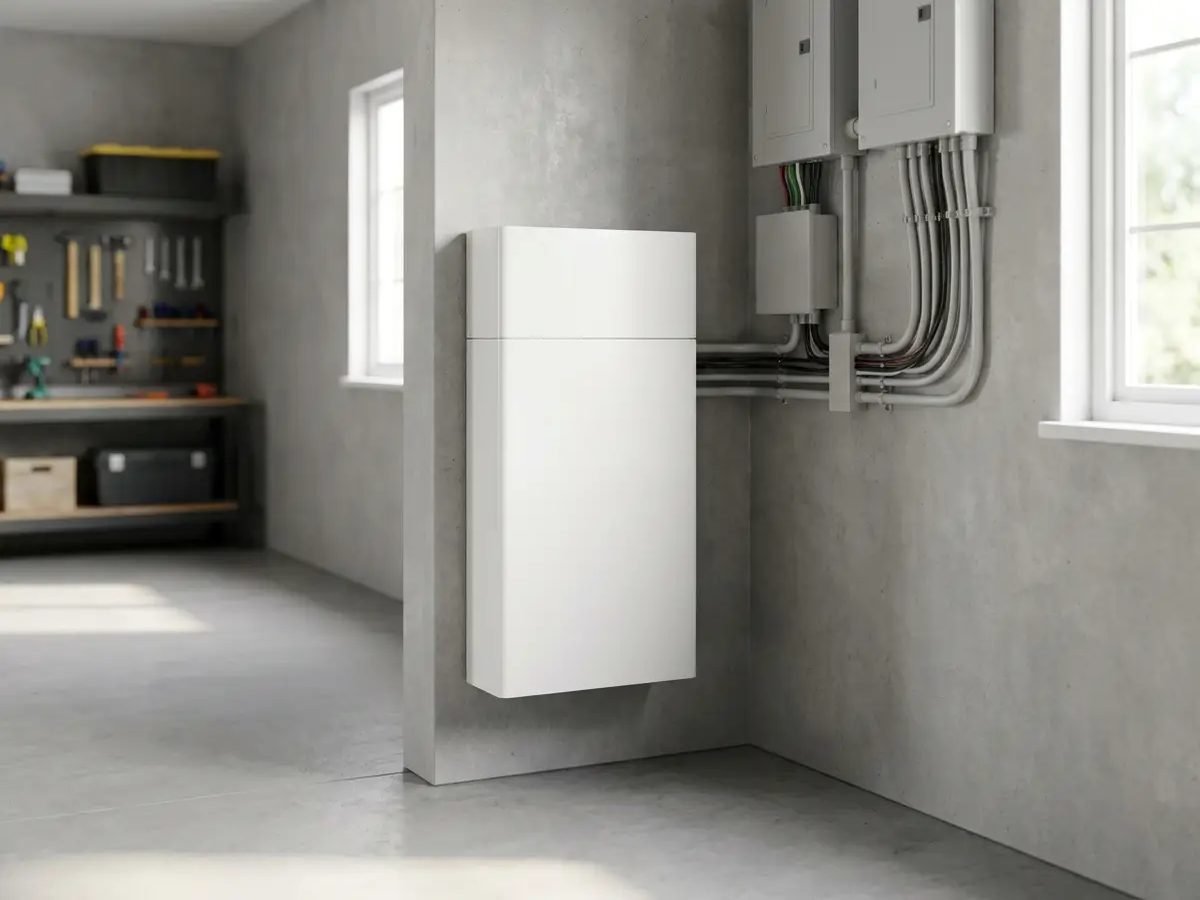
A home battery, sometimes called a home energy storage system, stores electricity so it can be used later. Most residential batteries store power drawn from the utility grid, from rooftop solar panels, or from both. The stored energy can then run selected circuits or an entire house when the grid goes down, or it can be used to shift electricity use to times of day when utility rates are higher.
At the core of a home battery system are a battery bank, an inverter that converts stored direct current (DC) power into the alternating current (AC) power a house uses, and a control system that manages charging and discharging. Lithium iron phosphate (LFP) chemistry is common in current residential batteries because of its cycle life and thermal stability, though some brands use other lithium-ion chemistries.
Types of Home Battery Systems
Homeowners generally choose between a few configurations:
- AC-coupled batteries connect to a home’s existing electrical panel through their own inverter and can be added to a home with or without existing solar panels.
- DC-coupled batteries connect directly to a solar array before the solar inverter, which can improve efficiency in new solar-plus-storage projects but is harder to retrofit onto an existing solar system.
- All-in-one systems combine the battery, inverter, and sometimes a backup gateway in a single enclosure, which can simplify installation.
- Modular battery systems let a homeowner start with one unit and add more later as needs or budget change.
Battery capacity is measured in kilowatt-hours (kWh), which describes how much energy a unit can store, and kilowatts (kW), which describes how much power it can deliver at once. A typical single residential battery stores between 5 kWh and 16 kWh, and homes that want whole-home backup often install two or more units. See the whole-home backup guide for more on sizing.
Home Battery Cost
Home battery pricing is usually discussed two ways: cost per kilowatt-hour of storage, and total installed system cost. Installed home battery costs generally run between $800 and $1,500 per kWh, which includes the battery hardware, inverter, wiring, permitting, and labor. A complete system commonly falls in the ranges below.
| System Size | Typical Installed Cost |
|---|---|
| 5 kWh (single small unit) | $6,000 – $9,000 |
| 10 kWh | $10,000 – $16,000 |
| 13 – 16 kWh (one large unit) | $13,000 – $20,000 |
| 20+ kWh (multiple units, whole-home) | $20,000 – $30,000+ |
Estimates only — not a quote. These are national ranges compiled from public sources and industry data. They are not an offer of price and are not guaranteed. Your actual cost depends on your project, location, materials, permits and the contractor you choose. HomeMatchr does not set prices or perform work. See our full disclaimer.
These figures are general national ranges. Actual pricing depends on the brand and model selected, whether solar panels are installed at the same time, the condition of a home’s existing electrical panel, and local labor and permitting rates. See the home battery cost guide for a full breakdown.
What Affects the Cost of a Home Battery
- Capacity and number of units. More kWh of storage and more power output (kW) generally cost more, and whole-home projects often use multiple stacked units.
- Whole-home vs. partial backup. Backing up an entire house typically requires more capacity and a larger inverter than backing up a handful of essential circuits.
- Electrical panel condition. Older panels may need an upgrade or a separate backup subpanel, which adds to labor and material costs.
- Solar integration. Adding a battery to an existing solar array, or installing solar and storage together, changes the wiring approach and equipment needed.
- Permitting and inspection. Requirements vary by city and county, and some jurisdictions require utility interconnection approval before a system can operate.
- Site conditions. Where the battery is mounted and how far it sits from the electrical panel affects wiring complexity and labor hours.
The Federal Tax Credit
Home batteries with a capacity of 3 kWh or more can be eligible for the federal Residential Clean Energy Credit, which currently allows homeowners to claim 30% of the cost of eligible equipment and installation on their federal taxes. This credit applies whether or not the battery is paired with solar panels, as long as the system meets the capacity and ownership requirements. State and utility incentives may also be available and vary by location. A tax professional can confirm eligibility for a specific project and filing year.
How to Choose and Hire a Contractor
Installing a home battery involves electrical work and, in most areas, coordination with the local utility, so a contractor’s experience matters. Before hiring, it helps to:
- Confirm the contractor is licensed and insured for electrical work in your state, and ask for proof.
- Ask which battery brands and models they install regularly, and request the manufacturer’s warranty terms in writing. See the home battery brands guide for how common brands compare.
- Request a written scope of work that specifies capacity, backup circuits covered, panel upgrades (if any), and estimated timeline.
- Ask how permitting and utility interconnection will be handled, and who is responsible for scheduling inspections.
- Get multiple quotes so you can compare equipment, scope, and pricing side by side before committing.
Installing a Battery Without Solar
A home battery does not require rooftop solar panels. A standalone battery charges from the grid instead, which can still provide backup power and, in many areas, help manage electricity costs on a time-of-use rate plan. Standalone batteries generally cost about the same per kWh as batteries installed alongside solar, and current tax credit rules allow standalone batteries to be eligible too. See the home battery without solar guide for use cases and eligibility details.
How HomeMatchr Can Help
Researching battery brands, sizing a system, and comparing installation quotes takes time. HomeMatchr lets homeowners describe their project once and compare no-obligation quotes from independent contractors in the home battery and solar space. HomeMatchr is an advertising-supported service and may receive a referral fee when you connect with a provider. Reviewing multiple quotes side by side makes it easier to compare equipment options, backup capabilities, and pricing before deciding how to move forward.
Frequently asked questions
How much does a home battery cost?
Installed home battery systems generally cost between $6,000 and $30,000 or more, depending on capacity, brand, and whether the project includes whole-home backup. Cost per kWh installed typically runs $800 to $1,500.
Do I need solar panels to install a home battery?
No. A standalone battery can charge from the utility grid and still provide backup power and, in some areas, help manage time-of-use electricity rates. Solar simply gives the battery another way to recharge.
How long will a home battery power my house during an outage?
It depends on capacity and what’s connected to the battery. A small essential-circuits battery may cover several hours to a day of basic loads, while a larger multi-unit whole-home system can cover more, especially if paired with solar.
Is there a tax credit for home batteries?
Home batteries with at least 3 kWh of capacity generally be eligible for the federal Residential Clean Energy Credit, currently worth 30% of the installed cost, whether or not solar panels are included. A tax professional can confirm current eligibility.
How do I get pricing for a home battery installation?
Because pricing depends on a home’s specific panel, wiring, and backup goals, the most accurate way to get pricing is a site-specific quote. HomeMatchr lets homeowners compare no-obligation quotes from independent contractors.
Also compare pros for




About tax credits, rebates and incentives. Program rules, amounts and deadlines change and depend on your own eligibility, income and installation year. Nothing here is tax, legal or financial advice, and no credit or rebate is guaranteed. Confirm current rules with a qualified tax professional or the official program before you rely on them.
Compare Home Battery quotes
Enter your ZIP code to request no-obligation quotes from independent contractors.
HomeMatchr is an advertising-supported service and may receive a referral fee when you connect with a service provider.
