EV Charger Installation & Cost Guide
Compare no-obligation quotes from independent electricians for home EV charger installation.
Request EV Charger quotes
Answer a few quick questions and compare quotes from independent contractors.
What EV Charger Installation Involves
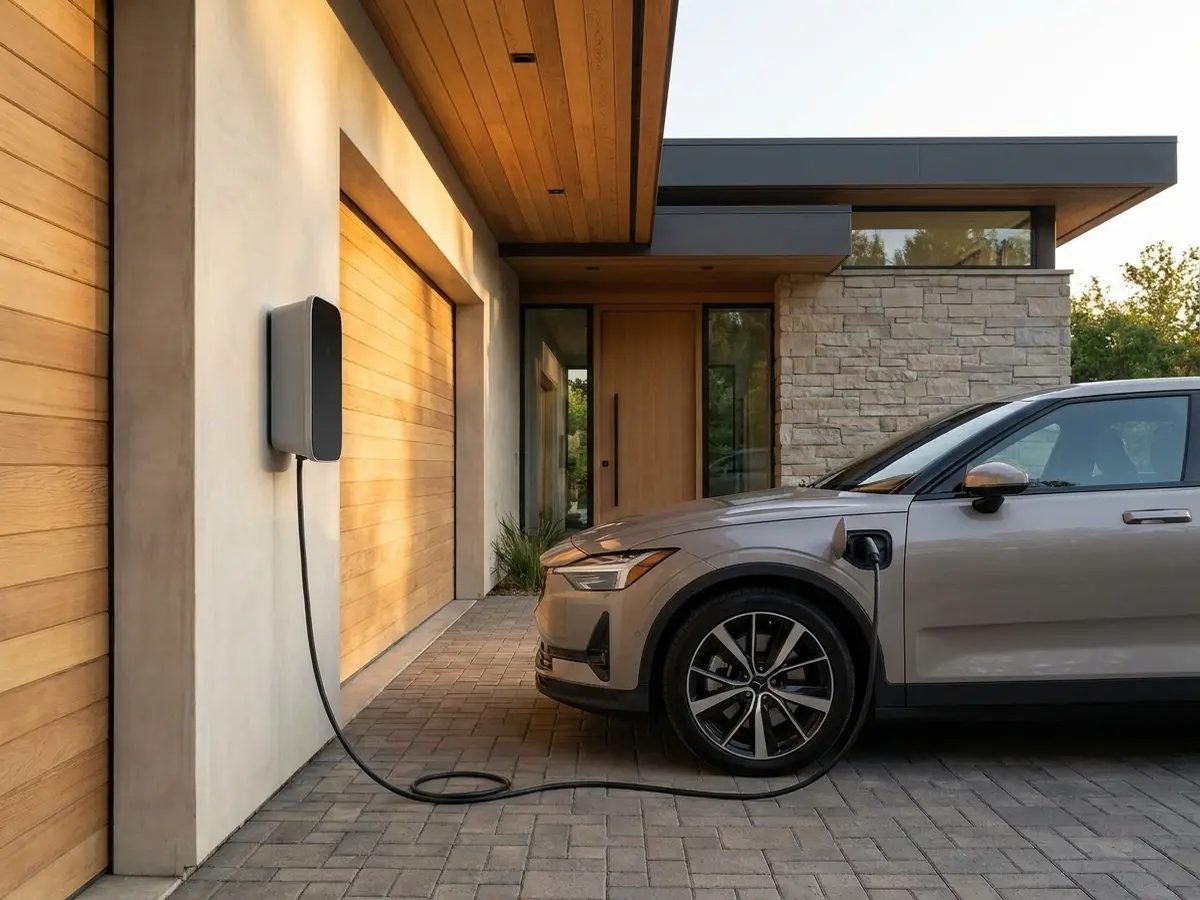
Installing a home EV charger is an electrical project, not just a matter of mounting a box on the wall. An electrician typically runs a new, dedicated circuit from your home’s main electrical panel to the spot where the charger will live, whether that’s a garage wall, an exterior wall near the driveway, or a carport post. The charger is then either hardwired directly into that circuit or plugged into a heavy-duty outlet, most often a NEMA 14-50, installed at the charging location. Depending on your home’s existing electrical capacity, the job can be as simple as a short circuit run and a few hours of labor, or as involved as a full electrical panel upgrade, a new subpanel, and trenching to reach a detached garage.
Most municipalities require an electrical permit and a follow-up inspection for this type of work, since it involves a new high-amperage circuit tied into your home’s main service. A qualified electrician will pull that permit, size the circuit and breaker correctly for the charger you’ve chosen, and make sure the finished installation meets your local electrical code before it’s signed off.
Types of Home EV Chargers
Home charging generally falls into two categories, and understanding the difference helps explain why installation cost varies so much from one household to the next.
- Level 1 charging uses a standard 120-volt household outlet and the cable that typically comes with the vehicle. It adds roughly 3 to 5 miles of range per hour, which is enough for some drivers with short commutes, and it usually doesn’t require any electrical work since it plugs into an existing outlet.
- Level 2 charging runs on a 240-volt circuit, similar to what powers an electric dryer or range, and adds roughly 10 to 60 miles of range per hour depending on the charger’s amperage and the vehicle’s onboard charger. This is the setup most homeowners choose, and it’s the one that requires a licensed electrician to install a new circuit and either a hardwired charging unit or a NEMA 14-50 outlet.
DC fast charging, the type you see at highway rest stops and public charging stations, is not practical or available for residential installation. It requires industrial-level electrical infrastructure that isn’t found in a typical home. For a closer look at Level 2 equipment and setup, see our Level 2 home charger guide.
EV Charger Installation Cost
Total installed cost depends on the charger hardware, the electrician’s labor, and whether your electrical panel has enough spare capacity for the new circuit. The table below outlines typical ranges homeowners see across the country.
| Item | Typical Cost Range |
|---|---|
| Level 2 charger hardware | $300 – $700 |
| Basic installation (existing panel capacity) | $300 – $900 |
| Installation with a subpanel or panel upgrade | $1,500 – $3,500 |
| Permit and inspection fees | $50 – $300 |
| Typical total installed range | $600 – $2,500+ |
Estimates only — not a quote. These are national ranges compiled from public sources and industry data. They are not an offer of price and are not guaranteed. Your actual cost depends on your project, location, materials, permits and the contractor you choose. HomeMatchr does not set prices or perform work. See our full disclaimer.
Homes with an older panel, a detached garage, or a charging location far from the main panel tend to land at the higher end of that range, or above it, because of the extra wiring, trenching, or panel work involved. Our EV charger installation cost breakdown covers each of these cost drivers in more detail.
What Drives the Cost of Installation
A handful of factors explain most of the price difference between a straightforward job and an expensive one.
- Distance from the panel — a charger installed right next to the main panel is far cheaper to wire than one on the opposite side of the house or in a detached structure.
- Panel capacity — older homes, or homes already running close to their panel’s amperage limit, often need a panel upgrade or a dedicated subpanel before a new 240-volt circuit can be added safely.
- Hardwired vs. plug-in setup — a hardwired connection is generally considered more durable for daily use, while a NEMA 14-50 outlet setup offers more flexibility if you ever switch charger brands, and pricing differs slightly between the two.
- Permit and inspection fees — these vary by city and county, and some jurisdictions charge more for electrical permits than others.
- Charger amperage and brand — higher-amperage chargers that deliver faster charging speeds require larger wire gauges and breakers, which can add to material cost.
The Federal Tax Credit for EV Chargers
The Alternative Fuel Vehicle Refueling Property Credit, commonly referred to by its tax code section, 30C, can cover up to 30% of the cost of EV charger hardware and installation, up to a set dollar cap for a residential install. Eligibility rules have changed over time and can depend on factors like your address’s census tract, so it’s worth confirming current eligibility and the exact cap with a tax professional or the IRS before you install, and keeping your itemized invoice in case it’s needed for your tax filing.
How to Choose and Hire a Contractor
Because this is electrical work tied into your home’s main service, the contractor you choose matters as much as the charger you buy. A few things worth doing before you commit to any one company:
- Confirm the contractor is licensed and insured for electrical work in your state before you hire them — this is a basic step for any electrical project, not just EV charging.
- Ask whether they will pull the required electrical permit and schedule the inspection, rather than skipping that step.
- Get a written, itemized quote that separates hardware, labor, and any panel or subpanel work, so you can compare quotes on an apples-to-apples basis.
- Ask how they’ll assess your panel’s spare capacity, and whether a load calculation will be done before work starts.
- Get everything in writing, including the estimated timeline and what happens if a panel upgrade turns out to be necessary once work begins.
How HomeMatchr Works
Pricing and panel requirements vary enough from house to house that a single online estimate rarely reflects what a job will actually cost at your address. HomeMatchr lets you describe your project once and compare no-obligation quotes from independent electricians and contractors in your area, so you can review pricing, scope, and timelines side by side before deciding who to hire. HomeMatchr is an advertising-supported service and may receive a referral fee when you connect with a provider.
Frequently asked questions
How much does it cost to install an EV charger at home?
Most home Level 2 charger installations run from about $600 to $2,500 or more, depending on charger hardware, labor, and whether your electrical panel has enough spare capacity for the new circuit. Homes needing a panel upgrade or subpanel typically land at the higher end.
Do I need an electrician to install a Level 2 charger?
Yes. A Level 2 charger runs on a 240-volt circuit and generally requires a licensed electrician to run the wiring, install the breaker, and either hardwire the unit or install a NEMA 14-50 outlet, along with pulling the necessary permit.
Is there a tax credit for installing an EV charger?
The federal Alternative Fuel Vehicle Refueling Property Credit (30C) can cover up to 30% of hardware and installation costs, up to a set cap, though eligibility depends on factors like your location. Confirm current rules with a tax professional before you install.
Can I install a Level 1 charger without an electrician?
Often yes, since Level 1 charging typically uses the cable that comes with the vehicle and plugs into a standard 120-volt outlet. It charges much more slowly than Level 2, which is why most homeowners upgrade to a dedicated 240-volt circuit.
How does HomeMatchr help with EV charger installation?
HomeMatchr lets you compare no-obligation quotes from independent electricians in your area, so you can review pricing and scope for your specific home before choosing who to hire.
Also compare pros for

About tax credits, rebates and incentives. Program rules, amounts and deadlines change and depend on your own eligibility, income and installation year. Nothing here is tax, legal or financial advice, and no credit or rebate is guaranteed. Confirm current rules with a qualified tax professional or the official program before you rely on them.
Compare EV Charger quotes
Enter your ZIP code to request no-obligation quotes from independent contractors.
HomeMatchr is an advertising-supported service and may receive a referral fee when you connect with a service provider.
