Tesla Wall Connector Installation
Cost, electrical requirements, and NACS connector details for installing a Tesla Wall Connector at home.
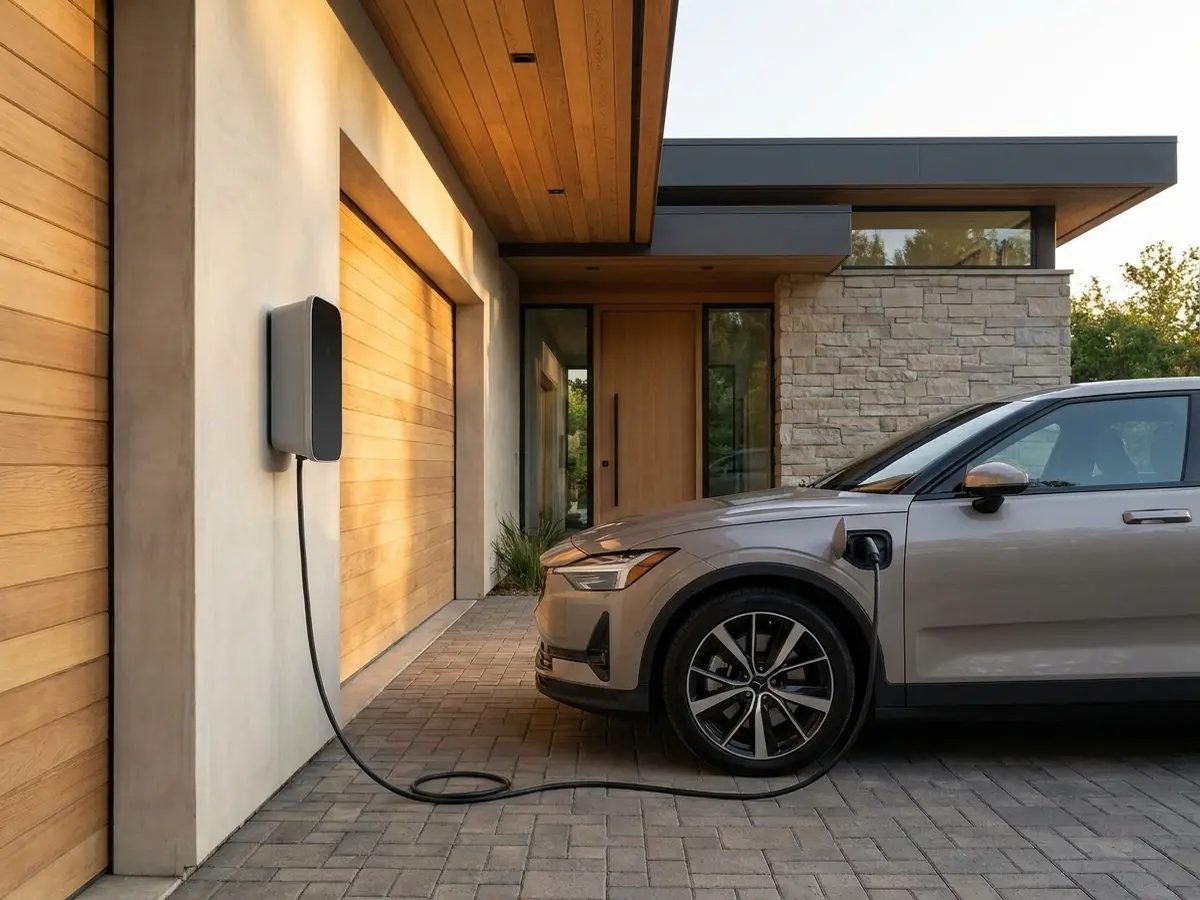
What the Tesla Wall Connector Is
The Tesla Wall Connector is a hardwired Level 2 home charging unit designed and sold by Tesla, built to deliver up to 48 amps of continuous power on a compatible circuit. Unlike some third-party chargers, the Wall Connector is designed for a permanent hardwired installation rather than a plug-in outlet setup, and it’s built specifically to work with Tesla’s charging software and app for scheduling, monitoring, and firmware updates. It’s the charger most commonly installed by Tesla owners who want the fastest realistic home charging speed their vehicle can accept.
Electrical Requirements
Because the Wall Connector can be configured for up to 48 amps of continuous draw, it needs a dedicated circuit sized appropriately, typically requiring a 60-amp breaker to safely support 48-amp continuous output under standard electrical code. Your electrician will assess whether your existing panel has that much spare capacity available. Many homes do not, particularly older homes with 100-amp electrical service, in which case a panel upgrade or a dedicated subpanel becomes part of the project. The Wall Connector’s amperage can also be configured lower during installation if your panel doesn’t have room for the full 48-amp setup, which still allows for solid overnight charging speeds on most circuits.
Installation Cost
The Wall Connector hardware itself typically costs around $400 to $500. Installation labor for a straightforward job, with adequate existing panel capacity and a charging location close to the panel, generally runs $300 to $900. If a panel upgrade or subpanel is needed to support the higher amperage, total project cost can climb to $2,500 to $5,000 or more once that additional electrical work, permit fees, and labor are included. Our EV charger installation cost guide breaks down each of these components in more detail.
| Item | Typical Cost Range |
|---|---|
| Wall Connector hardware | $400 – $500 |
| Installation, existing panel capacity | $300 – $900 |
| Installation with subpanel or panel upgrade | $2,500 – $5,000+ |
| Permit and inspection fees | $50 – $300 |
Estimates only — not a quote. These are national ranges compiled from public sources and industry data. They are not an offer of price and are not guaranteed. Your actual cost depends on your project, location, materials, permits and the contractor you choose. HomeMatchr does not set prices or perform work. See our full disclaimer.
NACS: The Connector Tesla Helped Standardize
The Wall Connector uses the North American Charging Standard, or NACS, the connector design originally developed by Tesla that has since been adopted by most other major automakers for their newer EV models, either as the native connector or through an adapter. This means a Wall Connector installed today is increasingly compatible with a growing range of non-Tesla vehicles as more manufacturers transition their new models to the NACS connector, in addition to working natively with all current Tesla vehicles.
Indoor, Garage, and Outdoor Installation
The Wall Connector can be mounted inside a garage, on an exterior wall near a driveway, or on a post for a carport, and it’s rated for outdoor use, which gives homeowners more flexibility than some indoor-only charging equipment. Outdoor installations on an exterior wall or post generally cost about the same as an equivalent indoor installation, though a freestanding post mount or a run to a detached garage adds material and labor for the extra wiring or trenching involved. Where you mount it should balance convenience for daily plug-in with a reasonably short wire run back to the electrical panel, since distance is one of the bigger drivers of labor cost.
Charging More Than One Vehicle
Households with two EVs, or a Tesla plus a non-Tesla EV that uses NACS, sometimes install two Wall Connectors on a shared circuit using Tesla’s power-sharing feature, which automatically splits available amperage between both chargers when both vehicles are plugged in at once. This can be more cost-effective than running two fully independent high-amperage circuits, though it does mean both vehicles may charge somewhat more slowly if they’re plugged in at the same time. An electrician can walk through whether your panel has enough capacity to support two connectors, whether shared or independent, before you commit to a two-charger setup.
Choosing an Installer
Because the Wall Connector supports a relatively high amperage circuit, installation quality and correct circuit sizing matter. Look for an electrician who is licensed and insured, has experience specifically with 48-amp or similarly high-amperage EV circuits, and will pull the required permit and schedule an inspection rather than skip that step. Ask whether they’ll perform a load calculation on your panel before starting work, since that determines whether you’ll need a panel upgrade. A written, itemized quote separating hardware, labor, and any panel work makes it much easier to compare multiple contractors on the same basis.
Getting Quotes for Your Home
Wall Connector installation cost varies significantly based on your panel’s existing capacity, the distance from the panel to your charging location, and local permit fees, so a single national average won’t tell you what the job will cost at your address. HomeMatchr can connect you with no-obligation quotes from independent electricians in your area, so you can compare pricing, scope, and timelines for a Wall Connector installation before deciding who to hire.
Frequently asked questions
How much does it cost to install a Tesla Wall Connector?
A straightforward installation with adequate existing panel capacity typically runs $700 to $1,400 total, including hardware and labor. Homes needing a panel upgrade or subpanel to support the higher amperage often see $2,500 to $5,000 or more.
What size breaker does a Tesla Wall Connector need?
A Wall Connector configured for the full 48-amp continuous output typically requires a 60-amp breaker on a dedicated circuit. It can also be configured for lower amperage if your panel doesn’t have capacity for the full setup.
Can non-Tesla vehicles use a Tesla Wall Connector?
The Wall Connector uses the NACS connector, which most major automakers are adopting for their newer EV models, either natively or through an adapter, making it increasingly compatible with non-Tesla vehicles.
Is the Tesla Wall Connector hardwired or plug-in?
The Wall Connector is designed for a permanent hardwired installation rather than a plug-in outlet setup, which is one reason a licensed electrician is needed to install it.
Do I need a panel upgrade for a Tesla Wall Connector?
It depends on your home’s existing electrical service and spare capacity. Older homes with 100-amp service more often need a panel upgrade or subpanel than newer homes with 200-amp service.
Compare EV Charger quotes
Enter your ZIP code to request no-obligation quotes from independent contractors.
HomeMatchr is an advertising-supported service and may receive a referral fee when you connect with a service provider.
