Home Insulation: Types, R-Values & Costs
Compare fiberglass, cellulose, and spray foam insulation, see real cost ranges, and request no-obligation quotes.
Request Insulation quotes
Answer a few quick questions and compare quotes from independent contractors.
Insulation is one of the highest-return upgrades a homeowner can make. It quietly controls how much of your heating and cooling budget actually stays inside your house instead of leaking through the attic, walls, and floors. The U.S. Department of Energy estimates that homeowners can reduce heating and cooling costs by properly air sealing and adding insulation in attics, floors, and crawl spaces. Beyond the utility bill, good insulation makes a home more comfortable year-round: fewer drafts, fewer hot and cold rooms, less strain on your HVAC system, and a quieter interior since insulation also dampens outside noise.
Why Insulation Matters
Heat naturally moves from warm areas to cool ones. In winter, indoor heat escapes upward and outward; in summer, outdoor heat pushes its way in. Without adequate insulation, your furnace and air conditioner have to work overtime to compensate, which shows up directly on your monthly energy bill. Older homes are especially prone to under-insulation, since building codes and material standards have changed significantly over the past few decades. If your attic insulation looks thin, uneven, or compressed, or if you notice ice dams in winter or a stuffy upper floor in summer, it’s usually a sign you’re due for an upgrade.
Main Types of Insulation
Contractors typically recommend one of four main insulation types depending on the area of the home, budget, and existing structure:
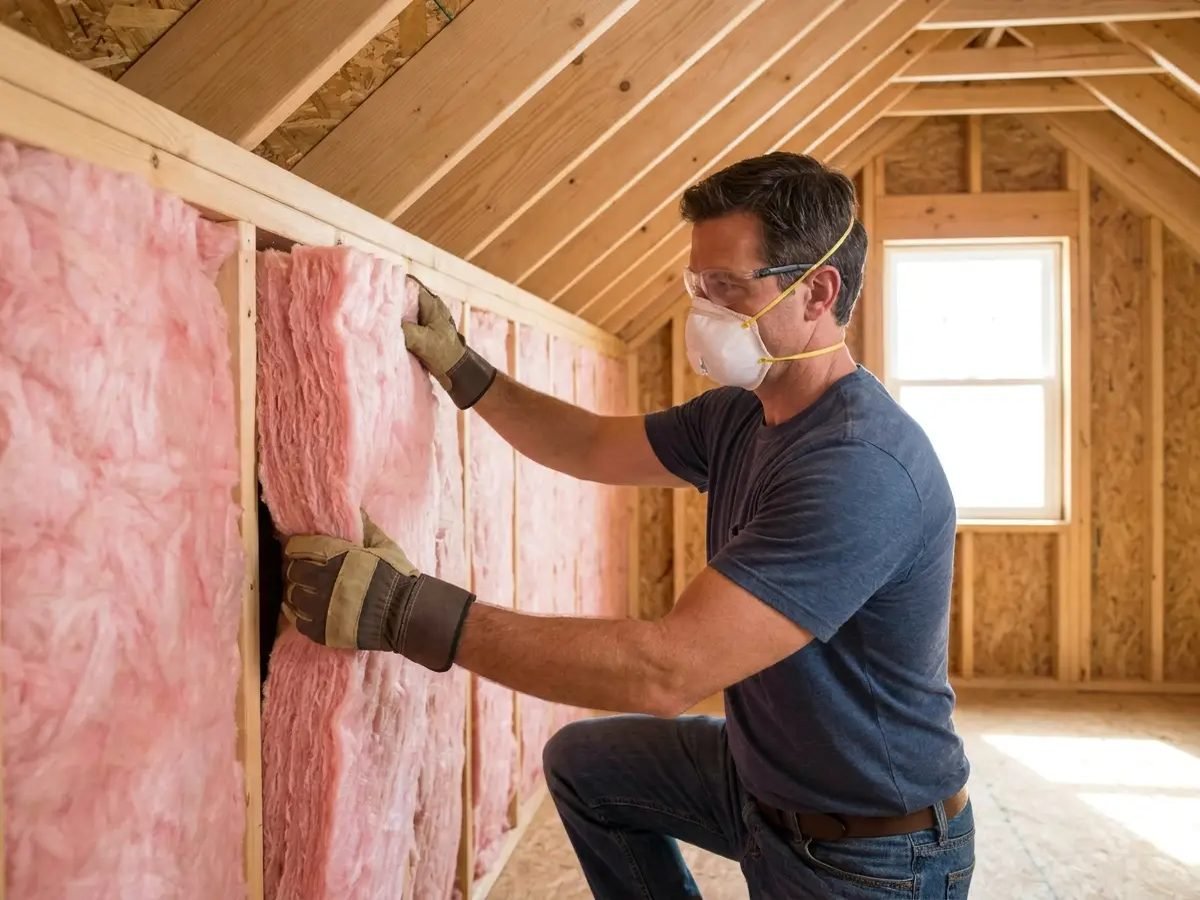
- Fiberglass batts: Pre-cut panels or rolls that fit between wall studs, floor joists, and attic rafters. This is the most common and most affordable option, widely used in new construction and straightforward attic retrofits.
- Blown-in cellulose: Loose fibers, largely made from recycled paper treated with fire retardant, blown into attics and wall cavities with special equipment. It fills gaps and irregular spaces well, making it a strong choice for older attics with uneven joists.
- Spray foam: A liquid that expands and hardens on contact, sealing cracks and gaps as it insulates. Open-cell foam is lighter and less expensive; closed-cell foam is denser, offers a higher R-value per inch, and adds some structural rigidity. Spray foam costs more upfront but delivers strong air-sealing performance.
- Rigid foam board: Dense foam panels used on exterior walls, basement walls, and under roofing. It resists moisture well and is often chosen for renovation projects where wall cavities are already open.
Understanding R-Value and DOE Climate Zones
R-value measures a material’s resistance to heat flow — the higher the number, the better the insulating power. The Department of Energy divides the country into climate zones (roughly Zone 1 in the Gulf Coast and southern Florida through Zone 7 in the coldest parts of the northern U.S. and Alaska) and publishes recommended R-value ranges for each zone and each part of the house. As a general guide, attic R-value recommendations range from about R-30 in the warmest zones up to R-60 in the coldest, while wall insulation typically falls between R-13 and R-21 depending on cavity depth and climate. A contractor can confirm the right target for your specific zip code and home construction.
Insulation Cost Overview
Insulation pricing depends on material, the area being insulated, your home’s accessibility, and local labor rates. Here are typical national ranges homeowners can expect:
| Insulation Type | Cost per Sq. Ft. (Installed) | Typical Attic Job (1,000 sq ft) |
|---|---|---|
| Fiberglass batts | $1.50 – $3.50 | $1,500 – $3,500 |
| Blown-in cellulose | $1.75 – $3.50 | $1,750 – $3,500 |
| Open-cell spray foam | $1.50 – $3.50 | $1,500 – $3,500 |
| Closed-cell spray foam | $3.00 – $7.50 | $3,000 – $7,500 |
| Rigid foam board | $2.00 – $5.00 | $2,000 – $5,000 |
Estimates only — not a quote. These are national ranges compiled from public sources and industry data. They are not an offer of price and are not guaranteed. Your actual cost depends on your project, location, materials, permits and the contractor you choose. HomeMatchr does not set prices or perform work. See our full disclaimer.
Whole-house projects that include attic, walls, and crawl space typically range from $2,000 to $10,000 or more, with larger homes and closed-cell spray foam pushing toward the higher end. Removing old, damaged, or contaminated insulation before a new install can add $1,000 to $3,000 to the total.
Federal Tax Credits and Rebates
Federal tax law has, in past years, included the Energy Efficient Home Improvement Credit (Section 25C), which allowed homeowners to claim a percentage of eligible insulation and air-sealing costs in a primary residence, up to an annual cap. Eligibility, percentages, and caps for this and similar programs are set by federal legislation and can change from year to year. Before assuming any credit applies to your project, confirm current-year rules directly with a tax professional or IRS.gov. Some utility companies and state energy offices also offer separate rebate or financing programs for insulation upgrades, so it’s worth asking a contractor what’s available in your state.
Choosing an Insulation Contractor
Not all insulation installers are equal, and a rushed or incomplete job can leave gaps that undercut your energy savings. When comparing contractors, consider:
- Confirming the contractor is properly licensed and insured for your state before signing anything
- Experience with your specific project type (attic, wall, crawl space, or spray foam)
- A written estimate that specifies material, R-value, and coverage area — not just a lump-sum price
- Willingness to do a blower-door test or thermal inspection to identify air leaks before quoting
- Clear cleanup and old-insulation removal terms, in writing
How HomeMatchr Works
Insulation pricing can vary by hundreds or even thousands of dollars between contractors for the exact same scope of work, since labor rates, overhead, and material sourcing differ widely by company. Requesting multiple quotes is a straightforward way to compare options — it also gives you a chance to weigh experience, timelines, and warranty terms (offered by the contractor or manufacturer, not by HomeMatchr) before committing. Enter your ZIP code and answer a few quick questions about your project, and request no-obligation quotes from independent insulation contractors. HomeMatchr is an advertising-supported service and may receive a referral fee when you connect with a provider.
Frequently asked questions
How much does home insulation cost on average?
Most homeowners spend between $1,500 and $7,500 depending on insulation type and area, with whole-house projects ranging from $2,000 to $10,000 or more. Attic insulation is usually the least expensive per square foot, while closed-cell spray foam is the most expensive but offers the highest R-value per inch.
What R-value do I need for my attic?
It depends on your DOE climate zone. Recommendations generally range from R-30 in the warmest southern zones to R-60 in the coldest northern zones. A contractor can confirm the exact recommendation for your zip code and existing attic condition.
Is spray foam insulation worth the extra cost?
Spray foam seals air gaps as it expands, which can outperform batts and blown-in insulation for air-sealing and moisture control. It costs more upfront, but many homeowners see it pay off through lower energy bills and improved comfort, especially in irregular spaces or additions.
Can I claim a tax credit for new insulation?
Federal tax credits for energy-efficient home improvements, such as the Section 25C credit, have historically covered a percentage of eligible insulation and air-sealing costs up to an annual cap. Because eligibility and availability change with federal tax legislation, confirm current-year rules with a tax professional or IRS.gov before assuming a specific credit applies to your project.
How do I request insulation quotes through HomeMatchr?
Enter your ZIP code and answer a few short questions about your project. You can then request no-obligation quotes from independent insulation contractors and compare pricing and experience before you hire.
Also compare pros for

About tax credits, rebates and incentives. Program rules, amounts and deadlines change and depend on your own eligibility, income and installation year. Nothing here is tax, legal or financial advice, and no credit or rebate is guaranteed. Confirm current rules with a qualified tax professional or the official program before you rely on them.
Compare Insulation quotes
Enter your ZIP code to request no-obligation quotes from independent contractors.
HomeMatchr is an advertising-supported service and may receive a referral fee when you connect with a service provider.
