Water Treatment Systems & Cost Guide
Compare water treatment options and get no-obligation quotes from independent contractors.
Request Water Treatment quotes
Answer a few quick questions and compare quotes from independent contractors.
What Is a Home Water Treatment System?
Water treatment covers any equipment installed in a home to change the mineral content, chemical composition, or contaminant level of the water supply before it reaches taps, appliances, and fixtures. The most common goal is addressing hard water—water with a high concentration of calcium and magnesium—which can leave scale on pipes, water heaters, and glassware, and can make soap and detergent less effective. Other systems target chlorine taste and odor, sediment, iron staining, or specific contaminants identified through a water test. Homeowners on both municipal water and private wells install treatment equipment, though well owners often need to address a wider range of issues since well water is not treated by a utility before it reaches the home.
Because water quality varies by region, source, and even by season, the right setup for one home may not fit another. A water test—either a simple at-home kit or a lab analysis—is usually the starting point, since it identifies hardness levels, pH, iron, and other factors that determine which type of system will actually solve the problem. Skipping this step and buying equipment based on general assumptions about your region is one of the most common reasons a system underperforms after installation.
Water hardness itself is measured in grains per gallon (GPG). As a general reference, water below 3 GPG is considered soft, 3 to 7 GPG is moderately hard, 7 to 10 GPG is hard, and anything above 10 GPG is considered very hard. These numbers matter because they influence not just whether treatment is worthwhile, but which category of equipment and what capacity makes sense for a given household.
Common Water Treatment Options
Several categories of equipment address different issues:
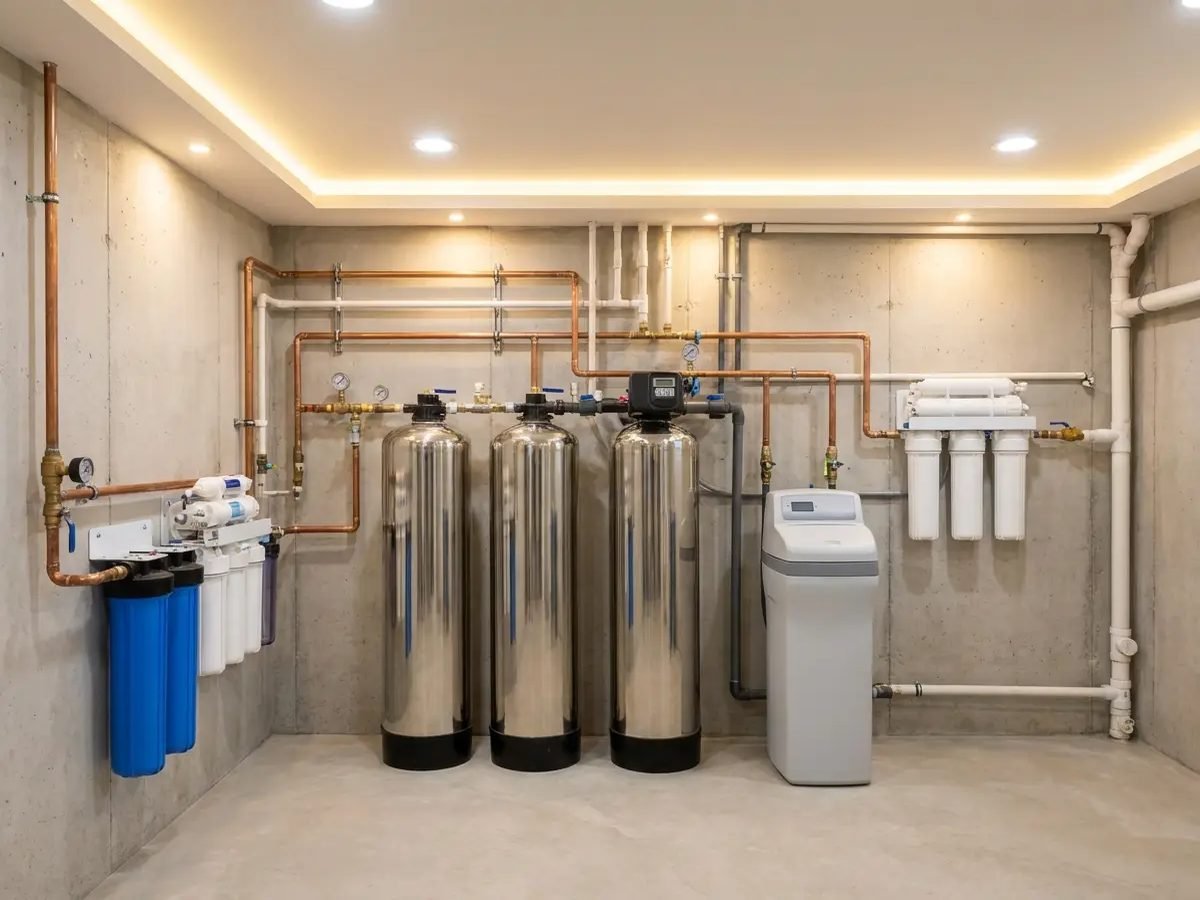
- Water softeners use an ion-exchange process with salt to remove calcium and magnesium from the water supply, reducing scale buildup.
- Salt-free conditioners alter the structure of hardness minerals so they’re less likely to form scale, without removing the minerals or using salt.
- Whole-house filtration systems treat all water entering the home, typically targeting sediment, chlorine, or a broader range of contaminants.
- Reverse osmosis systems are usually installed at a single point of use, such as a kitchen sink, and remove a wide range of dissolved solids from drinking water.
- Iron and sulfur filters address staining and odor issues common in well water.
- UV disinfection systems use ultraviolet light to neutralize bacteria and other microorganisms, often paired with a private well.
Many homes end up with a combination—for example, a softener for the whole house plus a reverse osmosis unit under the kitchen sink for drinking water.
Some issues call for equipment that isn’t strictly a softener or a filter. Neutralizers adjust pH in water that’s too acidic or too alkaline, which can otherwise corrode pipes and fixtures over time. Aerators inject air into the water stream to help oxidize iron or manganese before a filter stage removes it. These additions are usually recommended after a lab water test flags a specific issue, rather than installed as a first step.
Water Treatment Cost Guide
Costs vary based on system type, household size, water quality, and installation complexity. The table below outlines typical price ranges homeowners report for equipment and installation.
| System Type | Typical Cost Range (Installed) |
|---|---|
| Salt-based water softener | $1,000 – $3,500 |
| Salt-free conditioner | $1,200 – $4,000 |
| Whole-house filtration system | $800 – $4,500 |
| Reverse osmosis (under-sink) | $300 – $1,200 |
| Iron/sulfur filter | $1,000 – $4,000 |
| UV disinfection system | $500 – $1,500 |
Estimates only — not a quote. These are national ranges compiled from public sources and industry data. They are not an offer of price and are not guaranteed. Your actual cost depends on your project, location, materials, permits and the contractor you choose. HomeMatchr does not set prices or perform work. See our full disclaimer.
These ranges reflect equipment plus a typical installation. Homes with unusual plumbing layouts, well systems that need additional pre-treatment, or larger households requiring higher-capacity equipment often fall toward the higher end.
Local labor rates also shift these numbers meaningfully. Installation costs in major metro areas tend to run higher than in rural regions, and contractors in areas with widespread hard water sometimes offer more competitive pricing simply because they install softeners routinely. This is another reason it helps to compare more than one quote rather than relying on a single national average.
What Affects the Cost of a Water Treatment System
Several factors influence what a project actually costs:
- Household water usage. Larger households need higher-capacity systems, which cost more upfront.
- Water hardness and contaminant levels. Severe hardness or high iron content may require additional pre-treatment equipment.
- Municipal water vs. well water. Well water often needs more extensive treatment and testing before installation.
- Installation complexity. Retrofitting an older home’s plumbing, adding a dedicated electrical outlet, or running a drain line for reverse osmosis can add labor cost.
- Ongoing costs. Salt-based softeners require periodic salt refills; most filtration systems need filter or cartridge replacement on a schedule.
- Equipment brand and features. Digital metered controls, higher-capacity resin tanks, and smart monitoring typically cost more than basic mechanical models.
It’s also worth budgeting for the possibility of secondary equipment. If a water test turns up more than one issue, such as hardness plus iron, or chlorine odor plus sediment, you may need two pieces of equipment working together rather than a single all-in-one unit. A contractor can advise on whether a combination system or separate units make more sense for your specific results.
How to Choose and Hire a Water Treatment Contractor
Start with a water test to understand exactly what you’re treating for—guessing at equipment before testing often leads to buying the wrong system. From there:
- Ask each contractor to explain what the proposed system addresses and why, based on your water test results.
- Request an itemized quote that separates equipment cost from installation labor.
- Always confirm a contractor is licensed and insured in your state before signing a contract, and ask how they handle claims on the manufacturer’s warranty for equipment they install.
- Ask about ongoing maintenance requirements, including how often filters or resin need replacement and what that costs over time.
- Get the full scope of work in writing, including timeline, permits if required, and what happens if a leak or issue develops after installation.
Comparing more than one quote makes it easier to see whether a proposed system and price are reasonable for your situation.
How HomeMatchr Works
HomeMatchr is an advertising-supported service that helps homeowners compare quotes for water treatment projects. Answer a few questions about your water quality concerns and household needs, and request quotes from independent contractors in your state. You can request no-obligation quotes, review what each contractor proposes, and decide which option, if any, fits your home and budget. HomeMatchr does not perform water treatment installations and may receive a referral fee when you connect with a provider through the site.
Frequently asked questions
How do I know if I need a water softener or a filter?
A water test is the best starting point. Softeners address hardness minerals like calcium and magnesium, while filters typically target chlorine, sediment, or specific contaminants. Many homes use both for different purposes.
How much does a whole-house water treatment system cost?
Installed costs typically range from about $800 for a basic filtration system to $4,500 for higher-capacity or well-water treatment setups, depending on the equipment and complexity of installation.
Do I need a permit to install a water treatment system?
Permit requirements vary by city and county, and some installations that involve plumbing or electrical work may require one. A contractor familiar with your local building codes can confirm what applies to your project.
How often does water treatment equipment need maintenance?
It depends on the system. Salt-based softeners need periodic salt refills, while most filtration systems require filter or cartridge changes on a set schedule, often every few months to a year.
Is well water treated differently than municipal water?
Yes. Well water isn’t treated by a utility before reaching your home, so it often needs additional steps like iron removal, sediment filtration, or UV disinfection, in addition to any softening.
Also compare pros for
Compare Water Treatment quotes
Enter your ZIP code to request no-obligation quotes from independent contractors.
HomeMatchr is an advertising-supported service and may receive a referral fee when you connect with a service provider.
