Air Conditioning Contractors & Cost Guide
Compare no-obligation quotes from independent air conditioning contractors.
Request Air Conditioning quotes
Answer a few quick questions and compare quotes from independent contractors.
Air conditioning keeps a home livable through the hottest months of the year, but the systems that make that possible vary widely in design, capacity, and price. Whether you’re replacing an aging central system, adding cooling to a home that never had it, or trying to decide between a full ducted setup and a ductless mini-split, understanding how these systems work and what drives their cost helps you plan the project and talk to contractors with confidence.
What Air Conditioning Installation Involves
Installing or replacing an air conditioning system is more than swapping one box for another. A contractor typically starts with a load calculation, often called a Manual J calculation, that measures your home’s square footage, insulation levels, window area, ceiling height, and local climate to determine how much cooling capacity the space actually needs. Sizing matters: an oversized system cools too quickly without removing enough humidity, leaving rooms feeling clammy, while an undersized system runs constantly and struggles to keep up on the hottest days.
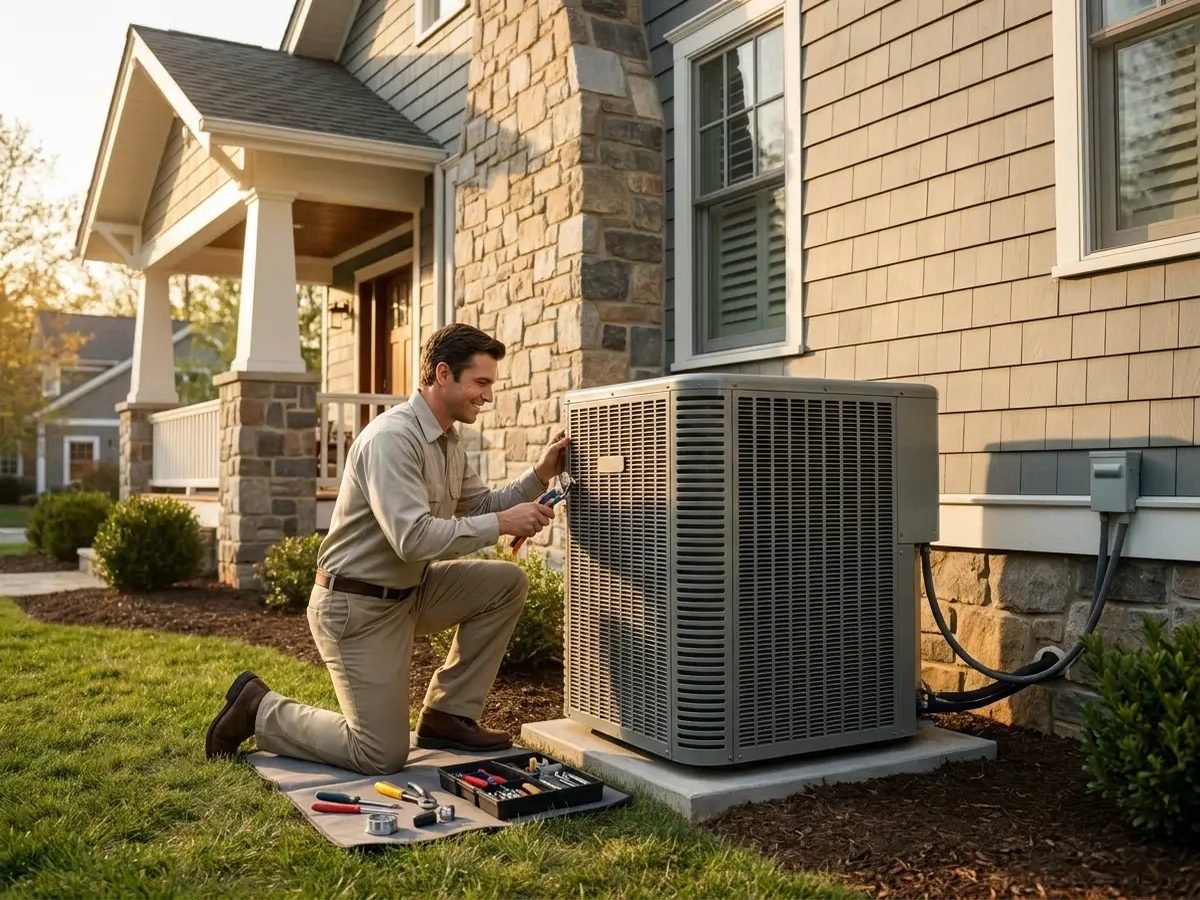
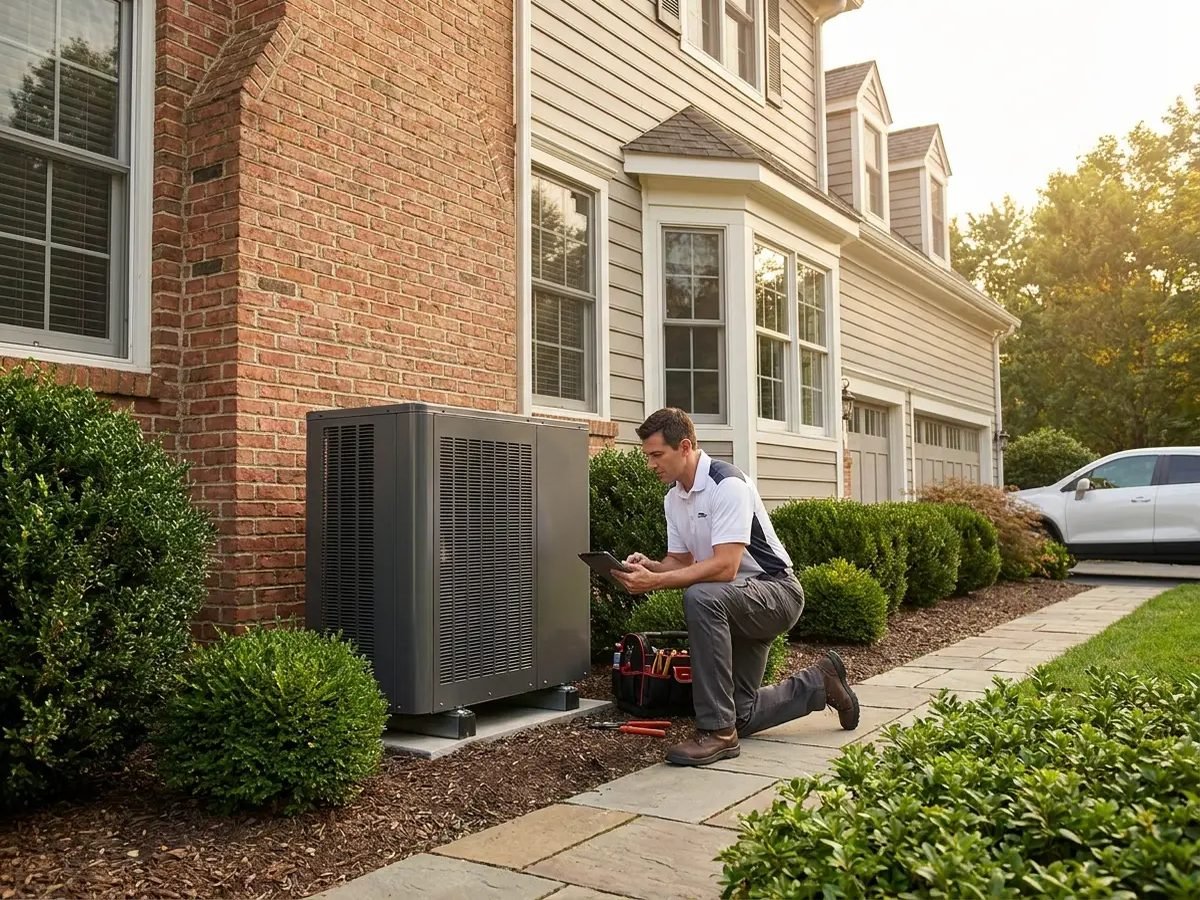
From there, the scope of work depends on the type of system. A central air conditioner ties into existing ductwork and a furnace or air handler, so installation usually involves setting the outdoor condenser, connecting refrigerant lines, installing or matching an indoor coil, and verifying airflow through the ducts. A ductless mini-split skips ducts entirely, running refrigerant lines from an outdoor compressor to one or more wall- or ceiling-mounted indoor units. New electrical circuits, a condensate drain line, and a mounting pad for the outdoor unit are common parts of either job.
Types of Air Conditioning Systems
Most homes use one of a few main system types, and the right choice depends on your existing infrastructure, budget, and how much of the home needs cooling.
- Central air conditioning: A single outdoor condenser and indoor coil cool the whole house through existing ductwork. This is the standard choice for homes that already have a forced-air furnace and duct system.
- Ductless mini-split systems: Individual indoor units serve specific rooms or zones, connected to an outdoor compressor by refrigerant lines instead of ducts. These work well for additions, older homes without ductwork, or room-by-room temperature control.
- Heat pumps: These systems provide both cooling and heating by reversing the refrigeration cycle, and are available in both central and ductless configurations.
- Window and portable units: Lower-cost, self-contained options that cool a single room without any permanent installation, useful for renters or as a stopgap solution.
- Packaged units: Combine the compressor, coil, and often the furnace into one outdoor cabinet, commonly used when there’s no space for an indoor air handler, such as in some manufactured homes.
What Drives the Cost of AC Installation
Air conditioning costs vary by region, system type, and the specifics of your home, but a few factors consistently move the price up or down.
| Cost Factor | Typical Impact |
|---|---|
| System tonnage (capacity) | Larger homes need higher-tonnage systems, which cost more in equipment and installation labor |
| SEER2 efficiency rating | Higher-efficiency units cost more upfront but can lower monthly cooling bills |
| Ductwork condition | Repairing, sealing, or replacing damaged or undersized ducts adds to the project cost |
| System type | Ductless mini-splits and heat pumps often carry different equipment costs than standard central AC |
| Electrical work | Older homes may need a panel upgrade or new circuit to support the new equipment |
| Removal of old equipment | Disposing of an existing condenser, coil, or window units adds labor time |
Estimates only — not a quote. These are national ranges compiled from public sources and industry data. They are not an offer of price and are not guaranteed. Your actual cost depends on your project, location, materials, permits and the contractor you choose. HomeMatchr does not set prices or perform work. See our full disclaimer.
As a general reference point, a full central air conditioning replacement for an average single-family home commonly falls in the range of $4,500 to $9,500 installed, while a single-zone ductless mini-split often runs $3,000 to $6,000 including the indoor and outdoor units. Multi-zone mini-split systems and larger central systems can run well beyond these ranges. These figures are general references only — actual pricing depends on your home’s size, local labor rates, and the specific equipment selected, which is why it helps to request quotes from more than one contractor before deciding.
Repair vs. Replacement
Not every AC problem calls for a new system. If a unit is under 10 years old, the repair is relatively minor (such as a capacitor, contactor, or fan motor), and the system has otherwise run reliably, repair is usually the more cost-effective route. Replacement tends to make more sense when a system is older than 12 to 15 years, needs a costly repair like a compressor or evacuated refrigerant line, or when rising utility bills suggest the unit has become significantly less efficient than newer models. A contractor can walk through the specific repair estimate against the cost of a new system so you can compare the two directly.
How to Choose and Hire a Contractor
Because HVAC work involves refrigerant handling, electrical connections, and sometimes gas lines, the process of hiring the right contractor matters as much as the equipment itself. A few general practices apply to almost any home services project:
- Confirm that any contractor you’re considering is licensed and insured in your state before signing a contract — ask to see documentation rather than taking it on faith.
- Ask for a written, itemized estimate that separates equipment, labor, permits, and any ductwork or electrical work.
- Check that the proposed system size is based on an actual load calculation for your home, not a rule of thumb.
- Ask about the manufacturer’s warranty on the equipment and what it covers versus what the contractor’s own labor warranty covers.
- Get multiple quotes so you can compare pricing, scope, and proposed equipment side by side.
How HomeMatchr Works
HomeMatchr helps you compare air conditioning options without having to track down contractors on your own. Answer a few questions about your project — the type of system, your home’s size, and your timeline — and request quotes from independent contractors in the field. You can compare no-obligation quotes side by side, review scope and pricing, and decide which contractor and system fit your project and budget. HomeMatchr is an advertising-supported service and may receive a referral fee when you connect with a provider.
Frequently asked questions
How long does AC installation take?
A straightforward central air conditioning replacement, where existing ductwork stays in place, typically takes one day. Installing a mini-split system usually takes one to two days per zone. Projects that require new ductwork, an electrical panel upgrade, or extensive electrical work can take several days to a week.
What size air conditioner do I need for my home?
Sizing depends on square footage, ceiling height, insulation levels, window area, and local climate, which is why contractors use a load calculation rather than a simple square-footage estimate. As a rough starting point, many homes need roughly 1 ton of cooling capacity per 400 to 600 square feet, but a proper calculation from a contractor is the only reliable way to size a system correctly.
What does SEER2 mean and does it matter?
SEER2 (Seasonal Energy Efficiency Ratio 2) measures how efficiently a cooling system converts electricity into cooling output over a season, using updated testing standards. A higher SEER2 rating generally means lower cooling costs over the life of the system, though higher-rated equipment usually costs more to purchase and install.
Should I repair or replace my air conditioner?
As a general guideline, repair often makes sense for units under 10 years old with a moderate repair cost. Replacement tends to be the better value for older systems, systems needing a major component like a compressor, or units that have become noticeably less efficient. A contractor can compare your specific repair estimate to replacement costs.
How does HomeMatchr work?
You share some basic details about your air conditioning project, and HomeMatchr helps connect you with independent contractors in the field. You can request quotes from more than one and compare no-obligation quotes before deciding who to hire. HomeMatchr is an advertising-supported service and may receive a referral fee when you connect with a provider.
Also compare pros for


Compare Air Conditioning quotes
Enter your ZIP code to request no-obligation quotes from independent contractors.
HomeMatchr is an advertising-supported service and may receive a referral fee when you connect with a service provider.
