Roof Repair Costs & Guide
See what common roof repairs cost and how to decide between repair and replacement.
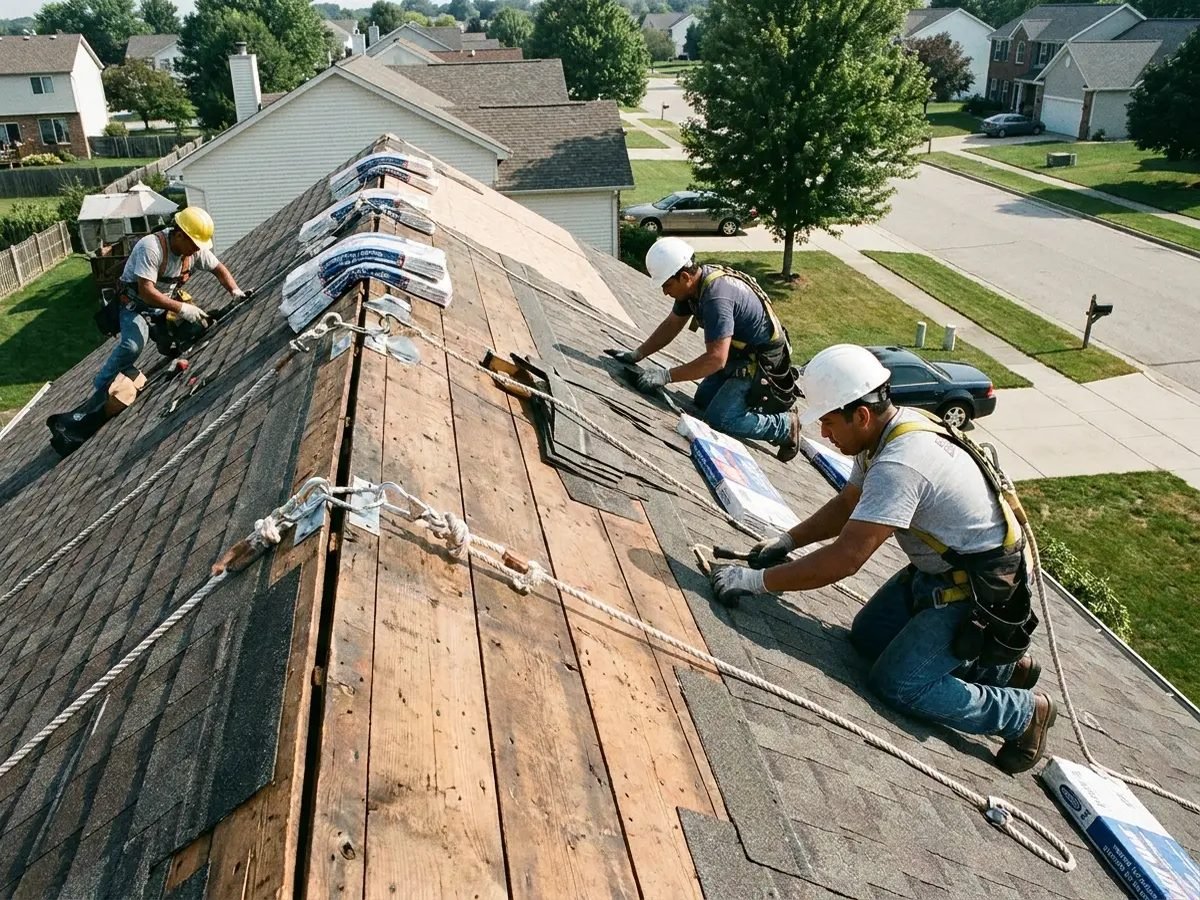
Not every roofing problem requires a full replacement. Many issues — a handful of damaged shingles, a failed seal around a vent pipe, a small area of flashing that has pulled away — can be fixed with a targeted repair at a fraction of the cost of a new roof. This guide covers the most common roof repairs, typical costs, and how to think through the repair-versus-replace decision.
Common Roof Repairs and What They Cost
| Repair Type | Typical Cost Range |
|---|---|
| Shingle replacement (small area) | $150–$600 |
| Flashing repair (chimney, vent, skylight) | $200–$700 |
| Leak diagnosis and repair | $300–$1,200 |
| Soffit or fascia repair | $300–$1,500 |
| Decking (plywood) repair, per section | $400–$1,200 |
| Gutter reattachment or repair | $200–$800 |
| Storm damage repair (moderate) | $500–$3,000 |
| Full section re-roof (partial roof) | $1,500–$5,000+ |
Estimates only — not a quote. These are national ranges compiled from public sources and industry data. They are not an offer of price and are not guaranteed. Your actual cost depends on your project, location, materials, permits and the contractor you choose. HomeMatchr does not set prices or perform work. See our full disclaimer.
Actual pricing depends on roof pitch, material, accessibility, and how much of the underlying structure — decking, insulation, or interior drywall — was affected by water intrusion before the repair was made.
Signs a Roof Needs Repair
- Missing, cracked, or curling shingles, especially after a storm.
- Granules collecting in gutters, which signals accelerated shingle wear.
- Water stains on ceilings or in the attic, which usually point to a leak rather than a cosmetic issue.
- Daylight visible through the roof deck from inside the attic.
- Sagging areas, which can indicate structural or decking damage.
- Flashing that has separated from a chimney, skylight, or vent pipe.
- Moss or algae growth concentrated in one area, which can trap moisture against the roofing material.
Repair vs. Replace: How to Decide
The right decision usually comes down to the roof’s age, the extent of the damage, and how the repair cost compares to the cost of a full replacement.
- Favor repair when: the roof is less than about two-thirds of the way through its expected lifespan, the damage is limited to a small area, and there’s no widespread granule loss or structural sagging.
- Favor replacement when: the roof is near or past its expected lifespan, repairs have been needed multiple times in recent years, damage is spread across multiple sections, or the decking shows widespread rot.
- A useful rule of thumb: if a repair estimate approaches 30–40% of the cost of a full replacement, it’s worth getting a replacement quote for comparison before committing to the repair.
An independent contractor can inspect the roof in person, check the attic for signs of moisture or ventilation problems, and provide a written recommendation that lays out both options with pricing, so the decision isn’t made on guesswork.
Repairing After a Storm
Wind and hail damage often affects an entire roof unevenly, so a repair that looks sufficient from the ground may miss less-visible damage. If a homeowner is filing an insurance claim, it typically helps to get a written, itemized estimate before repairs begin, since insurers generally want documentation of the damage and the proposed scope of work. Confirm licensing and insurance for any contractor doing storm repair work, and be cautious of unsolicited door-to-door offers immediately after a storm — get multiple written estimates rather than agreeing on the spot.
What Happens During a Repair Visit
A typical roof repair starts with an inspection to identify both the visible damage and any underlying issues, such as damp decking or compromised insulation. The contractor then removes the damaged material, repairs or replaces the decking if needed, installs new flashing or underlayment where required, and matches new shingles or roofing material to the existing roof as closely as possible. Most single-area repairs are completed in a few hours to a full day, depending on access and the extent of the damage.
DIY vs. Professional Roof Repair
It can be tempting to handle a small roof problem without calling a contractor, and low-risk tasks like clearing debris out of a valley are reasonable to do yourself with proper ladder safety. But most roof repairs are not good do-it-yourself candidates. Working at height without fall protection carries real risk, and an improperly sealed patch can trap moisture underneath and cause more damage than the original problem. A professional roofer also has the experience to trace a leak back to its actual source, which is frequently different from where water shows up inside the home. For anything beyond a very minor, ground-level task, hiring a professional is typically both safer and more likely to solve the problem correctly the first time.
Getting Repair Quotes
Because repair pricing depends heavily on what’s actually causing the problem, an accurate quote usually requires an in-person inspection rather than a phone estimate. It helps to ask each contractor for a written scope of work, a clear price, and confirmation of what happens if additional damage is found once the repair begins.
HomeMatchr connects homeowners with independent contractors for roof repair work. Submit project details once and compare no-obligation quotes from independent contractors before scheduling a repair. HomeMatchr is an advertising-supported service and may receive a referral fee when a homeowner connects with a provider.
Frequently asked questions
How much does a small roof repair typically cost?
Simple repairs like replacing a small area of shingles or resealing flashing around a vent typically run $150 to $700. More involved repairs, such as a leak with hidden decking damage, can run $1,000 or more depending on the extent of the damage.
How do I know if I should repair or replace my roof?
Consider the roof’s age relative to its expected lifespan, how widespread the damage is, and how the repair cost compares to a full replacement. If repair costs are approaching a third or more of a replacement quote, it’s worth comparing both options before deciding.
Will homeowners insurance cover a roof repair?
It depends on the cause. Sudden damage from wind, hail, or a fallen tree is often covered, subject to your deductible, while gradual wear or lack of maintenance typically isn’t. A written estimate can support an insurance claim.
How quickly should a roof repair be scheduled?
Active leaks or storm damage should be addressed as soon as possible to limit water damage to decking, insulation, and interior finishes. Cosmetic issues with no active leak have more flexibility, though it’s still worth scheduling a repair before the next storm season.
Can one repair fix multiple small roof problems at once?
Sometimes. If several issues are concentrated in the same area, such as flashing and a section of nearby shingles, a contractor may be able to address them in a single visit. Ask for a full inspection so nothing is missed and get one itemized estimate covering everything found.
Compare Roofing quotes
Enter your ZIP code to request no-obligation quotes from independent contractors.
HomeMatchr is an advertising-supported service and may receive a referral fee when you connect with a service provider.
