AC Installation Cost by Tonnage and Efficiency
Compare no-obligation quotes from independent air conditioning contractors.
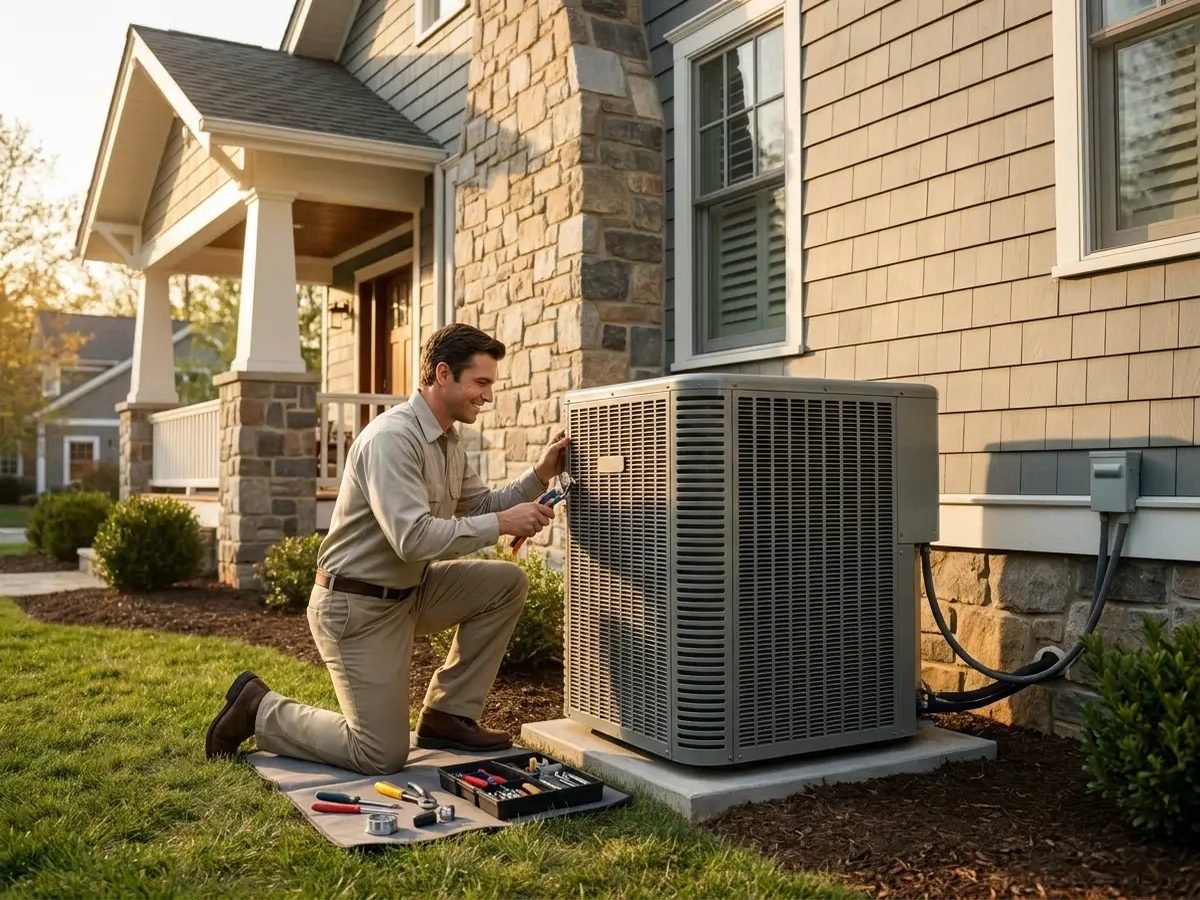
The cost of installing central air conditioning depends heavily on two numbers: tonnage, which measures cooling capacity, and SEER2, which measures efficiency. Together, these two factors account for much of the price difference between a basic installation and a higher-end one, though ductwork condition, electrical requirements, and local labor rates also play a significant role.
Understanding Tonnage
In air conditioning, a “ton” refers to cooling capacity, not weight — one ton equals 12,000 British Thermal Units (BTUs) of heat removed per hour. Residential systems commonly range from 1.5 to 5 tons, with the correct size determined by a contractor’s load calculation rather than square footage alone. Ceiling height, insulation quality, window area, sun exposure, and local climate all factor into the calculation. Installing a larger unit than needed doesn’t cool a home faster in any meaningful way; it typically cycles on and off too quickly, which leaves excess humidity in the air and can shorten the equipment’s lifespan.
Understanding SEER2
SEER2 (Seasonal Energy Efficiency Ratio 2) replaced the older SEER rating standard in 2023 and reflects a more realistic measurement of real-world duct static pressure. The federal minimum SEER2 rating varies by region, generally set at 13.4 in the North and 14.3 in the South and Southwest. Higher-efficiency units, often in the 16 to 20+ SEER2 range, cost more upfront but can lower monthly cooling bills, particularly in hot climates where the system runs frequently. In milder climates, the payback period for a high-efficiency unit is longer, so it’s worth discussing with a contractor whether the upgrade makes financial sense for your specific location and usage.
Cost by Tonnage and SEER2
The table below shows general reference ranges for installed cost, including equipment and labor, for a straightforward replacement where existing ductwork is reused. These are general estimates only — actual pricing varies by region, home layout, and contractor.
| System Size | Standard SEER2 (~14) | High SEER2 (18+) |
|---|---|---|
| 1.5 ton (up to ~900 sq ft) | $3,800 – $6,000 | $5,500 – $8,500 |
| 2.5 ton (~1,200–1,500 sq ft) | $4,200 – $7,000 | $6,200 – $9,500 |
| 3.5 ton (~1,800–2,200 sq ft) | $4,800 – $8,000 | $7,000 – $11,000 |
| 5 ton (2,500+ sq ft) | $5,500 – $9,500 | $8,000 – $13,000 |
Estimates only — not a quote. These are national ranges compiled from public sources and industry data. They are not an offer of price and are not guaranteed. Your actual cost depends on your project, location, materials, permits and the contractor you choose. HomeMatchr does not set prices or perform work. See our full disclaimer.
Additional Costs to Expect
Beyond the base equipment and labor for the condenser and coil, several add-ons commonly appear on an installation estimate:
- Ductwork repair or replacement: Leaky, undersized, or damaged ducts can add $1,000 to $5,000 or more depending on scope.
- Electrical upgrades: A new dedicated circuit or disconnect box typically adds a few hundred dollars; a full panel upgrade can add $1,500 to $3,000+.
- Permits and inspection: Most jurisdictions require a permit for AC installation, generally in the range of $50 to $300.
- Old equipment removal and disposal: Often a few hundred dollars, sometimes included in the base quote.
- Thermostat upgrade: A smart or programmable thermostat can add $150 to $500 installed.
Ways Homeowners Manage the Cost
A few practical approaches can help keep an installation project within budget without cutting corners on the work itself:
- Ask each contractor for a load calculation rather than accepting a sizing recommendation based on the old unit alone.
- Request an itemized estimate that separates equipment, labor, ductwork, electrical, and permit costs.
- Ask whether a mid-tier SEER2 rating makes more financial sense than the highest available option, based on your climate and how often the system runs.
- Check whether utility rebates or manufacturer promotions apply to the specific equipment being quoted — availability varies by state and utility provider.
- Compare quotes from more than one contractor, since scope and pricing can vary meaningfully for the same job.
Regional Cost Variation
Installed cost for the same tonnage and SEER2 combination can differ noticeably from one region to another. Labor rates, permit fees, and the local cost of living all play a role, and so does climate: in hotter regions, contractors and homeowners more often lean toward higher SEER2 equipment because the system runs for a larger share of the year, which shifts the average price upward compared with milder regions where a standard-efficiency unit is more common. Homes at higher elevations or in areas with strict energy codes may also face additional permitting or equipment requirements that affect the final number.
Financing and Rebates
Several avenues can offset part of the installation cost, though availability depends on your location, income, and the specific equipment installed. Many utility companies offer rebates for higher-efficiency systems, and some states and municipalities run their own incentive programs on top of federal tax credits available for qualifying high-efficiency HVAC equipment under current energy tax provisions. Contractors often stay current on which rebates apply to the equipment they carry, so it’s worth asking directly during the estimate process which programs might apply to your project. Many contractors also offer financing plans that spread the cost over monthly payments; comparing the total cost of financing against a rebate-eligible cash purchase is worth doing before committing to either approach.
Getting Quotes
Because tonnage and SEER2 needs are specific to each home, the most reliable way to get an accurate number is to have a contractor evaluate the space directly. HomeMatchr helps you request quotes from independent contractors, so you can compare no-obligation quotes and see how pricing and proposed equipment differ before you decide who to hire.
Frequently asked questions
What size AC unit do I need in tons?
Sizing depends on square footage, insulation, ceiling height, window area, and climate, and should be based on a contractor’s load calculation. As a rough starting point, many homes need about 1 ton per 400 to 600 square feet, but this varies enough that a proper in-home evaluation is the only reliable way to size a system.
Is a higher SEER2 rating worth the extra cost?
It depends on your climate and how often the system runs. In hot regions where cooling runs for months at a time, a higher SEER2 unit can offset its higher upfront cost through lower monthly bills. In milder climates, the payback period is longer, so it’s worth discussing the numbers with a contractor for your specific situation.
Why do AC installation quotes vary so much between contractors?
Differences often come down to the specific equipment brand and model proposed, whether ductwork repairs are included, local labor rates, and how thoroughly each contractor accounts for electrical or permit work. Comparing itemized quotes side by side makes it easier to see what’s actually driving the price difference.
Does installation cost include removing my old unit?
Many contractors include removal and disposal of the old condenser and coil in their base estimate, but it’s not universal. Ask each contractor to confirm whether removal is included or billed separately.
How can I compare AC installation quotes?
HomeMatchr lets you share basic details about your project and request quotes from independent contractors. You can compare no-obligation quotes to see how tonnage recommendations, SEER2 options, and pricing differ before choosing a contractor.
About tax credits, rebates and incentives. Program rules, amounts and deadlines change and depend on your own eligibility, income and installation year. Nothing here is tax, legal or financial advice, and no credit or rebate is guaranteed. Confirm current rules with a qualified tax professional or the official program before you rely on them.
Compare Air Conditioning quotes
Enter your ZIP code to request no-obligation quotes from independent contractors.
HomeMatchr is an advertising-supported service and may receive a referral fee when you connect with a service provider.
