Roof Leak Repair Guide
Learn what causes roof leaks, what repairs typically cost, and why acting quickly matters.
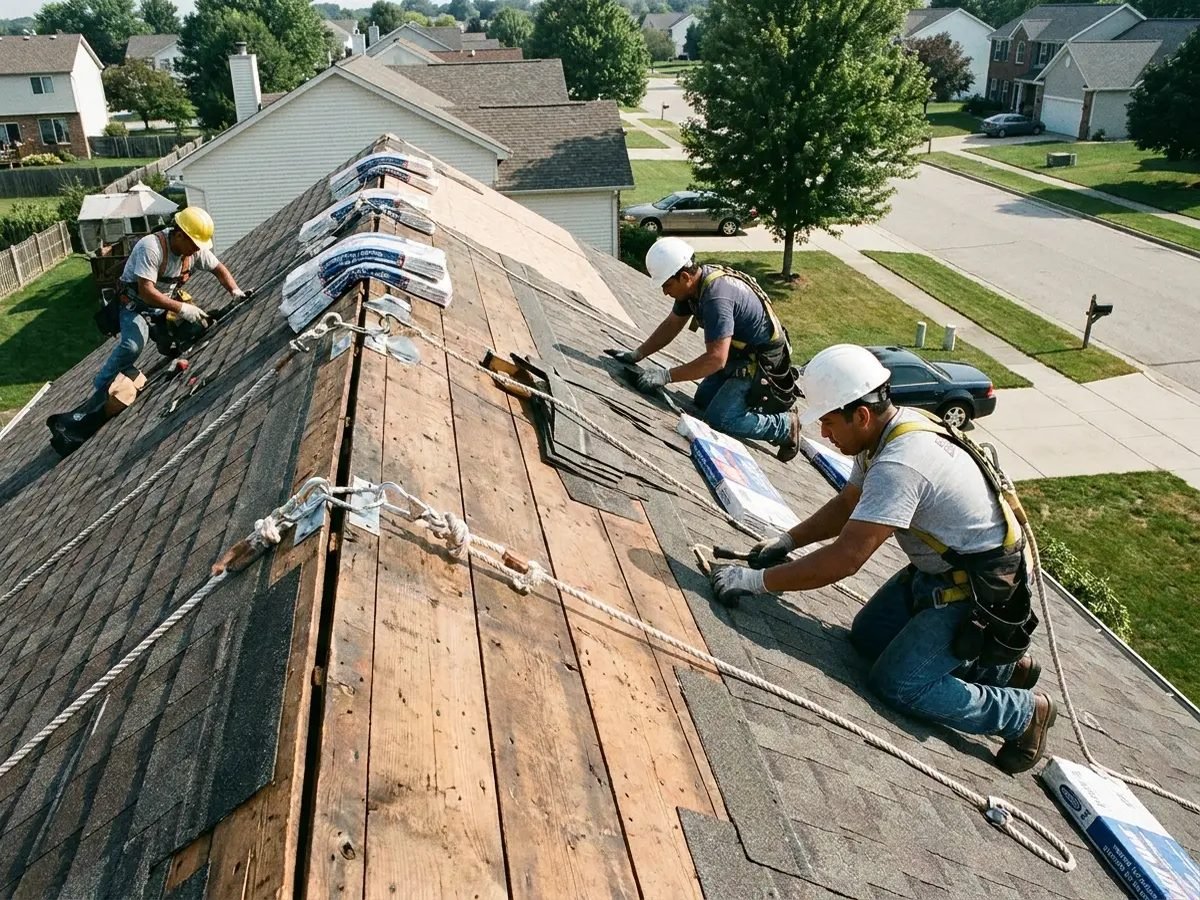
A roof leak rarely stays contained to the spot where water first appears. Left unaddressed, moisture can travel along rafters, soak insulation, and damage drywall, framing, and flooring far from the original entry point. This guide covers the most common causes of roof leaks, typical repair costs, and why responding quickly matters more with leaks than with almost any other home repair.
Common Causes of Roof Leaks
- Damaged or missing shingles — wind, hail, or age can crack, curl, or blow off shingles, exposing the underlayment and decking to water.
- Failed flashing — the metal strips sealing joints around chimneys, skylights, vent pipes, and roof valleys are one of the most common leak sources, especially as sealant ages and cracks.
- Clogged or damaged gutters — water that can’t drain properly backs up under the roof edge and works its way into the decking.
- Ice dams — in colder climates, melting snow can refreeze at the roof edge, forcing water back under shingles.
- Cracked vent boots — the rubber or plastic seal around plumbing vent pipes deteriorates over time and is a frequent, easy-to-miss leak point.
- Skylight seals — aging seals or improperly flashed skylights let water in around the frame.
- Age and wear — roofs nearing the end of their expected lifespan develop leaks simply from accumulated wear across the whole surface.
Why Acting Fast Matters
Water damage compounds quickly. A leak that starts as a small ceiling stain can, within weeks, saturate attic insulation, rot roof decking and framing, and create conditions for mold growth inside wall cavities — all of which cost far more to fix than the original leak. Water also tends to travel before it drips, following rafters or sheathing seams, so the visible stain isn’t always directly under the source of the leak, which is one more reason a fast professional inspection matters more than guessing at the cause.
In the short term, homeowners can reduce damage by placing a container under an active drip, moving furniture and belongings out of the way, and — only if it can be done safely — using a tarp to cover an exterior area that’s actively letting water in until a contractor can make a permanent repair.
Typical Roof Leak Repair Costs
| Leak Source | Typical Repair Cost |
|---|---|
| Vent boot replacement | $150–$450 |
| Flashing repair (chimney/skylight/valley) | $200–$700 |
| Shingle patch (small area) | $150–$600 |
| Leak tracing/diagnosis only | $150–$400 |
| Decking repair after water damage | $400–$1,500 |
| Interior drywall/insulation repair (leak-related) | $300–$2,000 |
| Ice dam-related repair | $500–$2,000 |
Estimates only — not a quote. These are national ranges compiled from public sources and industry data. They are not an offer of price and are not guaranteed. Your actual cost depends on your project, location, materials, permits and the contractor you choose. HomeMatchr does not set prices or perform work. See our full disclaimer.
The visible leak repair itself is often the smaller line item — the bigger cost variable is how much interior and structural damage occurred before the leak was found and fixed.
What to Expect From a Leak Repair Visit
A thorough leak repair typically starts with an inspection both on the roof and inside the attic, since the entry point and the interior damage often aren’t in the same spot. A contractor should be able to explain where the water is getting in, what’s needed to seal it, and whether any decking, insulation, or interior repair is required in addition to the roof work itself. Ask for a written estimate that separates the roof repair from any interior repair work, and confirm licensing and insurance directly before scheduling.
If the leak is related to storm damage, keep any photos and a written estimate for insurance purposes — most policies want documentation of both the cause and the scope of repair.
Finding the Source of a Leak
Locating the true source of a leak is often trickier than it sounds, since water can travel along rafters or sheathing before dripping somewhere well away from where it actually entered. A thorough inspection typically starts in the attic, looking for water trails, staining, or damp insulation, then moves to the roof exterior to check likely entry points such as flashing, vent boots, valleys, and skylights. Simple checks — looking for daylight through the attic roof deck, or feeling for damp insulation near an interior stain — can help narrow things down before a contractor arrives, but tracing and sealing the actual source is best left to a professional who can safely access the roof.
Preventing Future Roof Leaks
Once a current leak is fixed, a few routine habits go a long way toward preventing the next one. Scheduling a roof inspection at least once a year, and always after a major storm, helps catch small issues like a lifted shingle or a cracked vent boot before they let water in. Keeping gutters and downspouts clear allows water to drain properly instead of backing up under the roof edge, and trimming back branches that overhang the roof reduces debris buildup and the risk of impact damage. If a roof is approaching the end of its expected lifespan and leaks keep recurring in different spots, that’s often a sign that a full replacement is a more cost-effective long-term fix than another round of patches.
Getting Help Quickly
Because leaks get more expensive the longer they go unaddressed, it’s worth requesting quotes from independent contractors as soon as a leak is noticed rather than waiting. HomeMatchr lets homeowners submit project details once and compare no-obligation quotes from independent roofing contractors, making it easier to get a repair scheduled quickly. HomeMatchr is an advertising-supported service and may receive a referral fee when a homeowner connects with a provider.
Frequently asked questions
How much does it cost to fix a roof leak?
Most single-source leak repairs, such as a cracked vent boot or a section of failed flashing, cost between $150 and $700. Costs rise if the leak caused interior damage to drywall, insulation, or roof decking, which can add several hundred to a couple thousand dollars.
How urgent is a roof leak repair?
Very. Water damage spreads quickly through insulation, decking, and framing, and can lead to mold growth inside walls within days in humid conditions. Even a small, slow leak should be inspected and repaired as soon as possible rather than monitored over time.
Why is it hard to find where a roof leak is coming from?
Water often travels along rafters, sheathing seams, or insulation before it drips through the ceiling, so the stain inside the home isn’t always directly below the actual entry point on the roof. A combined roof and attic inspection is usually needed to trace the source accurately.
Can I temporarily stop a roof leak myself?
You can reduce damage with short-term steps like placing a container under an active drip and moving belongings out of the way. Getting on the roof to tarp or repair anything yourself carries real safety risk, so it’s best left to a professional, especially on steep or wet roofs.
Will insurance cover roof leak repair?
It depends on the cause. Leaks from a sudden event like wind or hail damage are often covered, subject to your deductible, while leaks from long-term wear, poor maintenance, or an aging roof typically are not. A written estimate and photos help support a claim either way.
Compare Roofing quotes
Enter your ZIP code to request no-obligation quotes from independent contractors.
HomeMatchr is an advertising-supported service and may receive a referral fee when you connect with a service provider.
