AC Repair: Common Problems and Costs
Compare no-obligation quotes from independent AC repair contractors.
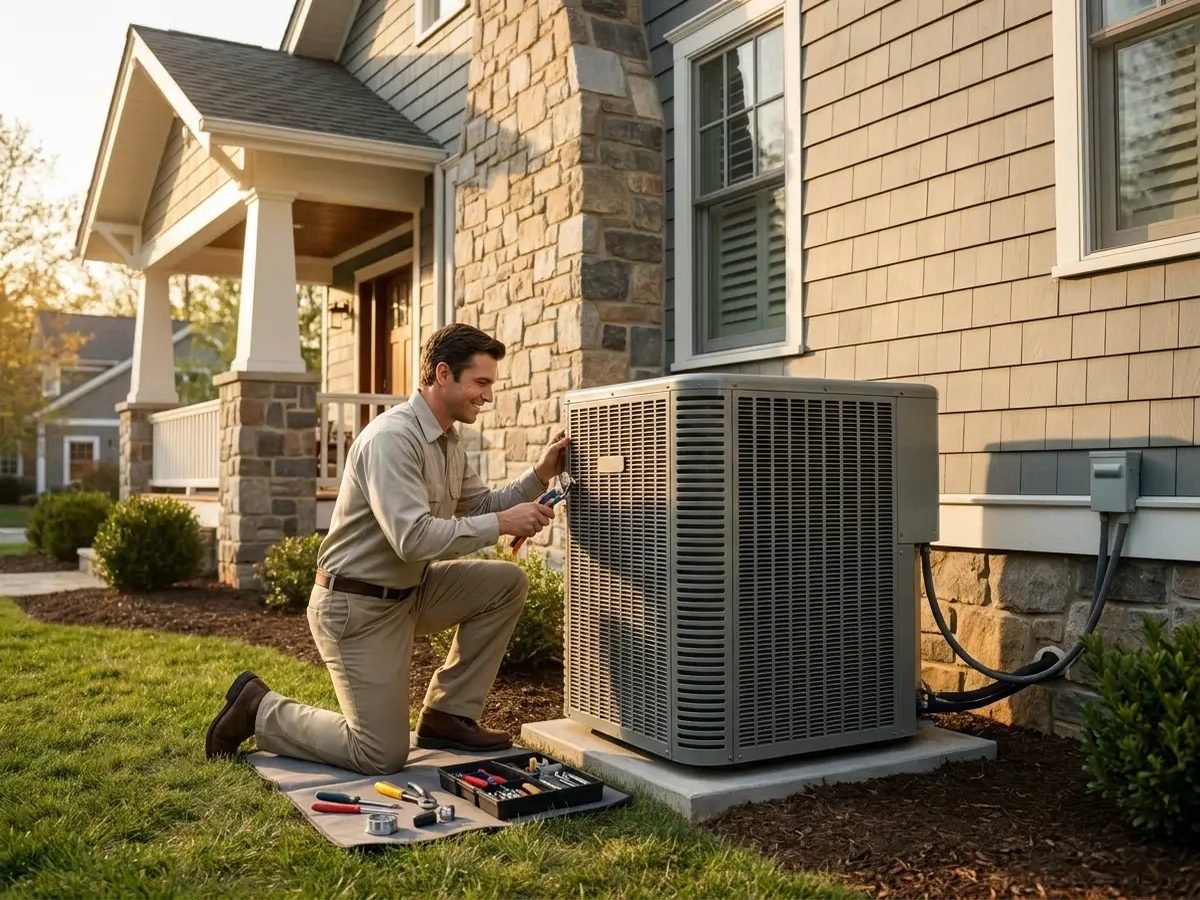
An air conditioner that stops cooling, runs constantly, or makes strange noises usually points to one of a handful of common problems. Most issues are repairable, and knowing what typically causes them — along with a general sense of repair costs — can help you evaluate a contractor’s diagnosis and decide whether repair or replacement makes more sense for your situation.
Common AC Problems
- Refrigerant leak or low refrigerant: Shows up as reduced cooling, ice forming on the indoor coil or refrigerant lines, or hissing sounds. Refrigerant doesn’t get “used up” in normal operation, so low levels almost always mean a leak somewhere in the system.
- Failed capacitor or contactor: These electrical components help start and run the compressor and fan motors. A failing capacitor often causes the outdoor unit to hum without starting, or to shut off shortly after starting.
- Dirty or frozen evaporator coil: Restricted airflow from a dirty filter or low refrigerant can cause the coil to ice over, which shuts down effective cooling until it thaws.
- Clogged condensate drain line: A blocked drain line can cause water backup, triggering a safety switch that shuts the system off, or leading to water damage near the indoor unit.
- Failing compressor: The compressor is the most expensive component in the system, and its failure is one of the strongest signals that replacement may be more cost-effective than repair.
- Thermostat or control board issues: Sometimes what looks like a major mechanical failure is actually a miscommunication between the thermostat and the system’s control board.
Typical AC Repair Costs
Repair costs vary by the specific component, system brand, and local labor rates. The ranges below are general references, not quotes for any specific job.
| Repair | Typical Cost Range |
|---|---|
| Capacitor replacement | $150 – $450 |
| Contactor replacement | $150 – $400 |
| Condensate drain line clearing | $100 – $300 |
| Refrigerant leak repair + recharge | $300 – $1,800 |
| Fan motor replacement | $300 – $700 |
| Evaporator coil replacement | $1,000 – $2,800 |
| Compressor replacement | $1,500 – $3,500+ |
Estimates only — not a quote. These are national ranges compiled from public sources and industry data. They are not an offer of price and are not guaranteed. Your actual cost depends on your project, location, materials, permits and the contractor you choose. HomeMatchr does not set prices or perform work. See our full disclaimer.
Diagnostic or trip fees, typically $75 to $200, are common and sometimes applied toward the cost of the repair if you move forward with the same contractor.
Repair vs. Replace
Deciding between repair and replacement usually comes down to the system’s age, the cost of the specific repair, and overall efficiency. A widely used rule of thumb is the “5,000 rule”: multiply the age of the system by the repair cost, and if the result exceeds roughly 5,000, replacement is often the better value. For example, a repair estimate of $600 on a 10-year-old system (600 x 10 = 6,000) would lean toward replacement, while the same repair on a 3-year-old system (600 x 3 = 1,800) would lean toward repair. Beyond the math, a few other signals point toward replacement: the system uses R-22 refrigerant, which is increasingly costly and hard to source; the compressor has failed; or the unit is already 12 to 15 years old or older, nearing the end of its typical service life.
Preventing Future Repairs
Routine maintenance meaningfully reduces the odds of an unexpected breakdown. Homeowners can handle a few basics on their own:
- Replace or clean air filters every one to three months during cooling season.
- Keep the outdoor condenser unit clear of leaves, grass clippings, and overgrown vegetation, leaving at least a couple of feet of clearance on all sides.
- Check that the condensate drain line isn’t visibly clogged or leaking.
- Schedule an annual professional tune-up, typically in spring, to catch small issues like a weakening capacitor before they cause a breakdown.
When to Call a Contractor
Call a contractor promptly if you notice reduced airflow, warm air blowing from vents, unusual noises, a burning smell, visible ice on the indoor coil or refrigerant lines, or water pooling near the indoor unit. Running a system with a suspected refrigerant leak or electrical fault for an extended period can turn a moderate repair into a more expensive one, so addressing symptoms early tends to keep the total repair bill lower.
What to Expect From a Repair Visit
A typical repair call starts with a diagnostic step: the contractor checks refrigerant pressure, electrical components, airflow, and the condensate drain to isolate the cause. Once the problem is identified, the contractor should explain the finding, walk through the repair options, and provide a written estimate before starting the work, rather than simply proceeding and billing afterward. For a compressor or refrigerant-related repair, it’s reasonable to ask how the estimate compares to the cost of replacing the whole system, since a second opinion or an estimate for full replacement can be a useful reference point when the repair figure is large. Ask whether parts are in stock or need to be ordered, since availability can affect how quickly the system is back up and running, particularly during peak summer demand.
Getting Repair Quotes
Because repair pricing depends on the specific diagnosis, the most accurate way to know what a repair will cost is to have a contractor inspect the system directly. HomeMatchr helps you request quotes from independent contractors for AC repair, so you can compare no-obligation quotes and get a second opinion before authorizing a repair.
Frequently asked questions
Why is my air conditioner blowing warm air?
Common causes include a dirty air filter restricting airflow, low refrigerant from a leak, a failed capacitor or contactor, or a frozen evaporator coil. A contractor can diagnose the specific cause, since several different problems can produce the same symptom.
How much does it cost to fix an AC that won't turn on?
It depends on the cause. A failed capacitor or contactor, among the most common reasons a unit won’t start, typically costs $150 to $450 to replace. Electrical or control board issues can run higher. A diagnostic visit from a contractor will identify the specific problem.
Is it worth repairing an old air conditioner?
It depends on the system’s age and the specific repair cost. A common guideline multiplies the unit’s age by the repair estimate — if that number is above roughly 5,000, replacement is often the better value. Systems older than 12 to 15 years, or those needing a compressor replacement, often make more sense to replace.
How often should I get my AC serviced to avoid repairs?
Most contractors recommend an annual tune-up, typically scheduled in spring before cooling season, along with regular filter changes every one to three months. Routine maintenance helps catch small issues before they turn into a breakdown.
How do I get a repair quote for my AC?
HomeMatchr lets you describe the problem you’re experiencing and request quotes from independent contractors. You can compare no-obligation quotes before authorizing any repair work.
Compare Air Conditioning quotes
Enter your ZIP code to request no-obligation quotes from independent contractors.
HomeMatchr is an advertising-supported service and may receive a referral fee when you connect with a service provider.
