Whole-Home Backup Power Guide
How whole-home and partial battery backup differ, how systems are sized, and what each typically costs.
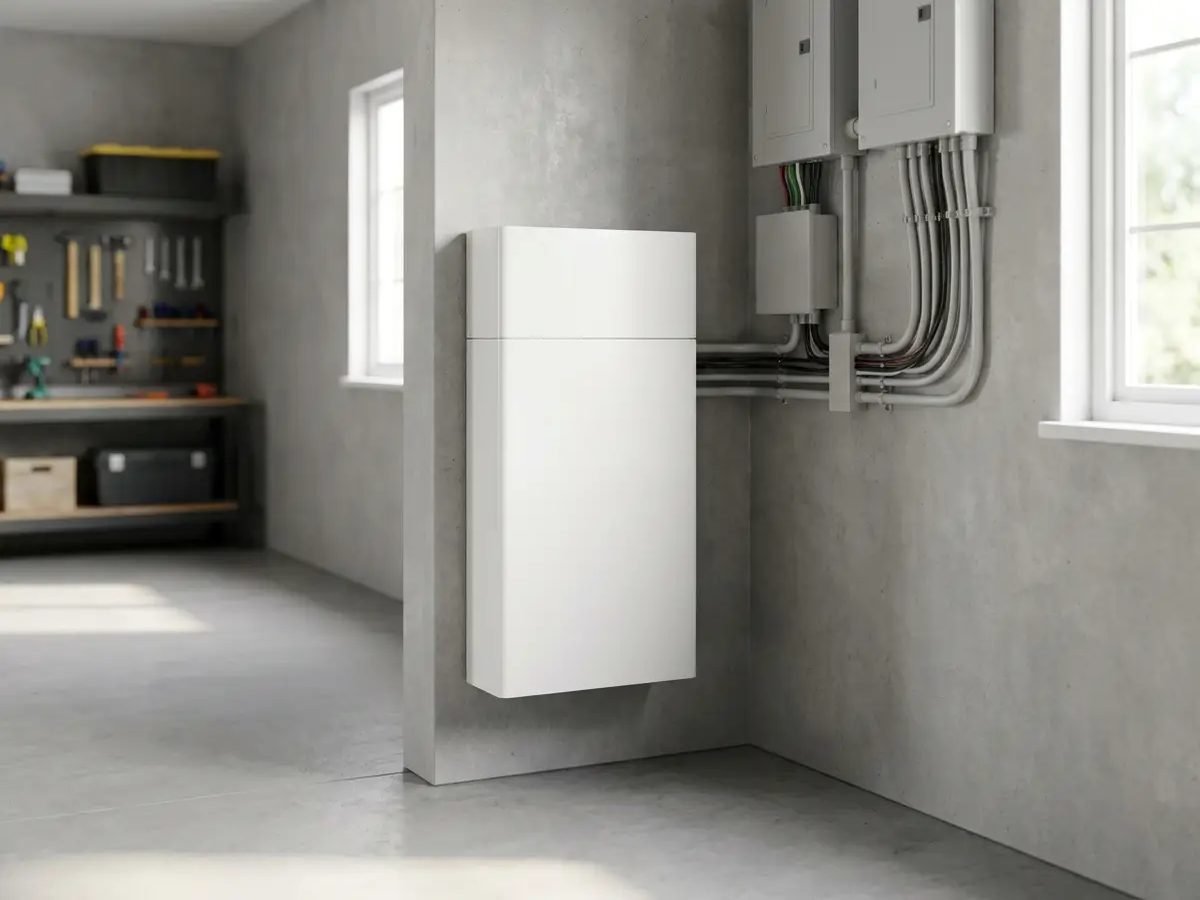
What “Whole-Home Backup” Means
Whole-home backup refers to a battery system sized to power every circuit in a house during a grid outage, including central air conditioning or heat, electric water heaters, well pumps, and other high-draw appliances. This is different from partial, or “essential circuits,” backup, which powers a selected subset of the home — typically refrigeration, some lighting, a few outlets, and a well pump or sump pump if applicable.
Whole-Home vs. Partial Backup
The choice between whole-home and partial backup mainly comes down to budget, how long outages typically last in the area, and which appliances a household considers essential.
- Partial backup uses a smaller battery, often a single 5–13 kWh unit, wired to a dedicated backup subpanel with a limited number of circuits. It’s generally the lower-cost option and can still cover refrigeration, lighting, and a home office or medical equipment.
- Whole-home backup requires enough stored energy (kWh) and enough continuous and surge power (kW) to run large loads like central HVAC, electric ranges, and well pumps, sometimes for multiple days. This typically means two or more stacked battery units, or a battery combined with a backup generator.
Sizing a Whole-Home Battery System
Contractors size a whole-home system using a load calculation that looks at a home’s total connected electrical load, the surge (startup) power needed for equipment like air conditioners and well pumps, and how many hours of backup a household wants without utility power or solar recharging. A typical mid-size home with central air conditioning may need 20–40 kWh of usable storage for a full day of whole-home backup, while a smaller home focused on essential circuits might only need 10–13 kWh. See the home battery cost guide for pricing by system size.
Because whole-home loads can spike briefly when large appliances start up, the inverter’s continuous and peak kW ratings matter as much as total kWh capacity. A system with enough stored energy but an undersized inverter may still fail to start certain appliances.
Cost Comparison: Whole-Home vs. Partial
| Backup Type | Typical Capacity | Typical Installed Cost |
|---|---|---|
| Partial (essential circuits) | 5 – 13 kWh | $6,000 – $18,000 |
| Whole-home (multi-unit) | 20 – 40+ kWh | $25,000 – $45,000+ |
Estimates only — not a quote. These are national ranges compiled from public sources and industry data. They are not an offer of price and are not guaranteed. Your actual cost depends on your project, location, materials, permits and the contractor you choose. HomeMatchr does not set prices or perform work. See our full disclaimer.
Pairing a battery system with solar panels can help recharge the battery during daylight hours instead of relying solely on the grid, though adding solar has its own separate installation cost.
Other Ways Homes Handle Backup Power
Some households combine a smaller battery with a portable or standby generator, using the battery for quiet, instant backup of essential circuits and the generator for extended outages or larger loads. Standby generators typically run on natural gas or propane and start automatically, but they require fuel and generally cannot power a home as quietly or cleanly as a battery. A contractor can walk through the tradeoffs between an all-battery system, a generator-only system, or a hybrid setup based on a home’s outage history and budget.
What Actually Runs During Each Type of Outage
With true whole-home backup, appliances behave exactly as they would on a normal day: central heating and cooling, the dishwasher and washing machine, an electric range or oven, garage door openers, and every outlet in the house. With partial backup, homeowners typically manage usage manually, running fewer appliances at once so the smaller battery isn’t overloaded. Because high-draw appliances like electric ranges, dryers, and air conditioning compressors can draw down even a larger battery quickly if several run together, some whole-home installations include smart load management that staggers big appliances automatically during an outage rather than relying on the household to manage it.
Permitting and Utility Interconnection
Whole-home battery systems typically involve more electrical work than a small partial-backup unit, which usually means a more involved permitting and inspection process. Many utilities require an interconnection application and approval before a battery system, especially one paired with solar, can be placed in service, and inspection timelines vary by jurisdiction. Because whole-home systems often need a larger or upgraded inverter and sometimes a service panel upgrade, it’s worth asking a contractor upfront how they typically handle permitting, how long approval has taken on recent projects in the area, and who is responsible for scheduling inspections.
How to Decide and Get Quotes
Deciding between whole-home and partial backup starts with a clear list of which circuits and appliances actually need to stay powered during an outage, and how long outages typically last in the area. From there, a licensed electrical or solar contractor can run a load calculation and recommend a system size. Because whole-home systems involve significantly more equipment and labor than partial systems, getting more than one estimate is especially useful for this type of project.
HomeMatchr allows homeowners to describe their backup power goals and compare no-obligation quotes from independent contractors, making it easier to weigh whole-home and partial options side by side. HomeMatchr is an advertising-supported service and may receive a referral fee when you connect with a provider.
Frequently asked questions
What's the difference between whole-home and partial battery backup?
Whole-home backup powers every circuit in a house during an outage, including large appliances, while partial backup powers a selected set of essential circuits like refrigeration and lighting through a dedicated subpanel.
How much battery capacity do I need for whole-home backup?
Most whole-home systems need roughly 20–40 kWh of usable storage, often split across two or more units, depending on the home’s size and appliances. A contractor’s load calculation gives an exact figure.
Can a battery run central air conditioning during an outage?
It can, but the inverter needs enough continuous and surge power to handle the compressor’s startup draw, and there needs to be enough stored capacity to keep it running for the desired backup duration.
Is whole-home backup more expensive than partial backup?
Yes. Whole-home systems typically cost more because they require more battery capacity, a larger inverter, and sometimes additional electrical panel work compared to a smaller partial-backup system.
Can I combine a battery with a generator for whole-home backup?
Yes. Some households pair a battery for instant, quiet backup with a standby generator for extended outages or larger loads, rather than sizing a battery system alone to cover every scenario.
Compare Home Battery quotes
Enter your ZIP code to request no-obligation quotes from independent contractors.
HomeMatchr is an advertising-supported service and may receive a referral fee when you connect with a service provider.
