Home Battery Cost Guide
Real installed pricing per kWh and by system size, plus how the federal tax credit applies.
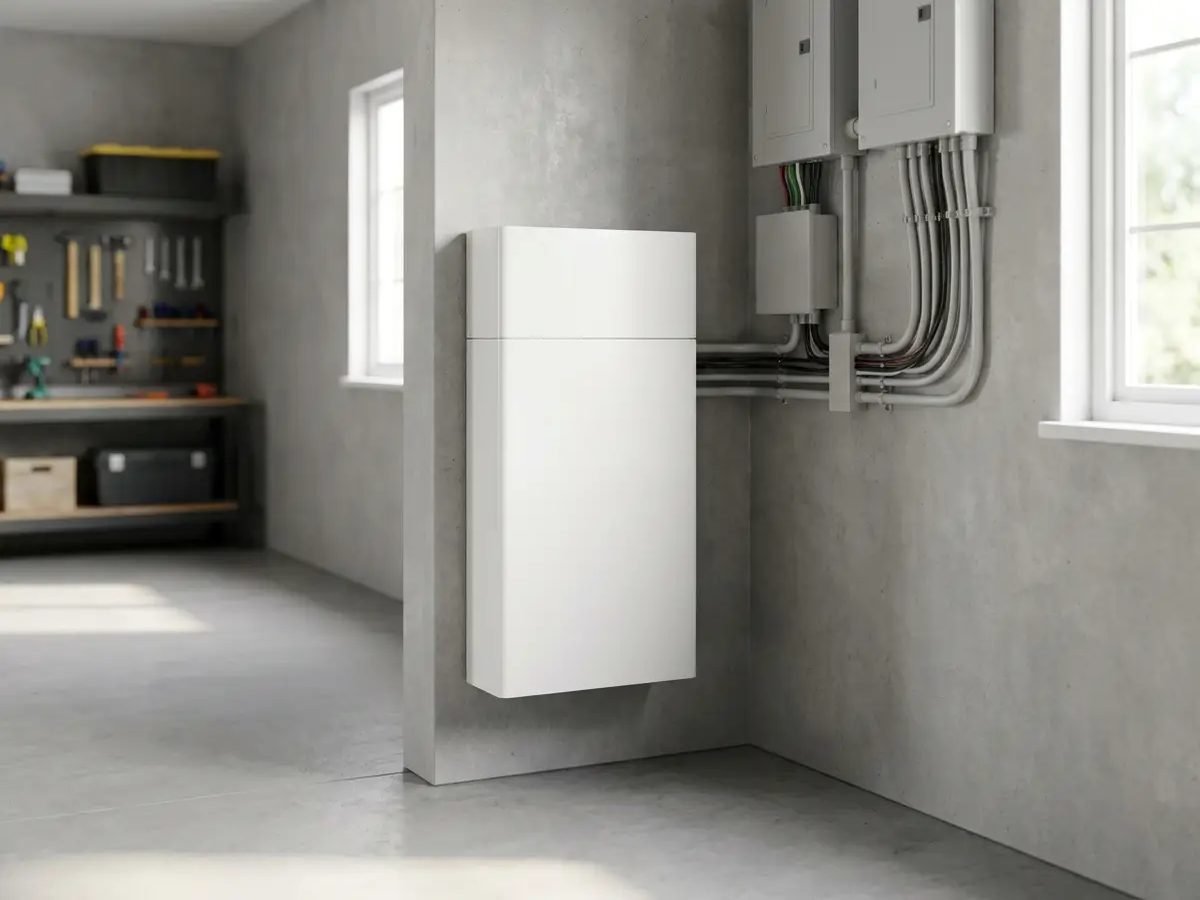
How Home Battery Pricing Works
Home battery cost is usually broken down two ways: price per kilowatt-hour (kWh) of storage capacity, and total installed system cost. Pricing per kWh gives a rough way to compare different battery sizes and brands, while the total installed cost reflects everything a homeowner actually pays, including the battery unit, inverter, wiring, a backup subpanel if needed, permitting, and labor.
Nationally, installed home battery costs generally range from about $800 to $1,500 per kWh. A single residential battery typically stores between 5 kWh and 16 kWh, so most single-unit systems land somewhere between $6,000 and $20,000 installed, before any tax credit.
Installed Cost by System Size
| System Size | Typical Installed Cost |
|---|---|
| 5 kWh | $6,000 – $9,000 |
| 10 kWh | $10,000 – $16,000 |
| 13 – 16 kWh | $13,000 – $20,000 |
| 20+ kWh (multiple units) | $20,000 – $30,000+ |
Estimates only — not a quote. These are national ranges compiled from public sources and industry data. They are not an offer of price and are not guaranteed. Your actual cost depends on your project, location, materials, permits and the contractor you choose. HomeMatchr does not set prices or perform work. See our full disclaimer.
These are general national ranges. Local labor rates, permitting fees, and the specific brand and model chosen will move the final number up or down. A full whole-home system with several stacked units can run higher; see the whole-home backup guide for that comparison.
What Drives the Price Up or Down
- Battery capacity and power rating. More stored kWh and a higher continuous power output (kW) both add to equipment cost.
- Number of units. Many whole-home backup projects use two or more stacked batteries, which multiplies the base hardware cost.
- Inverter type. A hybrid inverter that manages both solar and battery can cost more upfront than a standalone battery inverter, but may simplify a combined solar-plus-storage install.
- Electrical panel work. Homes with older or full panels sometimes need a panel upgrade or a dedicated backup subpanel.
- Site accessibility. Distance between the battery location and the main panel, and whether work is indoors or outdoors, affects labor hours.
- Permitting and utility interconnection. Requirements and fees vary significantly by city, county, and utility provider.
The Federal Tax Credit
Home batteries with a capacity of at least 3 kWh generally be eligible for the federal Residential Clean Energy Credit, which currently allows homeowners to claim 30% of the total project cost, including equipment and labor, on their federal taxes. This credit applies to batteries installed with solar panels and, under current rules, to batteries installed on their own — see the home battery without solar guide for details. On a $15,000 installed system, a 30% credit would reduce the net federal tax liability by $4,500, though every household’s tax situation is different. A tax professional can confirm how the credit applies to a specific filing year and household.
Some states and utilities offer additional rebates or incentives for battery storage, particularly in areas prone to grid outages or with time-of-use electricity rates. These programs change often and vary by location, so it’s worth checking current state and utility program details before budgeting a project.
Ways Homeowners Plan for the Cost
Beyond the tax credit, homeowners commonly plan for the upfront cost of a home battery through manufacturer or installer financing plans, phased installation (starting with one battery and adding a second unit later on modular systems), or by combining the battery purchase with a planned solar installation to share some labor and permitting costs. Comparing multiple contractor quotes also makes it easier to see which brands and financing options are available for a given budget and how each affects the total price.
Ongoing Costs After Installation
Compared to a fuel-powered generator, a home battery has very low ongoing costs. There’s no oil to change, no fuel to store or replace, and most maintenance happens remotely through a smartphone app that tracks charge level and flags error codes. Some installers offer optional monitoring plans or extended workmanship coverage for the wiring and inverter, separate from the manufacturer’s product warranty, and it’s worth asking what’s included versus billed separately. An occasional professional check, particularly after severe weather, helps confirm the inverter, wiring, and any solar connection are working correctly.
Regional Cost Differences
Installed pricing for the same battery model can differ by thousands of dollars from one region to another. Labor rates, the cost and speed of local permitting, and utility interconnection requirements all vary by state, county, and even city. Homes in areas with more complex permitting processes or higher licensed-electrician labor rates typically see higher installed costs for an identical system than homes in areas with simpler permitting. This regional variation is one reason a national average is only a starting point and a site-specific quote is needed for an accurate number.
Getting an Accurate Price for Your Home
Published cost ranges are a starting point, not a quote. The real price for a specific home depends on the home’s electrical panel, how much backup capacity is wanted, mounting location, and local permitting requirements. A contractor typically needs to review the home’s electrical setup and ask about backup goals — whole-home versus a handful of critical circuits — before providing an accurate number.
HomeMatchr lets homeowners describe their project and compare no-obligation quotes from independent contractors, which makes it easier to see how battery brand, system size, and installation scope affect the final price across multiple estimates. HomeMatchr is an advertising-supported service and may receive a referral fee when you connect with a provider.
Frequently asked questions
How much does a home battery cost per kWh?
Installed home battery costs generally run $800 to $1,500 per kWh of storage, including the battery hardware, inverter, wiring, permitting, and labor.
Does the 30% tax credit apply to batteries without solar?
In many cases, yes. Under current federal rules, a home battery with at least 3 kWh of capacity can be eligible for the 30% Residential Clean Energy Credit whether or not it’s paired with solar panels.
What's included in the installed cost of a home battery?
Installed cost typically covers the battery unit, inverter, wiring, any backup subpanel needed, permitting fees, and labor. It does not include ongoing maintenance, which is minimal for most lithium battery systems.
Can I finance a home battery?
Many installers and manufacturers offer financing plans, and some homeowners use a home equity loan or line of credit. Financing terms and how the tax credit is applied vary by lender.
Why do quotes for the same battery size vary between contractors?
Labor rates, permitting fees, panel work, and the specific equipment brand all vary by contractor and location, which is why comparing multiple quotes for the same project scope is useful.
About tax credits, rebates and incentives. Program rules, amounts and deadlines change and depend on your own eligibility, income and installation year. Nothing here is tax, legal or financial advice, and no credit or rebate is guaranteed. Confirm current rules with a qualified tax professional or the official program before you rely on them.
Compare Home Battery quotes
Enter your ZIP code to request no-obligation quotes from independent contractors.
HomeMatchr is an advertising-supported service and may receive a referral fee when you connect with a service provider.
