Air-Source Heat Pumps Explained
How air-source heat pumps work, efficiency ratings to compare, and cold-climate performance.
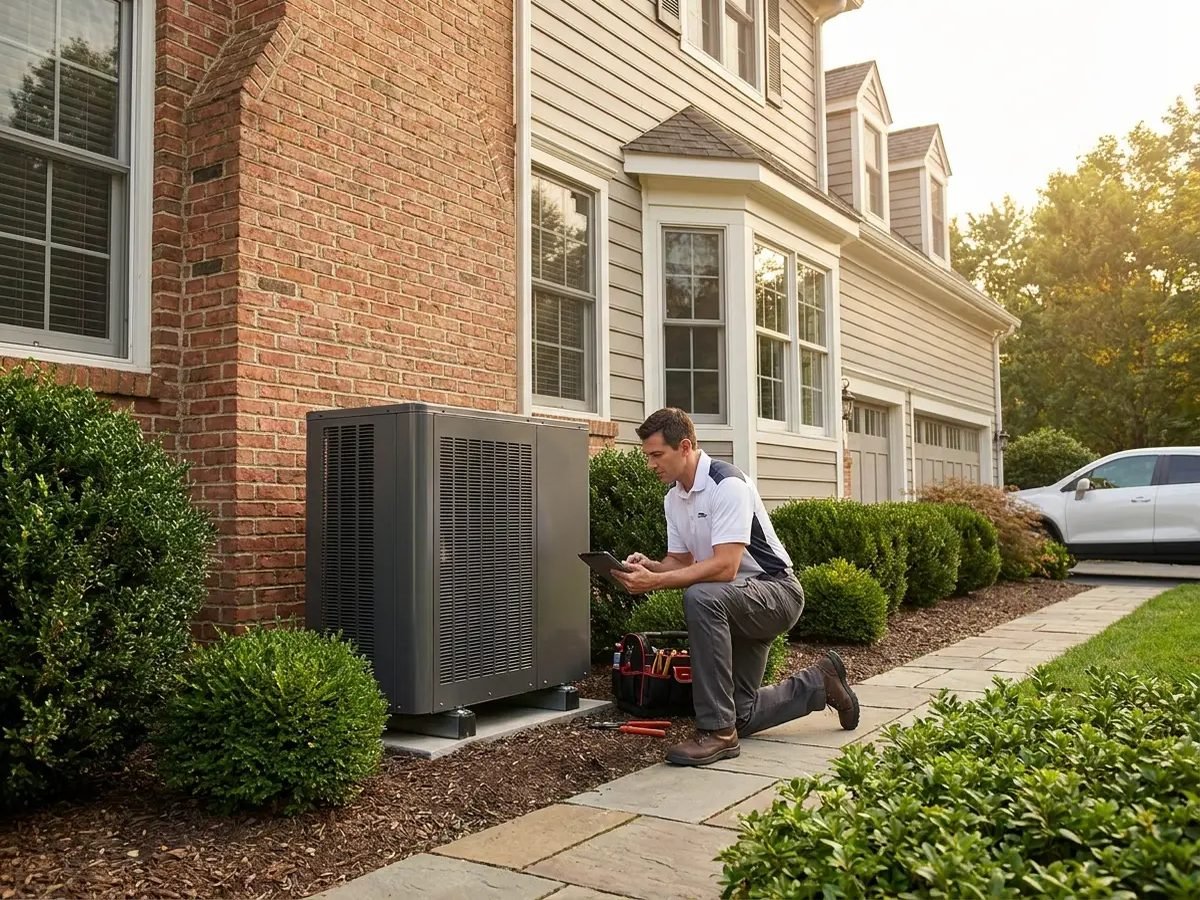
Air-source heat pumps are the most common type installed in U.S. homes because they don’t require the excavation a geothermal system needs, and they can often use a home’s existing ductwork. This page explains how air-source systems work, the efficiency ratings to compare, how cold-climate models differ from standard units, and typical installed costs.
How Air-Source Heat Pumps Work
An air-source heat pump has an outdoor unit and an indoor coil connected by refrigerant lines. In heating mode, the outdoor unit extracts heat from the outside air — even when it’s cold — compresses the refrigerant to raise its temperature, and moves that heat indoors through the coil and, in a ducted system, the existing duct system. In cooling mode, a reversing valve flips the cycle so the system pulls heat out of the house, functioning like a standard central air conditioner. Because the equipment simply relocates heat rather than generating it through combustion, it can move more heat energy than the electrical energy it consumes.
Efficiency Ratings to Compare
- SEER2 measures cooling efficiency; higher numbers mean less electricity used per unit of cooling.
- HSPF2 measures heating efficiency over a full season; higher numbers indicate better heating performance per unit of electricity.
- COP (coefficient of performance) shows how much heat output a unit delivers compared with the electrical energy it consumes at a specific outdoor temperature — useful for comparing cold-weather performance between models.
- ENERGY STAR certification indicates a unit meets a recognized federal efficiency standard for the category.
Cold-Climate Air-Source Heat Pumps
Standard air-source heat pumps lose heating capacity as outdoor temperatures drop, which historically meant relying on electric resistance backup heat in cold regions. Cold-climate air-source models use variable-speed, inverter-driven compressors that ramp output up and down to match the home’s heating load, allowing them to maintain a much larger share of their rated capacity at low outdoor temperatures. Many current cold-climate units are designed to keep delivering usable heat well into single-digit and sub-zero conditions, though a contractor should still confirm the unit’s performance data against your region’s design temperature and whether backup heat is recommended.
Ducted vs. Ductless Air-Source Systems
A ducted air-source heat pump connects to a home’s central duct system and typically replaces a furnace-and-AC combination with one unit. A ductless mini-split instead uses one or more wall- or ceiling-mounted indoor air handlers wired to an outdoor compressor, with no ductwork required. Ductless systems work well for additions, homes that never had ducts, or converting individual rooms, while ducted systems are usually the more practical choice for whole-home replacements where ductwork already exists.
Air-Source Heat Pump Cost
| System Type | Installed Cost Range |
|---|---|
| Ducted, standard efficiency (2–3 ton) | $4,500 – $9,000 |
| Ducted, standard efficiency (4–5 ton) | $6,500 – $12,000 |
| Ducted, cold-climate / high efficiency | $7,000 – $18,000 |
| Ductless mini-split, single zone | $2,000 – $4,500 |
| Ductless mini-split, multi-zone | $6,000 – $14,000 |
Estimates only — not a quote. These are national ranges compiled from public sources and industry data. They are not an offer of price and are not guaranteed. Your actual cost depends on your project, location, materials, permits and the contractor you choose. HomeMatchr does not set prices or perform work. See our full disclaimer.
Pros and Cons of Air-Source Heat Pumps
- Pros: lower installed cost than geothermal, can use existing ductwork, provides both heating and cooling from one system, cold-climate models now perform well in most U.S. regions.
- Cons: heating capacity and efficiency decline somewhat as outdoor temperatures fall, extremely cold regions may still want backup heat, outdoor unit requires placement with adequate clearance and airflow.
Installation Timeline and Process
A straightforward replacement of an existing furnace and air conditioner with a ducted air-source heat pump commonly takes one to two days once the equipment is on site, assuming the ductwork and electrical service don’t need major changes. Adding a ductless multi-zone system can take longer, since each indoor unit needs its own mounting location, refrigerant line set, and condensate drain. Before installation day, a contractor typically schedules a site visit to perform the load calculation, inspect the electrical panel and existing ductwork, and confirm where the outdoor unit will sit, followed by permitting where required by the local jurisdiction.
Maintenance Requirements
Air-source heat pumps run for both heating and cooling, so they accumulate more annual operating hours than a furnace that only runs part of the year. Routine maintenance — an annual professional inspection, coil cleaning, refrigerant level check, and regular filter changes — helps the system maintain its rated efficiency and reach the upper end of its expected lifespan. Homeowners should also keep the outdoor unit clear of leaves, snow, and debris, and confirm there’s adequate airflow clearance on all sides.
Choosing a Contractor
Ask any contractor you’re considering to walk through the SEER2, HSPF2, and cold-weather COP ratings of the models they’re proposing, and to explain how they arrived at the system size for your home. Confirm the contractor is licensed and insured in your state, request the scope of work and equipment model numbers in writing, and compare more than one quote before deciding. HomeMatchr lets you request no-obligation quotes from independent contractors so you can compare options side by side. HomeMatchr is an advertising-supported service and may receive a referral fee when you connect with a provider.
Frequently asked questions
What is the difference between an air-source and a geothermal heat pump?
An air-source heat pump exchanges heat with the outside air through an outdoor unit, while a geothermal heat pump exchanges heat with the ground or a water source through buried loops. Air-source systems generally cost less to install; geothermal systems tend to run more efficiently but cost more upfront.
Do air-source heat pumps work well in cold climates?
Cold-climate air-source models use variable-speed compressors designed to maintain a large share of their heating capacity at low outdoor temperatures, and many perform well into single-digit and sub-zero weather. In especially cold regions, some homeowners still pair the heat pump with backup heat for the coldest days.
What do SEER2 and HSPF2 ratings mean?
SEER2 measures how efficiently a unit cools a home over a cooling season, and HSPF2 measures how efficiently it heats a home over a heating season. Higher numbers on both ratings generally mean lower electricity use for the same output.
Can an air-source heat pump replace both my furnace and air conditioner?
Yes, a properly sized ducted air-source heat pump can typically replace both a furnace and central air conditioner, since it provides both heating and cooling from a single outdoor unit and indoor coil.
How long does an air-source heat pump last?
Most air-source heat pumps last 15 to 20 years with regular maintenance, including annual coil cleaning and refrigerant checks. Coastal or salt-air environments can shorten the lifespan of the outdoor unit without extra corrosion protection.
Compare Heat Pumps quotes
Enter your ZIP code to request no-obligation quotes from independent contractors.
HomeMatchr is an advertising-supported service and may receive a referral fee when you connect with a service provider.
