How to Choose an EV Charger
Hardwired vs. plug-in, amperage, smart features, and connector type explained before you buy a home charger.
Start With How You Actually Drive
Before comparing specific charger models, it helps to think through your daily driving distance, how many hours your car sits parked overnight, and whether you might add a second EV to the household down the road. A driver with a short commute who plugs in every night rarely needs the fastest, highest-amperage charger on the market, while a household with a longer commute, a shared vehicle, or plans for a second EV may get real value from a faster unit. This context makes the rest of the decision, amperage, connector type, and features, much easier to work through.
Hardwired vs. Plug-In
Home chargers install one of two ways. A hardwired connection wires the unit directly into a dedicated circuit with no outlet in between, which many electricians view as slightly more durable for years of daily, heavy use since there’s no plug connection to wear out. A plug-in setup instead installs a heavy-duty outlet, most commonly a NEMA 14-50, and the charger plugs into it like a large appliance. Plug-in setups add flexibility, since you can unplug the charger to swap brands later or occasionally use the outlet for something else, like an RV. Installed cost is generally similar between the two approaches, so this decision often comes down to whether you value that future flexibility or a slightly more permanent connection.
Choosing the Right Amperage
Charger amperage determines how much power can flow to your vehicle, and it typically ranges from 16 amps up to 48 or even 80 amps for high-end units. A higher-amperage charger charges faster, but only up to the limit of what your specific vehicle’s onboard charger can accept, so pairing an 80-amp charger with a vehicle that maxes out at 32 amps doesn’t add any real-world benefit. It’s also worth checking with an electrician whether your home’s panel has enough spare capacity to support a higher-amperage circuit before you fall in love with a specific high-end model, since that can end up driving the amperage decision for you.
Smart Features Worth Considering
Many modern chargers include Wi-Fi connectivity and a companion app that lets you schedule charging sessions, track energy use, and start or stop charging remotely. Scheduling is particularly useful if your utility charges different rates by time of day, since you can set the charger to only run during cheaper overnight hours. Some units also support load management, automatically reducing charging amperage if your home’s overall electrical demand spikes, which can help avoid tripping a breaker in homes running close to their panel’s limit. These features add convenience but aren’t strictly necessary, so weigh them against any added cost for the specific model you’re considering.
Connector Type: NACS vs. J1772
Connector type matters because it determines which vehicles can physically plug into your charger without an adapter. J1772 has historically been the standard connector used by most non-Tesla EVs sold in North America, while NACS, the connector originally developed by Tesla, is increasingly being adopted by other automakers for their newer models. If you drive a Tesla, a NACS charger is the natural fit. If you drive a different EV brand, check whether that manufacturer has already transitioned to NACS or still uses J1772, and confirm whether your chosen charger includes or supports the adapter you’d need either way. Read more about connector compatibility in our Tesla Wall Connector installation guide.
Comparing Options Before You Decide
| Factor | What to Consider |
|---|---|
| Hardwired vs. plug-in | Durability preference vs. future flexibility |
| Amperage | Match to your vehicle’s onboard charger and panel capacity |
| Smart features | Scheduling, app monitoring, load management |
| Connector type | NACS vs. J1772 compatibility with your vehicle |
Estimates only — not a quote. These are national ranges compiled from public sources and industry data. They are not an offer of price and are not guaranteed. Your actual cost depends on your project, location, materials, permits and the contractor you choose. HomeMatchr does not set prices or perform work. See our full disclaimer.
Where to Mount the Charger
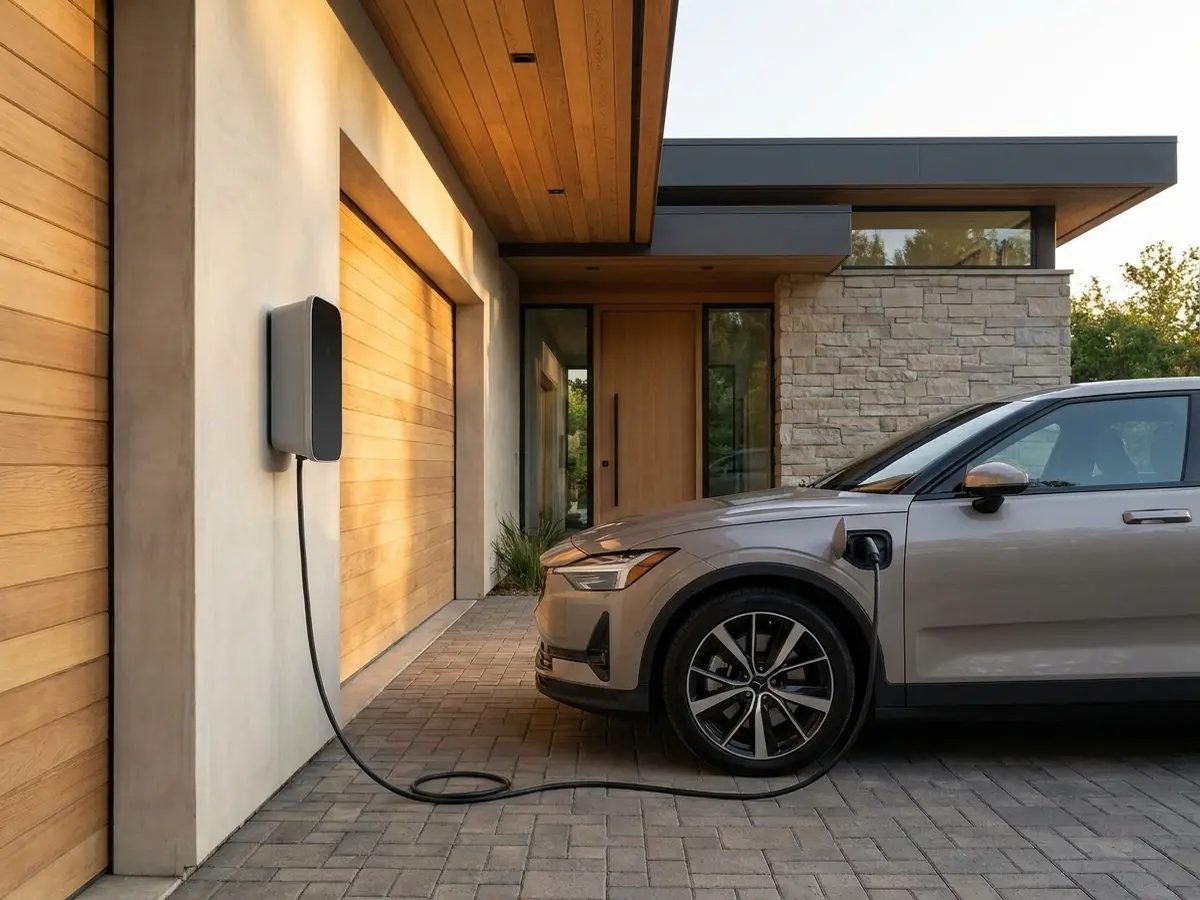
Charger placement affects both convenience and cost. Mounting the unit close to where you actually park, whether that’s a garage wall or an exterior wall near the driveway, keeps the charging cable within comfortable reach every time you plug in. It’s also worth considering the length of cable included with the charger, since a mounting spot too far from where the car’s charging port sits can leave the cord stretched or make it awkward to reach on certain vehicles. From a cost standpoint, a location close to your electrical panel is generally cheaper to wire than one on the far side of the house or in a detached garage, so balancing daily convenience against wiring distance is worth a few minutes of thought before installation day.
Getting the Right Installation for Your Choice
Once you’ve settled on a charger, the installation itself should be handled by a licensed, insured electrician who will assess your panel’s spare capacity, size the circuit correctly for your chosen charger’s amperage, and pull the required permit for the work. Confirm licensing and insurance before hiring anyone, and get a written quote that separates hardware, labor, and any panel work so you can compare it clearly against other estimates. HomeMatchr can connect you with no-obligation quotes from independent electricians in your area, so you can compare pricing and installation approaches before making a final decision.
Frequently asked questions
Should I choose a hardwired or plug-in EV charger?
Both are reliable options. A hardwired connection is often considered slightly more durable for daily use, while a plug-in NEMA 14-50 setup offers more flexibility to swap chargers later. Cost is generally similar between the two.
What amperage EV charger should I buy?
It depends on your vehicle’s onboard charging capacity and your home’s panel capacity. A higher-amperage charger only charges faster up to the limit your specific vehicle can accept, so check your vehicle’s specs before choosing a high-end model.
Do I need a smart charger with Wi-Fi and an app?
It’s optional. Smart features like scheduling and load management add convenience, especially if your utility has time-of-day rates, but a basic charger without connectivity still charges your vehicle reliably.
What's the difference between NACS and J1772 connectors?
NACS is the connector originally developed by Tesla and increasingly adopted by other automakers, while J1772 has historically been the standard for most non-Tesla EVs in North America. Choose based on your vehicle, or confirm adapter compatibility.
How do I get the right charger installed correctly?
Hire a licensed, insured electrician who can assess your panel’s capacity, size the circuit to your charger, and pull the required permit. HomeMatchr can match you with no-obligation quotes from independent electricians in your area.
Compare EV Charger quotes
Enter your ZIP code to request no-obligation quotes from independent contractors.
HomeMatchr is an advertising-supported service and may receive a referral fee when you connect with a service provider.
