Level 2 Home Charger Guide
How 240V home charging works, from amperage and charging speed to what installation involves.
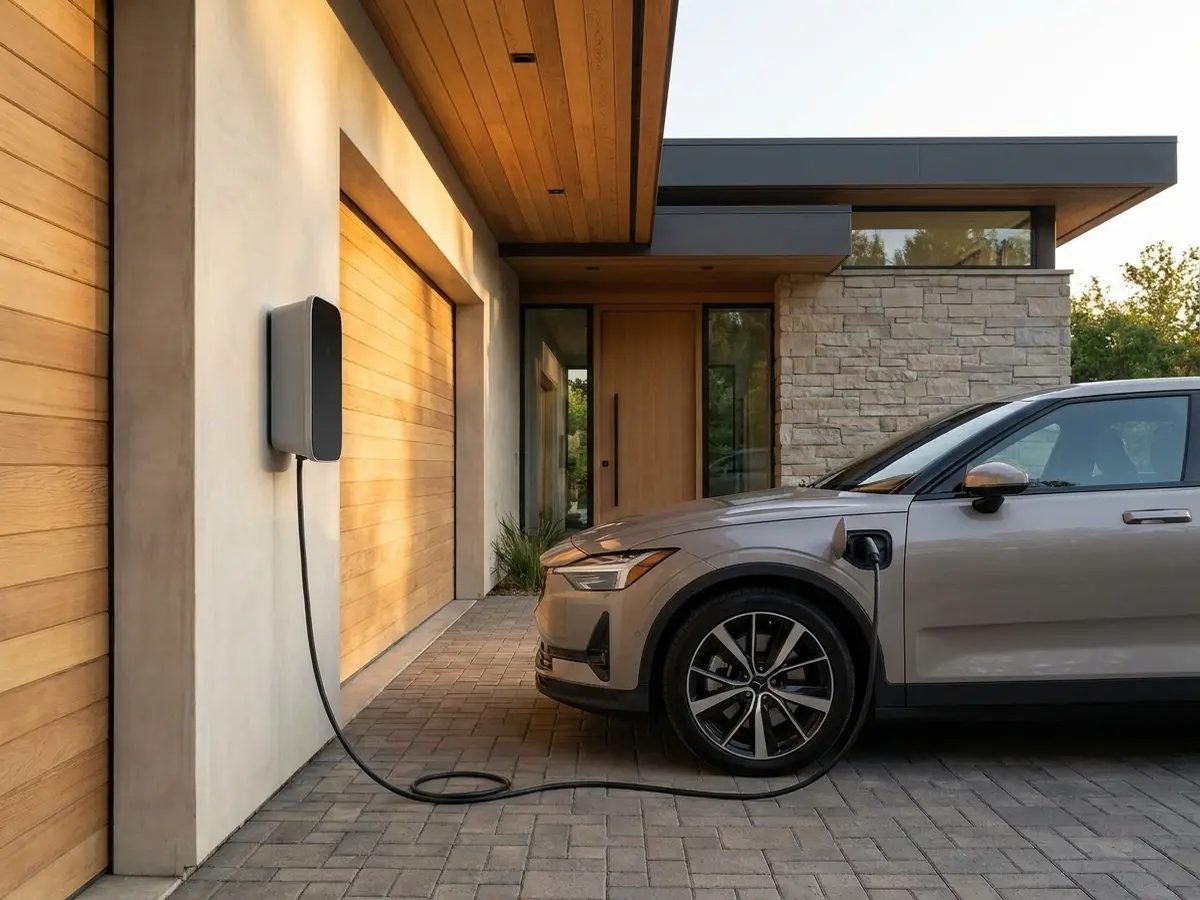
What Makes a Charger Level 2
A Level 2 charger runs on a 240-volt circuit, the same voltage used by an electric clothes dryer or range, rather than the standard 120-volt outlet found throughout most homes. That higher voltage is what allows a Level 2 charger to deliver power to a vehicle much faster than the Level 1 cable that typically comes in the trunk. Because it draws on a dedicated high-amperage circuit, a Level 2 charger generally needs to be installed by a licensed electrician, unlike Level 1 charging, which usually just plugs into an existing outlet.
Understanding Amperage
Level 2 chargers are sold in a range of amperage ratings, commonly anywhere from 16 amps up to 48 or even 80 amps for higher-end units. The charger’s amperage, combined with your vehicle’s onboard charger capacity, determines how quickly your car actually charges; a higher-amperage charger can’t charge faster than your vehicle is able to accept. Your electrician will size the circuit, wire gauge, and breaker specifically for the amperage of the charger you choose, and will also confirm your home’s panel has enough spare capacity to support it, since running a 48-amp or 60-amp circuit is a bigger draw than a 16-amp or 24-amp one.
Charging Speed: What to Expect
Charging speed for Level 2 equipment is usually described in miles of range added per hour, and it varies quite a bit depending on the charger’s amperage and the specific vehicle. A lower-amperage 16 to 24-amp charger typically adds roughly 10 to 20 miles of range per hour, while a higher-amperage 40 to 48-amp charger can add 30 to 60 miles per hour on a vehicle capable of accepting that much power. For most daily drivers, even the slower end of that range is more than enough to fully recharge overnight, so a higher-amperage charger isn’t always necessary, particularly if your commute is modest.
| Charger Amperage | Typical Added Range per Hour |
|---|---|
| 16 – 24 amps | 10 – 20 miles |
| 32 – 40 amps | 20 – 35 miles |
| 48 – 80 amps | 35 – 60+ miles |
Estimates only — not a quote. These are national ranges compiled from public sources and industry data. They are not an offer of price and are not guaranteed. Your actual cost depends on your project, location, materials, permits and the contractor you choose. HomeMatchr does not set prices or perform work. See our full disclaimer.
Hardwired vs. Plug-In Installation
Level 2 chargers can be installed one of two ways. A hardwired connection wires the charger directly into the circuit with no outlet in between, which many electricians consider slightly more durable for daily, heavy use since there’s no plug connection that can loosen or wear over time. A plug-in setup instead installs a heavy-duty outlet, most commonly a NEMA 14-50, and the charger plugs into that outlet like a large appliance. Plug-in setups offer more flexibility if you ever want to swap chargers or temporarily use the outlet for something else, such as an RV. Cost between the two approaches is generally similar, so the choice often comes down to personal preference and what your electrician recommends for your situation.
What the Installation Process Looks Like
A typical Level 2 installation starts with the electrician assessing your electrical panel’s spare capacity and the distance from the panel to your preferred charging location. If the panel has enough room, they’ll run a new dedicated circuit, install the appropriate breaker, and either hardwire the charger or install the NEMA 14-50 outlet at the charging spot. The electrician pulls the required permit and schedules an inspection once the work is done. If the panel doesn’t have enough spare capacity, they’ll discuss options like a subpanel or a full panel upgrade before proceeding, which adds time and cost to the project. For a full cost breakdown, see our EV charger installation cost guide.
Choosing the Right Amperage for Your Home
Rather than automatically choosing the highest-amperage charger available, it’s worth thinking through your actual daily driving distance and how much overnight charging time you realistically have. A driver with a modest commute who charges every night rarely needs an 80-amp charger, while a household with a longer commute or multiple EVs might benefit from the faster charging speed a higher-amperage unit provides. Your electrician can also tell you what your panel can comfortably support, which sometimes narrows the decision for you.
Comparing Installers
Because the installation involves permitting, a panel capacity assessment, and a new high-amperage circuit tied into your home’s main service, the electrician’s experience matters. Confirm licensing and insurance before hiring anyone, ask whether they’ll pull the permit and schedule the inspection, and get a written quote that spells out hardware, labor, and any panel work separately. HomeMatchr can connect you with no-obligation quotes from independent electricians in your area, so you can compare pricing and recommendations before choosing who to hire.
Frequently asked questions
What voltage does a Level 2 home charger use?
Level 2 chargers run on a 240-volt circuit, similar to an electric dryer or range, compared to the standard 120-volt outlet used by Level 1 charging cables.
What amperage charger do I need?
It depends on your daily driving distance and how much overnight charging time you have. A 16 to 24-amp charger is enough for many drivers, while higher-amperage units around 40 to 48 amps charge faster and suit longer commutes.
Is a hardwired charger better than a plug-in one?
Both work well. A hardwired connection is often considered slightly more durable for daily use, while a plug-in NEMA 14-50 setup offers more flexibility to swap chargers later. Cost is generally similar between the two.
How fast does a Level 2 charger charge an EV?
Typical Level 2 chargers add roughly 10 to 60 miles of range per hour, depending on the charger’s amperage and the vehicle’s onboard charging capacity.
Do I need a panel upgrade for a Level 2 charger?
Not always. It depends on how much spare capacity your existing panel has. An electrician will assess this before recommending a subpanel or full panel upgrade if needed.
Compare EV Charger quotes
Enter your ZIP code to request no-obligation quotes from independent contractors.
HomeMatchr is an advertising-supported service and may receive a referral fee when you connect with a service provider.
