Solar Panels: Cost Guide & Installers
Compare no-obligation quotes from independent solar installers.
Request Solar Panels quotes
Answer a few quick questions and compare quotes from independent contractors.
What Solar Panels Do for Your Home
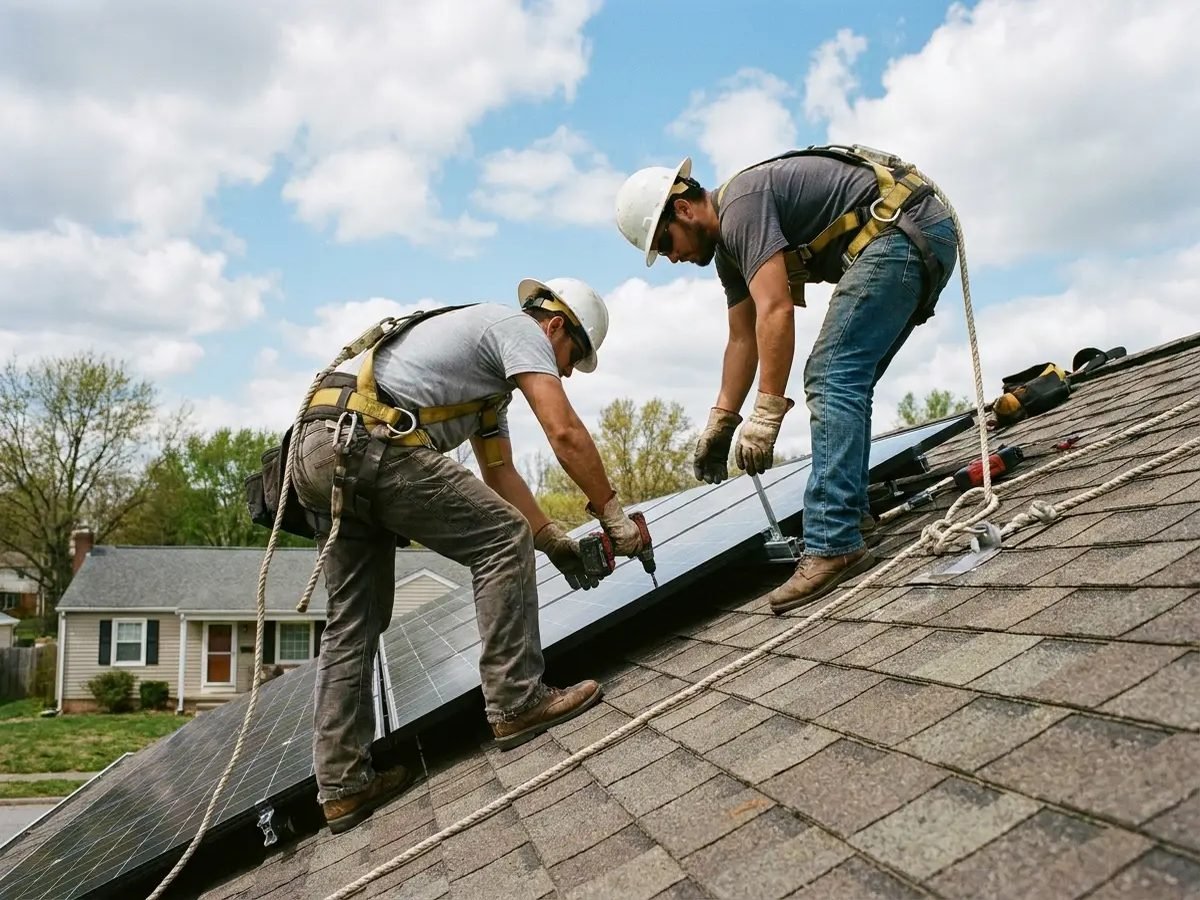
Solar panels convert sunlight into electricity that powers your home’s lights, appliances, HVAC system, and increasingly, electric vehicles. A residential system typically includes solar panels mounted on the roof or ground, an inverter that converts direct current (DC) electricity into the alternating current (AC) your home uses, a mounting and racking system, wiring, and a monitoring setup that tracks how much power the system produces. Most homeowners stay connected to the electric utility grid, which allows excess solar production to be sent back to the grid, often through net metering, and lets the home draw power from the grid at night or on cloudy days when panels aren’t producing enough electricity.
The size of the system you need depends on your household’s electricity usage, roof space and orientation, sun exposure, and how much of your electric bill you want to offset. A home that uses 900 kWh a month will generally need a larger system than one using 500 kWh a month, all else being equal.
Types of Solar Panel Systems
Not every solar installation looks the same. The right setup depends on your roof, budget, and energy goals.
- Monocrystalline panels — the most common residential choice, known for higher efficiency and a sleeker black appearance, usually at a higher price per watt.
- Polycrystalline panels — a lower-cost option with slightly lower efficiency, often used when roof space isn’t a constraint.
- Grid-tied systems — connected to the utility grid with no battery, the most common and lowest-cost configuration.
- Hybrid systems — grid-tied but paired with battery storage for backup power during outages.
- Off-grid systems — fully independent of the utility grid, requiring battery storage and a larger system to cover all household needs. This is typically the most expensive option and uncommon for homes with grid access.
- Ground-mounted systems — installed on a rack in the yard instead of the roof, useful when roof space, shading, or roof condition rules out a rooftop array.
What Drives the Cost of a Solar Panel Installation
Several factors determine what a solar installation costs:
- System size — measured in kilowatts (kW), based on your energy usage and offset goals.
- Panel type and equipment quality — higher-efficiency panels and premium inverters cost more upfront.
- Roof condition and complexity — a steep roof, multiple angles, or the need for roof repairs before installation adds labor and material costs.
- Permitting and inspection fees — these vary significantly by city and county.
- Labor rates — installation labor costs differ by region and by contractor.
- Battery storage — adding a battery for backup power substantially increases total project cost.
- Available incentives — federal, state, and utility incentives can reduce net cost after installation, though eligibility and amounts change over time.
The table below shows typical national cost ranges for common system sizes. Actual pricing varies by location, equipment, and installer, and does not reflect any tax credits or incentives.
| System Size | Estimated Cost | Estimated Annual Production* |
|---|---|---|
| 4 kW | $10,000 – $14,000 | 5,200 – 6,000 kWh |
| 6 kW | $15,000 – $21,000 | 7,800 – 9,000 kWh |
| 8 kW | $20,000 – $28,000 | 10,400 – 12,000 kWh |
| 10 kW | $25,000 – $35,000 | 13,000 – 15,000 kWh |
Estimates only — not a quote. These are national ranges compiled from public sources and industry data. They are not an offer of price and are not guaranteed. Your actual cost depends on your project, location, materials, permits and the contractor you choose. HomeMatchr does not set prices or perform work. See our full disclaimer.
*Production estimates vary by climate, roof orientation, shading, and panel efficiency.
Solar Panels and Home Value
Homes with solar panel systems often sell at a premium compared to similar homes without solar, according to multiple industry and academic studies, though the exact impact depends on your market, system age, and whether the system is owned outright or financed through a lease or power purchase agreement. Appraisers and buyers generally view owned systems more favorably than leased systems, since a lease or loan tied to the panels can complicate a home sale and may need to be addressed as part of the transaction.
Maintenance and Lifespan
Solar panels have no moving parts and require minimal upkeep. Most manufacturers rate panels for 25 years or more of production, though output gradually declines over time, typically less than 1% per year. Routine maintenance includes occasional cleaning to remove dust, pollen, or debris; trimming nearby trees that cast shade on the array; and checking system output through a monitoring app or dashboard to catch any drop in performance early. Inverters generally need replacement once during the life of a solar array, often in the 10- to 15-year range for string inverters.
How to Choose and Hire a Solar Installer
A solar installation is a significant investment that affects your roof and your home’s electrical system, so it’s worth taking time to evaluate contractors carefully. Before signing a contract:
- Confirm the contractor is licensed and insured in your state, and ask to see documentation.
- Ask whether the installer or its technicians hold relevant industry certifications, such as NABCEP (North American Board of Certified Energy Practitioners).
- Request references from recent projects and, where possible, review examples of completed installations.
- Get a detailed written proposal that specifies equipment brand and model, system size, estimated production, and total price.
- Ask about workmanship coverage separately from the manufacturer’s warranty on the panels and inverter, and get the terms of both in writing.
- Compare more than one proposal, since pricing, equipment, and estimated production can vary significantly between contractors.
- Ask how the company handles permitting, utility interconnection paperwork, and post-installation inspections.
Watch for high-pressure sales tactics, contracts that require a large upfront deposit before permits are approved, and pricing that seems out of line with typical market rates for a system of that size.
How HomeMatchr Works
HomeMatchr helps homeowners compare their options before starting a solar project. Answer a few questions about your home and energy goals, and request no-obligation quotes from independent contractors in the solar industry. Reviewing multiple quotes side by side makes it easier to compare pricing, equipment, and project timelines before you commit to a contractor. HomeMatchr is an advertising-supported service and may receive a referral fee when you connect with a provider.
Frequently asked questions
How much do solar panels cost for an average home?
Most residential systems cost between $15,000 and $30,000 before incentives, depending on system size, equipment, and your roof. Request quotes from independent contractors to get pricing specific to your home.
How long does it take to install solar panels?
Physical installation usually takes one to three days, but the full process, including permitting, utility approval, and inspection, often takes several weeks to a few months from signed contract to system activation.
Do solar panels work during a power outage?
A standard grid-tied system without battery storage automatically shuts off during a power outage for safety reasons. A hybrid system with battery storage can continue supplying power to some or all of your home during an outage.
How long do solar panels last?
Most panels are rated for 25 years or more of production, with output declining gradually over that period. Many systems continue producing usable electricity well beyond their rated lifespan.
Is my roof suitable for solar panels?
Roof age, condition, orientation, shading, and structural capacity all affect suitability. An installer can evaluate your roof and recommend whether panel installation, roof repairs, or an alternative like a ground-mounted system makes more sense.
Also compare pros for

About tax credits, rebates and incentives. Program rules, amounts and deadlines change and depend on your own eligibility, income and installation year. Nothing here is tax, legal or financial advice, and no credit or rebate is guaranteed. Confirm current rules with a qualified tax professional or the official program before you rely on them.
Compare Solar Panels quotes
Enter your ZIP code to request no-obligation quotes from independent contractors.
HomeMatchr is an advertising-supported service and may receive a referral fee when you connect with a service provider.
