Heat Pump Installation & Cost Guide
Compare heat pump types and costs, then request no-obligation quotes from independent contractors.
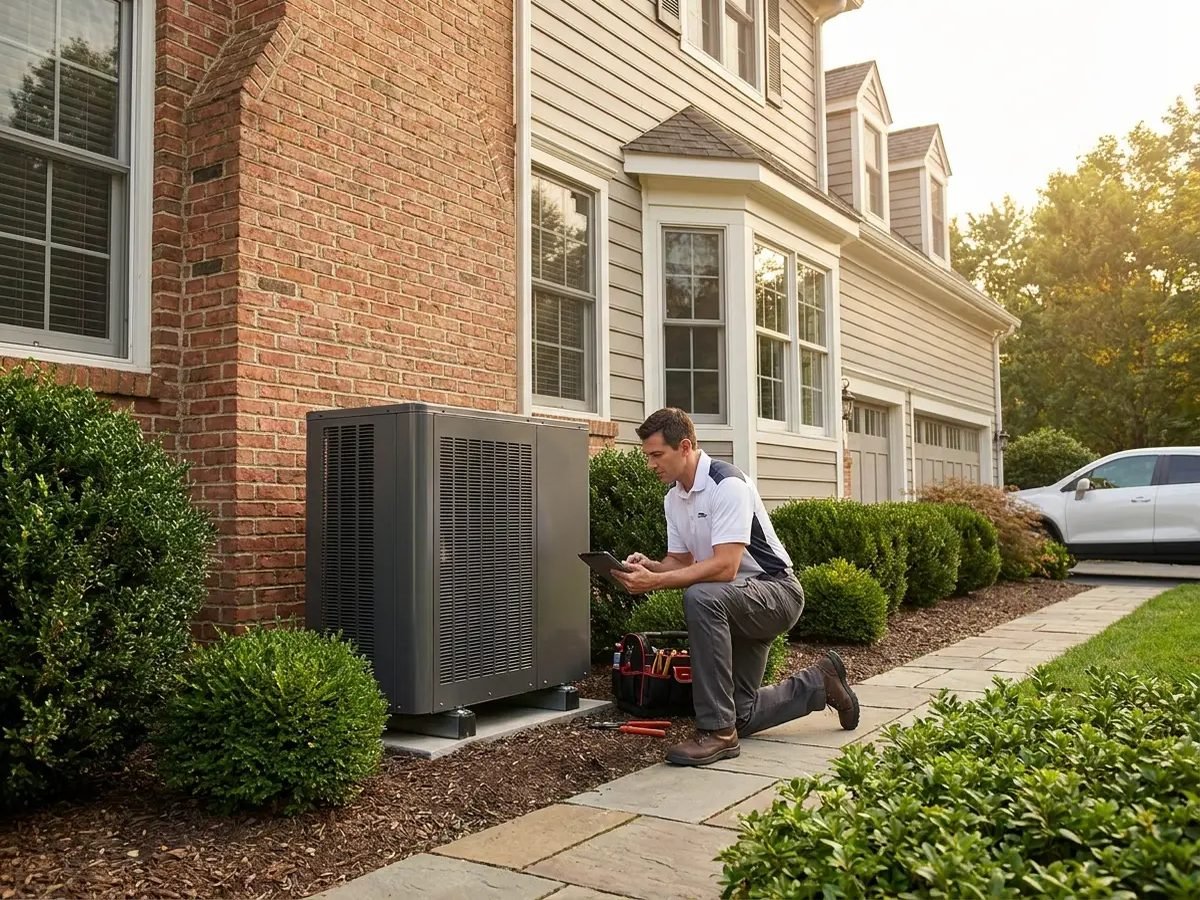
Request Heat Pumps quotes
Answer a few quick questions and compare quotes from independent contractors.
A heat pump moves heat from one place to another instead of burning fuel to create it, which lets a single outdoor unit provide both heating and cooling for a home. In the right climate, a heat pump can deliver two to four units of heat energy for every unit of electricity it uses, which is why heat pumps have become one of the most common replacements for aging furnaces, boilers, and window air conditioners across the United States. This guide covers how heat pumps work, the main types on the market, typical installed costs by system and home size, what pushes the price up or down, and general steps for choosing a contractor.
How a Heat Pump Works
A heat pump uses a refrigerant cycle and a reversing valve to move heat rather than generate it directly. In heating mode, the outdoor unit absorbs heat from the outside air, the ground, or a water source, even when temperatures are cold, and transfers that heat indoors through a compressor and coil system. In cooling mode, the same equipment runs in reverse, pulling heat out of the house and releasing it outside, functioning much like a central air conditioner. Because the system only moves heat instead of burning fuel, a well-sized heat pump generally uses less energy than electric resistance heat and, depending on local electricity and gas rates, can also be more efficient to run than a combustion furnace.
Types of Heat Pumps
- Air-source, ducted heat pumps connect to a home’s existing ductwork and replace a furnace and air conditioner with one combined system.
- Ductless mini-split heat pumps use individual indoor air handlers mounted on walls or ceilings, wired to an outdoor compressor, and work well in homes without ductwork or for room additions.
- Cold-climate air-source heat pumps use variable-speed compressors engineered to keep producing usable heat at outdoor temperatures well below freezing.
- Geothermal, or ground-source, heat pumps use buried loops of pipe that exchange heat with the stable temperature of the ground or a body of water, which makes them more efficient but more expensive to install.
- Dual-fuel, or hybrid, systems pair a heat pump with a backup gas furnace so the furnace can take over automatically during the coldest stretches of winter.
Heat Pump Cost by Type and Size
Installed cost depends heavily on system type, the tonnage needed to heat and cool the home, and local labor rates. The table below outlines typical U.S. ranges homeowners commonly report for a full installation, including equipment and labor.
| System Type | Typical Size | Installed Cost Range |
|---|---|---|
| Ductless mini-split (single zone) | Studio to 1 room | $2,000 – $4,500 |
| Ductless mini-split (multi-zone) | 2–5 zones | $6,000 – $14,000 |
| Air-source, ducted (2–3 ton) | 800–1,800 sq ft | $4,500 – $9,000 |
| Air-source, ducted (4–5 ton) | 1,800–3,000 sq ft | $6,500 – $14,000 |
| Cold-climate air-source | 2–5 ton | $6,000 – $18,000 |
| Geothermal (ground-source) | Whole home | $18,000 – $45,000 |
Estimates only — not a quote. These are national ranges compiled from public sources and industry data. They are not an offer of price and are not guaranteed. Your actual cost depends on your project, location, materials, permits and the contractor you choose. HomeMatchr does not set prices or perform work. See our full disclaimer.
What Drives Heat Pump Cost
- Equipment tier and efficiency rating — units with higher SEER2 and HSPF2 ratings cost more up front but use less electricity over time.
- Home size and layout — larger square footage or multiple zones requires more capacity and more equipment.
- Ductwork condition — homes that need new, repaired, or resized ducts will see added labor and material costs.
- Electrical panel capacity — some homes need a panel upgrade to support a new heat pump, especially with electric backup heat strips.
- Site conditions — geothermal systems require excavation or drilling for ground loops, which is one of the largest cost variables.
- Local permits and labor rates — permit fees and contractor labor rates vary by city and state.
- Climate zone — homes in colder regions often need larger or cold-climate-rated equipment, plus backup heat.
Cold-Climate Performance
Older heat pump models lost significant heating capacity below freezing, which is why many cold-climate homes historically paired electric resistance backup with a heat pump. Current cold-climate air-source models use variable-speed compressors that maintain a much higher share of their rated output at low outdoor temperatures, and many are designed to keep operating efficiently well into single-digit and sub-zero conditions. A contractor should size the system to the home’s design heating load for the local climate zone, not just the square footage, and confirm whether backup heat is needed for the coldest days of the year.
How to Choose and Hire a Contractor
- Ask for a Manual J load calculation rather than a rule-of-thumb size estimate.
- Compare SEER2, HSPF2, and COP ratings between the systems being proposed.
- Confirm that any contractor you hire is licensed and insured in your state before signing a contract.
- Get more than one written quote so you can compare equipment, scope of work, and price side by side.
- Ask what the manufacturer’s warranty covers on parts and compressors, and what the contractor covers on labor.
- Check whether local permits and inspections are included in the quoted price.
- Put the full scope of work, equipment model numbers, and payment schedule in writing before work begins.
How HomeMatchr Works
HomeMatchr helps homeowners compare heat pump options by connecting them with independent contractors in the HVAC industry. After you share a few basic details about your home and project, you can request no-obligation quotes from independent contractors and compare scope, equipment, and pricing on your own terms before deciding who to hire. HomeMatchr is an advertising-supported service and may receive a referral fee when you connect with a provider.
Frequently asked questions
How long does a heat pump last?
Most heat pumps last 15 to 20 years with regular maintenance, though ductless mini-split components can sometimes run longer. Annual service, including coil cleaning and refrigerant checks, helps the system reach the upper end of that range.
Can a heat pump really work in a cold climate?
Yes. Cold-climate air-source heat pumps use variable-speed compressors designed to keep producing usable heat at outdoor temperatures well below freezing. In very cold regions, some homeowners still choose a dual-fuel setup that pairs a heat pump with a backup furnace for the coldest days.
Is a heat pump cheaper to run than a furnace?
It depends on your local electricity and natural gas rates, your climate, and how efficient the equipment is. In many regions a heat pump costs less to operate than electric resistance heat and can be competitive with or cheaper than a gas furnace, but a contractor can estimate operating costs based on your utility rates.
Do I need to replace my ductwork to install a heat pump?
Not always. If your existing ducts are in good condition and properly sized, a ducted air-source heat pump can often use them. Homes without ductwork, or with damaged or undersized ducts, are often better suited to a ductless mini-split system instead.
What size heat pump does my home need?
Sizing depends on square footage, insulation levels, window efficiency, ceiling height, and local climate, so it should be based on a Manual J load calculation rather than square footage alone. An oversized or undersized system can run inefficiently and wear out faster.
Also compare pros for
Compare Heat Pumps quotes
Enter your ZIP code to request no-obligation quotes from independent contractors.
HomeMatchr is an advertising-supported service and may receive a referral fee when you connect with a service provider.
