EV Charger Installation Cost
Real cost ranges for hardware, electrician labor, and panel upgrades, plus how the 30C tax credit lowers your total.
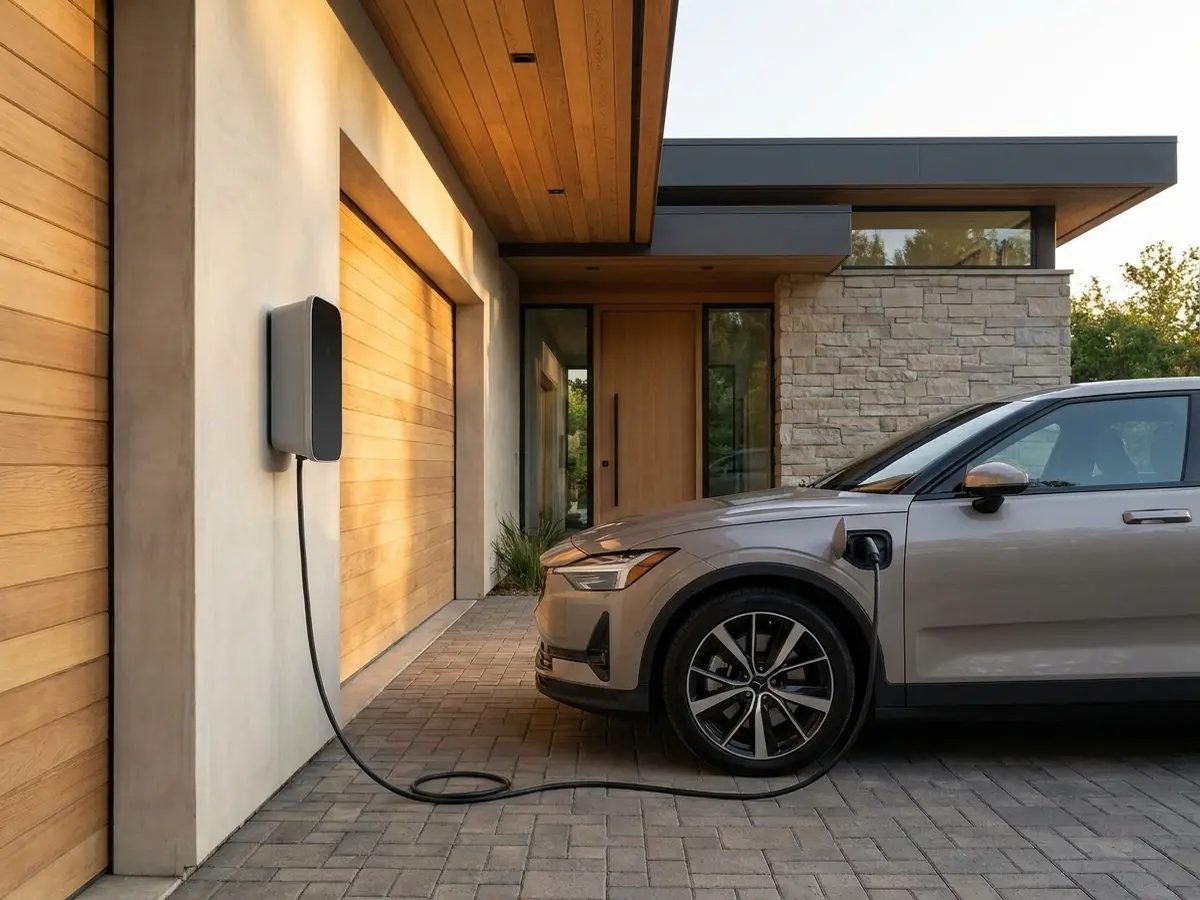
What Goes Into the Total Price
An EV charger installation invoice is usually made up of three separate pieces: the charger hardware itself, the electrician’s labor to run a new circuit and connect it, and, for some homes, additional electrical work like a subpanel or a full panel upgrade. Understanding each piece separately makes it much easier to compare quotes from different contractors, since one company’s low bid might be leaving out a panel assessment that another company has already priced in.
Charger Hardware Cost
A Level 2 home charging unit typically costs between $300 and $700, depending on brand, amperage rating, and features like Wi-Fi connectivity, scheduling, or a smart app. Higher-amperage units that charge faster, along with chargers from major vehicle manufacturers or premium third-party brands, tend to sit at the upper end of that range. Basic, no-frills units from established brands can often be found closer to the lower end.
Electrician Labor Cost
Labor for a straightforward installation, where the panel already has spare capacity and the charging location is close to the panel, generally runs $300 to $900. That covers running the new circuit, installing the breaker, and mounting and connecting the charger, whether it’s hardwired or installed with a NEMA 14-50 outlet. Jobs that involve a longer wire run, work in a finished wall or ceiling, or a charging location on the far side of the house from the panel will cost more in labor even without any panel upgrade.
Panel Upgrade and Subpanel Cost
If your electrical panel doesn’t have enough spare amperage for a new 240-volt circuit, the electrician will typically recommend either a subpanel dedicated to the charger or a full panel upgrade. This additional work generally adds $1,500 to $3,500 or more to the total project cost, depending on your home’s existing service size and how much additional capacity is needed. Older homes with 100-amp service are more likely to need this step than newer homes built with 200-amp panels.
Full Cost Breakdown Table
| Cost Component | Typical Range |
|---|---|
| Charger hardware | $300 – $700 |
| Labor, existing panel capacity | $300 – $900 |
| Subpanel or panel upgrade | $1,500 – $3,500 |
| Permit and inspection fees | $50 – $300 |
| Trenching for a detached garage (if needed) | $500 – $2,000+ |
Estimates only — not a quote. These are national ranges compiled from public sources and industry data. They are not an offer of price and are not guaranteed. Your actual cost depends on your project, location, materials, permits and the contractor you choose. HomeMatchr does not set prices or perform work. See our full disclaimer.
Adding these up, a straightforward installation with no panel work typically totals $600 to $1,900, while a job requiring a subpanel or upgrade can run $2,500 to $5,000 or more once every line item is included.
The 30C Federal Tax Credit
The Alternative Fuel Vehicle Refueling Property Credit, known by its tax code section as 30C, can offset up to 30% of combined hardware and installation costs, up to a set dollar cap for residential installs. Eligibility has been tied in recent years to factors such as the census tract where the property is located, and the rules have changed more than once, so don’t assume you’re eligible just because a past year’s version of the credit applied broadly. Confirm current eligibility and the applicable cap with a tax professional, and keep your itemized invoice from the contractor in case it’s needed to support your filing.
Permit and Inspection Fees
Most cities and counties require an electrical permit for a new 240-volt circuit, along with a follow-up inspection once the work is complete. Fees generally range from $50 to $300 depending on your local jurisdiction. Skipping the permit might seem like a way to cut costs, but it can create problems later, including issues with home insurance claims or a future home sale, if an inspector or buyer’s inspector finds unpermitted electrical work.
Ways Homeowners Can Manage Cost
Choosing a charging location as close to the main panel as practical is one of the simplest ways to hold down labor cost, since it shortens the wire run. Some homeowners also opt for a NEMA 14-50 outlet installation instead of a hardwired unit, which can make future charger swaps easier, though pricing between the two options is often similar once you account for the outlet or hardwire connection kit itself. Comparing quotes from more than one electrician is also one of the most effective ways to avoid overpaying, since pricing for the same scope of work can vary significantly between contractors in the same area.
Getting an Accurate Quote for Your Home
Because panel capacity, wire distance, and local permit fees vary so much from one house to the next, a national average is only a starting point. The only way to know your real installed cost is a quote based on your specific panel and charging location. HomeMatchr can connect you with no-obligation quotes from independent electricians in your area, so you can compare pricing, scope, and timelines before deciding who to hire.
Frequently asked questions
What is the average cost to install an EV charger?
Most Level 2 home installations cost between $600 and $2,500 total, covering hardware and labor, with jobs that need a panel upgrade or subpanel often running $2,500 to $5,000 or more.
Does the price include the charger itself?
Charger hardware is usually billed separately from labor. Expect to pay $300 to $700 for the unit itself, plus $300 to $900 or more in electrician labor depending on your panel and charging location.
How much does a panel upgrade for an EV charger cost?
A subpanel or full panel upgrade typically adds $1,500 to $3,500 or more to the total project, depending on your home’s existing electrical service size and how much added capacity is needed.
Is the 30C tax credit still available for EV chargers?
The Alternative Fuel Vehicle Refueling Property Credit can still apply, covering up to 30% of costs up to a cap, but eligibility rules have changed and can depend on your location. Confirm current details with a tax professional.
How can I get an accurate installation quote for my home?
The most reliable way is a quote based on your specific panel, wiring, and charging location. HomeMatchr can match you with no-obligation quotes from independent electricians in your area.
About tax credits, rebates and incentives. Program rules, amounts and deadlines change and depend on your own eligibility, income and installation year. Nothing here is tax, legal or financial advice, and no credit or rebate is guaranteed. Confirm current rules with a qualified tax professional or the official program before you rely on them.
Compare EV Charger quotes
Enter your ZIP code to request no-obligation quotes from independent contractors.
HomeMatchr is an advertising-supported service and may receive a referral fee when you connect with a service provider.
