Central Air Conditioning: How It Works and What It Costs
Compare no-obligation quotes from independent central AC contractors.
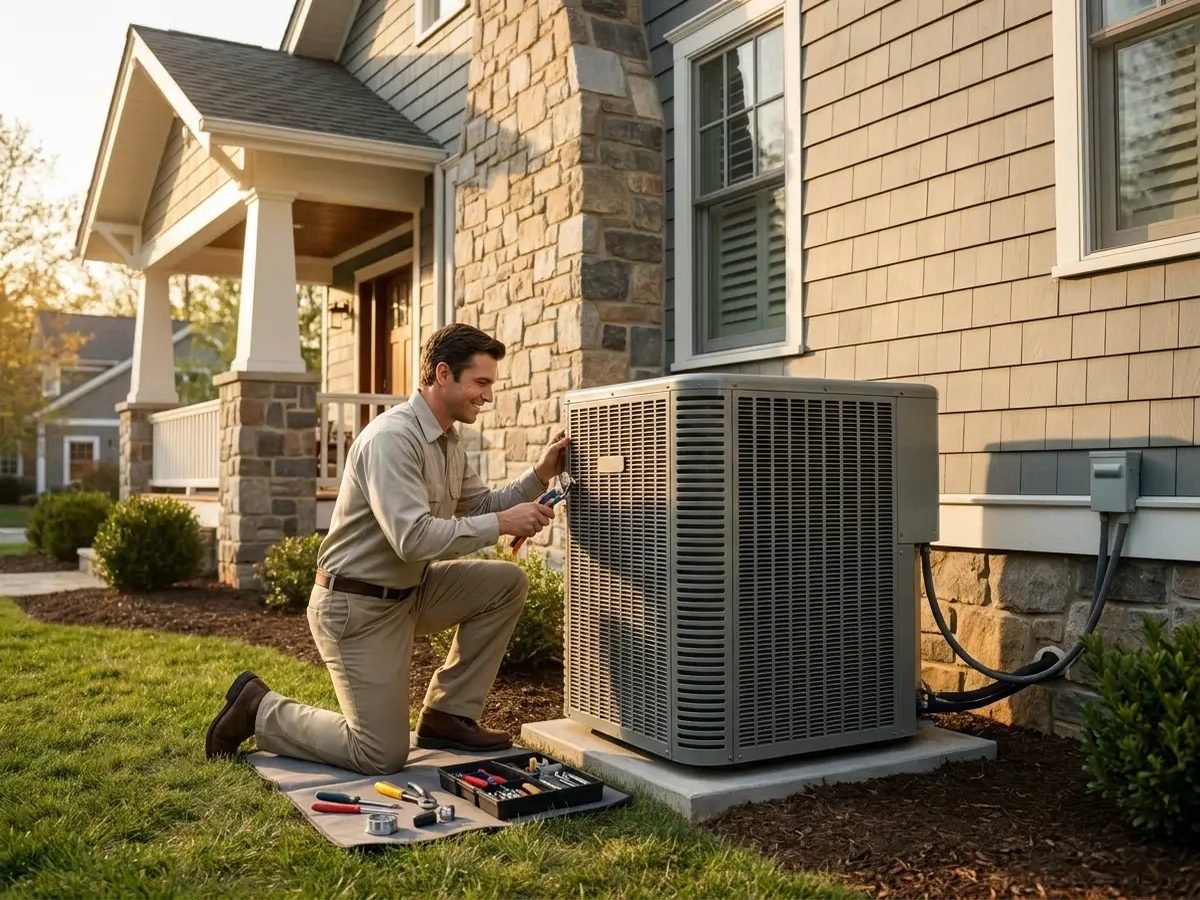
Central air conditioning is the most common way to cool a home in the United States, particularly in houses that already have a forced-air furnace and duct system. Rather than cooling one room at a time, a central system conditions the whole house from a single outdoor unit, distributing cool air through the same ducts that carry heated air in winter.
How Central Air Conditioning Works
A central air conditioning system has two main components connected by refrigerant lines: an outdoor condenser unit, which contains the compressor and condenser coil, and an indoor evaporator coil, usually mounted on top of or alongside the furnace or air handler. The system works by circulating refrigerant that absorbs heat from indoor air as it passes over the evaporator coil, then releases that heat outside at the condenser. A blower fan, typically part of the furnace or air handler, pushes the cooled air through the home’s ductwork and out through supply registers, while return registers pull warm air back to be cooled again. A thermostat controls when the system cycles on and off to maintain the set temperature.
Sizing a Central AC System
Correct sizing is one of the most important — and most often skipped — steps in a central AC installation. A contractor performs a load calculation (commonly a Manual J calculation) that accounts for square footage, ceiling height, insulation levels, window size and orientation, and local climate data. An oversized system cools the air quickly but cycles off before it has removed enough humidity, which can leave the home feeling clammy even at the target temperature. An undersized system runs nearly nonstop during hot weather and still struggles to keep up. Because ductwork also affects how well cooled air actually reaches each room, a contractor may recommend duct sealing, resizing, or added return vents alongside a new system, especially in a home with unbalanced airflow.
Central AC Cost
Cost depends primarily on system size (tonnage), efficiency rating (SEER2), and the condition of existing ductwork.
| Scope | Typical Cost Range |
|---|---|
| Standard replacement, ducts reused | $4,500 – $9,500 |
| High-efficiency system (18+ SEER2) | $7,000 – $13,000+ |
| New installation with ductwork required | $10,000 – $20,000+ |
| Ductwork repair or sealing (add-on) | $1,000 – $5,000 |
Estimates only — not a quote. These are national ranges compiled from public sources and industry data. They are not an offer of price and are not guaranteed. Your actual cost depends on your project, location, materials, permits and the contractor you choose. HomeMatchr does not set prices or perform work. See our full disclaimer.
These figures are general references only. The specific tonnage, efficiency rating, brand, and any electrical or ductwork work required for your home will shift the price, which is why it’s worth requesting quotes from more than one independent contractor.
Signs It’s Time to Replace
Not every issue with a central AC system means it’s time for a full replacement, but a few signals suggest replacement is worth seriously considering:
- The system is 12 to 15 years old or older, which is near or past the typical service life for most central air conditioners.
- Repair costs are approaching half the price of a new system, particularly for major components like the compressor.
- The system uses R-22 refrigerant, which has been phased out of production and is increasingly expensive and hard to source.
- Cooling bills have risen noticeably even though usage patterns haven’t changed, suggesting declining efficiency.
- Some rooms are consistently too warm or too humid despite the thermostat reading the target temperature, which can point to an undersized or failing system.
Maintaining a Central AC System
Routine maintenance extends the life of a central system and helps it run efficiently. Homeowners can handle some basics themselves, such as replacing air filters every one to three months and keeping the outdoor condenser clear of leaves, grass clippings, and debris. Other tasks are best left to a professional, including checking refrigerant charge, cleaning the evaporator and condenser coils, testing electrical connections, and verifying that the system is cycling correctly. Many contractors offer annual tune-up visits, typically scheduled in spring before cooling season begins.
Choosing a Contractor
Because central AC installation involves refrigerant handling and often electrical work, it’s worth taking the same care choosing a contractor as choosing the equipment. Confirm licensing and insurance directly with the contractor before signing anything, ask for an itemized written estimate, and make sure the proposed tonnage is based on an actual load calculation for your home rather than a guess based on the old unit’s size. Getting more than one estimate makes it easier to compare scope, equipment, and pricing side by side.
Getting Quotes
HomeMatchr helps you request quotes from independent contractors for a central air conditioning installation or replacement. Share a few details about your home and project, then compare no-obligation quotes to see how sizing recommendations, equipment options, and pricing differ before deciding who to hire.
Frequently asked questions
How long does central air conditioning last?
Most central AC systems last 12 to 15 years with regular maintenance, though some run 20 years in mild climates with light use. Systems in hot climates that run near-constantly during summer tend toward the shorter end of that range.
Can central AC use my existing ductwork?
In many cases, yes, if the ducts are properly sized and in good condition. A contractor will typically inspect the ductwork as part of the estimate and recommend sealing, resizing, or repairs if airflow or leakage issues are found.
What's the difference between central air and a heat pump?
A standard central air conditioner only cools; a heat pump can both cool and heat by reversing the refrigeration cycle. Heat pumps typically cost more upfront but can replace both an AC unit and a furnace in moderate climates.
How often should I service my central AC system?
Most manufacturers and contractors recommend an annual tune-up, usually scheduled in spring, along with regular filter changes every one to three months during the cooling season.
How do I get quotes for a central AC replacement?
HomeMatchr lets you share details about your home and cooling needs, then request quotes from independent contractors. You can compare no-obligation quotes before choosing who to hire.
Compare Air Conditioning quotes
Enter your ZIP code to request no-obligation quotes from independent contractors.
HomeMatchr is an advertising-supported service and may receive a referral fee when you connect with a service provider.
