Home Battery Brands & Specs
Capacity, chemistry, and features for common home battery brands on the market.
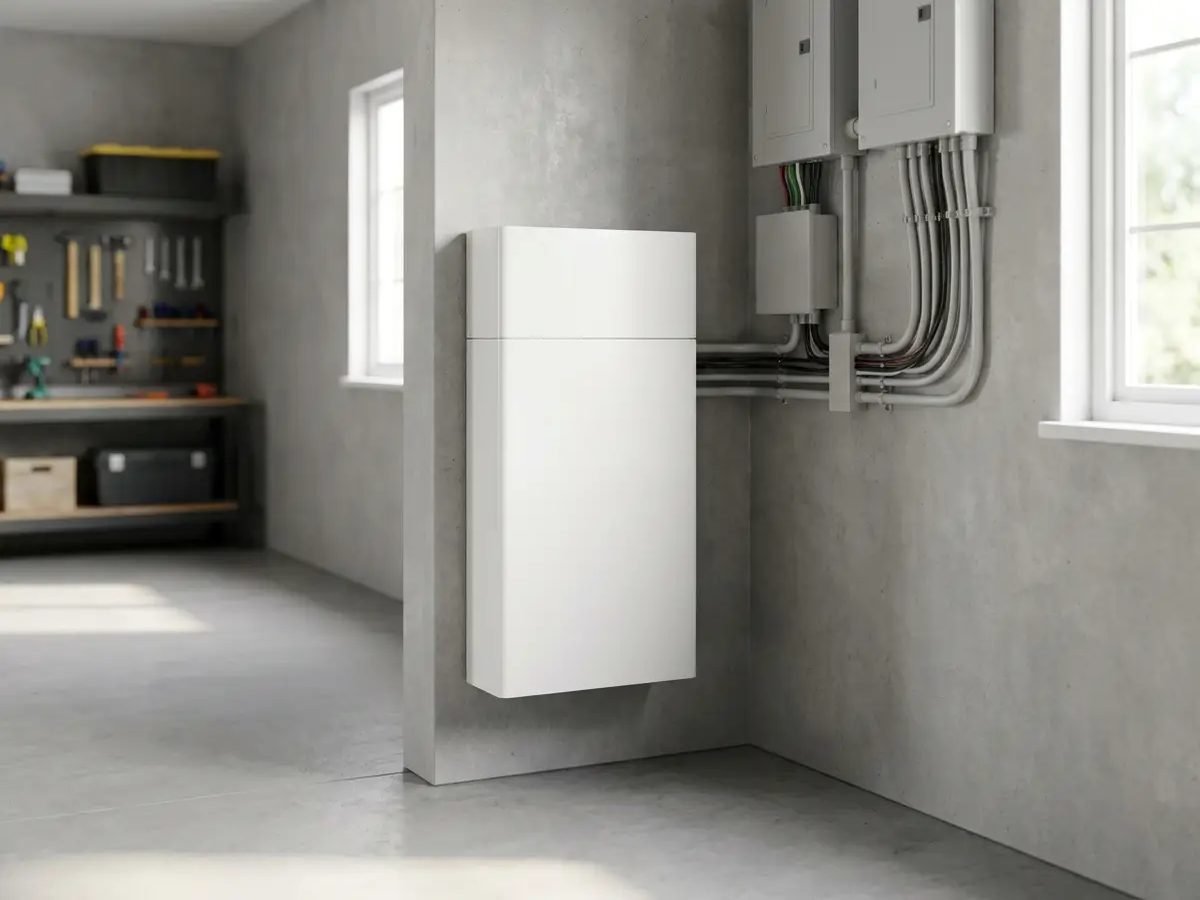
Comparing Home Battery Brands
Tesla Powerwall is one of the most widely recognized home batteries on the market, but it isn’t the only option. Several other manufacturers make residential battery systems with different capacities, chemistries, and features. The right brand for a given home often depends on whether it needs to pair with existing solar equipment, how much capacity is needed, and which installers in the area work with a given brand.
Common Home Battery Brands
| Brand / Model Line | Typical Capacity | Chemistry | Notable Feature |
|---|---|---|---|
| Tesla Powerwall | ~13.5 kWh per unit, stackable | Lithium iron phosphate (LFP) | Integrated inverter, app-based monitoring |
| Enphase IQ Battery | ~3.5–10.5 kWh per unit, stackable | Lithium iron phosphate (LFP) | Modular, microinverter-based architecture |
| LG Energy Solution | ~8–16 kWh, model dependent | Lithium-ion | Compact wall-mounted enclosure options |
| FranklinWH | ~13.6 kWh per unit, stackable | Lithium iron phosphate (LFP) | Built-in smart home energy management features |
| Generac PWRcell | ~9–18 kWh, modular | Lithium-ion (NMC) | Can pair with Generac standby generators |
| Sonnen (SonnenCore) | ~10–20 kWh, model dependent | Lithium iron phosphate (LFP) | Long manufacturer warranty cycle counts on some models |
Estimates only — not a quote. These are national ranges compiled from public sources and industry data. They are not an offer of price and are not guaranteed. Your actual cost depends on your project, location, materials, permits and the contractor you choose. HomeMatchr does not set prices or perform work. See our full disclaimer.
Specifications, pricing, and availability change frequently and vary by model year and region, so it’s worth confirming current specs directly with a manufacturer or an installing contractor. See the home battery cost guide for how brand and capacity affect installed pricing.
What to Compare Between Brands
- Usable capacity (kWh) — how much energy the unit can actually store and discharge, which is sometimes lower than the total rated capacity.
- Continuous and peak power output (kW) — how many appliances the battery can run at once, and whether it can handle a large surge load like an air conditioner starting up.
- Stackability — whether additional units can be added later for more capacity or whole-home backup; see the whole-home backup guide for sizing.
- Solar compatibility — whether the battery is designed for AC-coupled or DC-coupled solar systems, or works as a standalone unit without solar.
- Manufacturer’s warranty — typically stated in years and/or charge cycles, and covering capacity retention (for example, a stated retention of a set percentage of capacity after 10 years).
- Smart home and monitoring features — app-based monitoring, time-of-use scheduling, and integration with home energy management systems.
Chemistry: Why LFP Is Common
Most current residential battery lines use lithium iron phosphate (LFP) chemistry rather than the nickel manganese cobalt (NMC) chemistry more common in earlier electric vehicle and consumer electronics batteries. LFP batteries are generally valued in home storage applications for their thermal stability and longer cycle life, though they can be slightly less energy-dense by weight and volume than NMC alternatives. Some manufacturers still use NMC or other lithium-ion chemistries, so it’s worth asking a contractor which chemistry a specific model uses.
Other Brands Worth Knowing
SolarEdge Energy Bank and Panasonic EverVolt are both commonly installed alongside those companies’ own solar equipment, since matching inverter and battery brands can simplify installation and warranty claims. SunPower SunVault is another option frequently paired with SunPower panels. Availability of any specific brand depends heavily on which installers in a given area are certified to work with it, so a certified installer’s hands-on experience with that model is often as important as the spec sheet when narrowing down options.
Questions to Ask Before Choosing a Brand
Beyond capacity and chemistry, a few practical questions can matter more day-to-day than the numbers on a spec sheet: How many of this specific model has the installer put in, and how do they handle warranty claims if something goes wrong? Can additional units be added later without replacing existing hardware? Does the battery operate during an outage without needing the grid or solar production present, sometimes called black-start capability? What does the app show, and can charge and discharge schedules be customized for outage prep versus everyday time-of-use management? Getting clear answers from a contractor about a specific model is often more useful than comparing marketing spec sheets alone.
Choosing a Brand and Installer
Beyond the equipment specs, brand choice is often shaped by which installers in a given area are factory-certified for that brand, since certification can affect warranty coverage and access to manufacturer support. Confirming that a contractor is licensed and insured for electrical work, and asking directly which brands they regularly install and service, are useful steps before signing a contract.
HomeMatchr helps homeowners compare no-obligation quotes from independent contractors, which can include a range of battery brands and system configurations for the same project. HomeMatchr is an advertising-supported service and may receive a referral fee when you connect with a provider.
Frequently asked questions
Is Tesla Powerwall the only home battery brand available?
No. Enphase, LG, FranklinWH, Generac, and Sonnen are among several other manufacturers that make residential battery systems, each with different capacities, chemistries, and features.
Are all home batteries lithium-ion?
Most current residential battery lines use lithium-ion chemistry, and specifically lithium iron phosphate (LFP), though a few models use other lithium-ion formulations such as NMC.
Can I stack multiple battery units for more capacity?
Many brands, including Tesla Powerwall, Enphase, FranklinWH, and Generac PWRcell, offer modular or stackable units that let a system start smaller and expand later.
Does the battery brand affect which installer I can use?
Yes. Installers are often factory-certified for specific brands, which can affect warranty coverage, so it’s worth confirming which brands a contractor regularly installs before choosing equipment.
How long do home battery warranties typically last?
Manufacturer warranties commonly run around 10 years and are usually tied to a stated capacity retention percentage or a maximum number of charge cycles, with specifics varying by brand and model.
Compare Home Battery quotes
Enter your ZIP code to request no-obligation quotes from independent contractors.
HomeMatchr is an advertising-supported service and may receive a referral fee when you connect with a service provider.
