Spray Foam Insulation: Cost, Types & Pros/Cons
Compare open-cell and closed-cell spray foam, see real cost ranges, and find out if it's the right fit for your home.
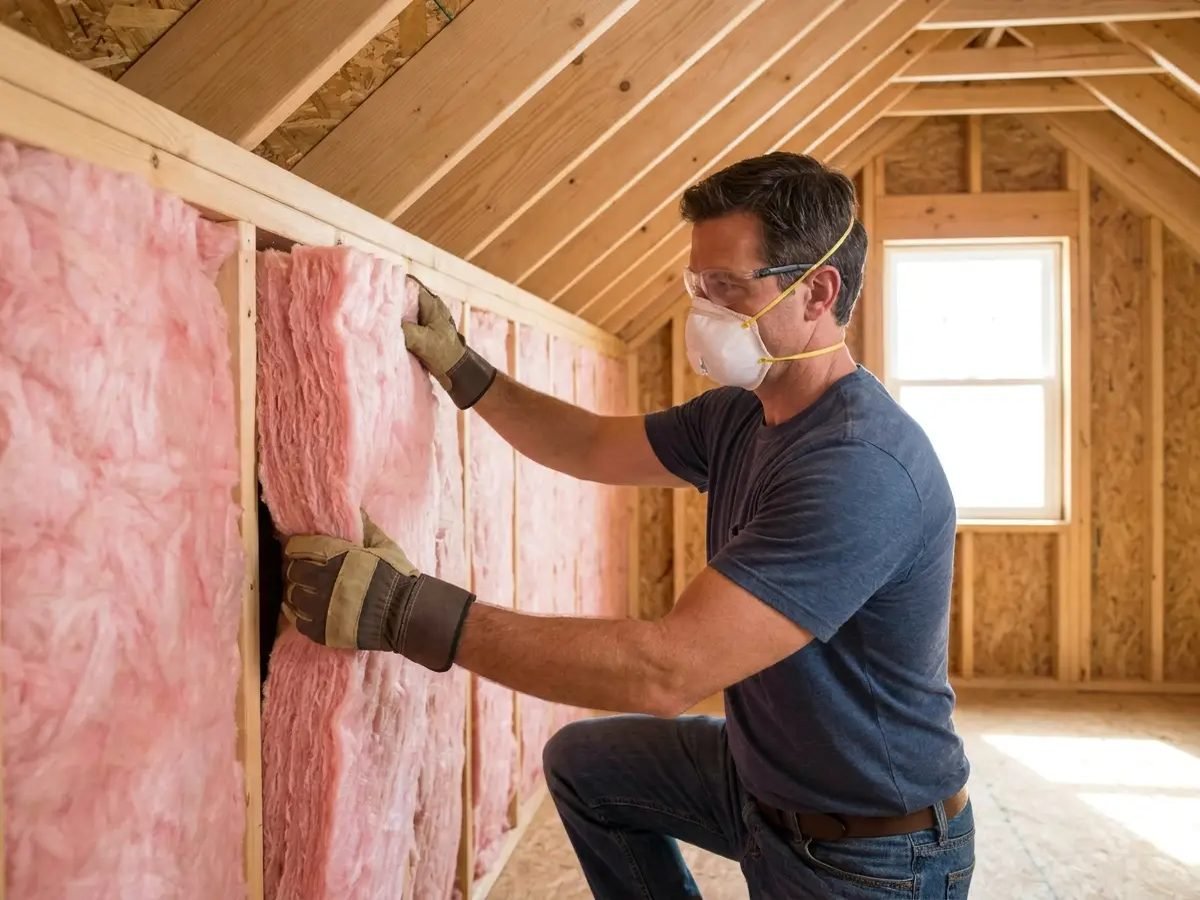
Spray foam insulation is applied as a liquid that expands on contact and hardens into a solid layer, filling gaps and cracks as it goes. Because it seals air leaks and insulates in a single step, spray foam is popular for hard-to-reach spaces, additions, rim joists, and homes where air infiltration is a major problem. It costs more than traditional batt or blown-in insulation, but many homeowners find the performance difference worth the investment.
Open-Cell vs. Closed-Cell Spray Foam
There are two main types of spray foam, and choosing the right one depends on the application, budget, and moisture conditions in the space being insulated.
- Open-cell foam: Lighter, softer, and less expensive than closed-cell. Its cell structure is open, so it stays somewhat flexible and allows a small amount of vapor to pass through. It typically offers an R-value of around R-3.5 to R-3.6 per inch. Open-cell is a common choice for interior walls, attics, and areas where sound dampening is a priority, but it is not recommended for below-grade or high-moisture areas since it can absorb water.
- Closed-cell foam: Denser and more rigid, with tightly packed cells that resist moisture and add structural strength to the area it’s applied in. It offers a higher R-value per inch, typically around R-6 to R-7, meaning less material is needed to hit a target R-value. Closed-cell is the preferred choice for basements, crawl spaces, rim joists, and exterior applications where moisture resistance matters.
Spray Foam Insulation Cost
Spray foam is priced per square foot (sometimes per board foot for smaller jobs) and varies based on foam type, thickness, and accessibility of the space.
| Foam Type | Cost per Sq. Ft. (Installed) | R-Value per Inch |
|---|---|---|
| Open-cell spray foam | $1.50 – $3.50 | ~R-3.5 to R-3.6 |
| Closed-cell spray foam | $3.00 – $7.50 | ~R-6 to R-7 |
Estimates only — not a quote. These are national ranges compiled from public sources and industry data. They are not an offer of price and are not guaranteed. Your actual cost depends on your project, location, materials, permits and the contractor you choose. HomeMatchr does not set prices or perform work. See our full disclaimer.
For a full attic (around 1,000 sq ft), open-cell spray foam typically runs $1,500 to $3,500, while closed-cell can range from $3,000 to $7,500 or more depending on thickness. Smaller targeted jobs, like sealing rim joists or a crawl space, often fall between $1,000 and $3,000 total.
Pros of Spray Foam
- Seals air leaks and insulates simultaneously, reducing drafts more effectively than batts or blown-in material
- Higher R-value per inch means thinner applications can still hit strong insulation targets, especially with closed-cell
- Closed-cell foam adds rigidity and can strengthen the structure it’s applied to
- Resists moisture and can act as a vapor barrier (closed-cell in particular)
- Helps reduce outside noise transmission
- Does not settle or sag over time the way loose-fill insulation can
Cons of Spray Foam
- Higher upfront cost than fiberglass batts or blown-in cellulose
- Requires professional installation with specialized equipment and protective gear during application
- Curing generates strong odors and requires the home to be vacated for a period during and shortly after installation
- Difficult and costly to remove or modify later, for example if rewiring or plumbing work is needed in that cavity
- Improper installation (wrong ratio or thickness) can lead to off-gassing issues or reduced performance
Where Spray Foam Works Best
Spray foam is especially effective in attics with complex framing, rim joists and band joists (a major source of drafts in many homes), crawl spaces, basement walls, and additions where wall cavities are open and accessible. It’s less commonly used for full whole-house retrofits in finished walls, since that would require removing drywall — in those cases, injection or blown-in wall insulation is usually more practical and affordable. Ask your contractor which areas of your home would benefit most from spray foam versus a lower-cost alternative; a mixed approach (spray foam in rim joists and problem areas, blown-in or batts elsewhere) is common and cost-effective.
Choosing a Spray Foam Contractor
Spray foam installation requires more skill and specialized equipment than batt or blown-in insulation, so contractor experience matters. Ask about the specific foam product being used, its certified R-value per inch, and how they handle ventilation during and after application. An experienced installer will also discuss fire-code compliance, since some spray foam applications require an ignition or thermal barrier covering depending on local building codes.
It’s also worth asking how long the crew has been installing spray foam specifically, since improper mixing ratios or application thickness are common causes of performance issues and unpleasant odors that don’t fully cure. An experienced contractor will walk you through the expected cure and re-entry time for your home, confirm whether a thermal or ignition barrier is required for the area being treated, and provide documentation of the installed R-value for your own records.
Request Spray Foam Insulation Quotes
Because spray foam pricing varies widely based on foam type, thickness, and labor, comparing quotes is especially valuable for this type of project. HomeMatchr connects homeowners with no-obligation quotes from independent spray foam insulation contractors — enter your ZIP code to compare what contractors are quoting for your project.
Frequently asked questions
What's the difference between open-cell and closed-cell spray foam?
Open-cell foam is lighter, less expensive, and offers around R-3.5 per inch, making it good for interior walls and attics. Closed-cell foam is denser, moisture-resistant, adds structural rigidity, and offers a higher R-value of around R-6 to R-7 per inch, making it the better choice for basements, crawl spaces, and exterior applications.
How much does spray foam insulation cost per square foot?
Open-cell spray foam typically costs $1.50 to $3.50 per square foot installed, while closed-cell spray foam ranges from $3.00 to $7.50 per square foot due to its higher density and R-value.
Is spray foam insulation worth the higher cost?
For areas with significant air leaks, like rim joists, additions, or complex attic framing, spray foam’s combined air-sealing and insulating performance often justifies the added cost through better comfort and energy savings. For simple, accessible attic floors, batts or blown-in insulation may be more cost-effective.
Do I need to leave my house during spray foam installation?
Yes, most spray foam manufacturers recommend vacating the treated area during application and for a period afterward while the foam off-gasses and cures, typically 24 hours, though this varies by product and ventilation.
Can spray foam be removed or modified later?
Spray foam is much harder to remove or modify than batts or blown-in insulation once cured. If you anticipate future wiring or plumbing work in a cavity, discuss this with your contractor before choosing spray foam for that area.
Compare Insulation quotes
Enter your ZIP code to request no-obligation quotes from independent contractors.
HomeMatchr is an advertising-supported service and may receive a referral fee when you connect with a service provider.
