Roofing Contractors & Cost Guide
Compare no-obligation quotes from independent roofing contractors and learn what 2026 roofing projects typically cost.
Request Roofing quotes
Answer a few quick questions and compare quotes from independent contractors.
A roof protects everything under it, from the framing and insulation to the belongings inside a home, so most homeowners eventually face a decision about repairing, replacing, or upgrading it. Roofing projects range from patching a handful of shingles after a storm to a full tear-off and replacement on a two-story house. Understanding what the work involves, which materials are available, and what typically drives the price helps homeowners plan a budget and ask better questions before they request quotes.
What Roofing Work Involves
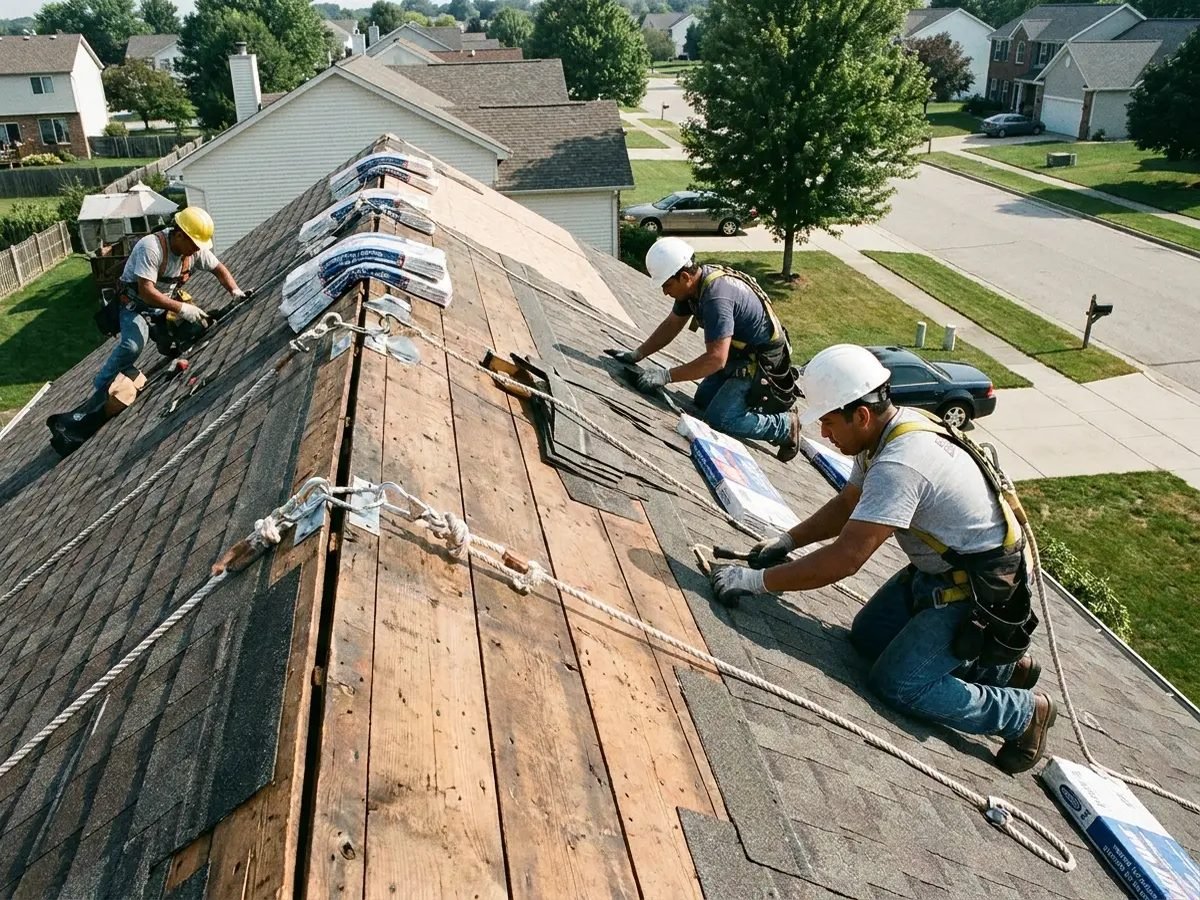
Most roofing projects fall into one of three categories: repair, replacement, or new installation. A repair addresses a specific problem, such as a section of damaged shingles, a failed flashing seal around a chimney, or a soft spot in the decking. A full replacement removes the existing roofing material down to the decking (or in some cases layers over it, depending on local code) and installs a new system, including underlayment, flashing, ventilation components, and the finish material itself. New installation applies to additions, detached structures, or homes where the roof is being built for the first time.
A typical replacement project includes several steps: removing and disposing of the old roofing material, inspecting and repairing the decking underneath, installing an underlayment (a moisture barrier), adding flashing around penetrations like chimneys, vents, and skylights, installing the new material, and finishing with ridge caps and ventilation. Ventilation and attic insulation are often reviewed at the same time, since poor airflow can shorten the life of a new roof and drive up energy bills.
Types of Roofing Materials
The material a homeowner chooses affects upfront cost, lifespan, maintenance, and how the home looks from the street.
- Asphalt shingles — the most common residential roofing material in the United States, available in 3-tab and architectural (dimensional) styles, with a typical lifespan of 15–30 years.
- Metal roofing — standing seam panels or metal shingles, known for a longer lifespan (40–70 years) and strong wind and fire resistance.
- Wood shakes or shingles — a natural look with a lifespan of roughly 20–40 years depending on climate and maintenance.
- Clay or concrete tile — common in warmer climates, with a lifespan that can exceed 50 years but adds significant weight to the structure.
- Slate — one of the longest-lasting materials, often 75–100+ years, but among the most expensive to install.
- Flat or low-slope roofing — including TPO, EPDM rubber, and modified bitumen, typically used on additions, porches, or homes with a low-pitch design.
Some manufacturers back their products with a manufacturer’s warranty covering material defects for a set number of years; the terms vary by product line and installation requirements, so it is worth reading the documentation for any material under consideration.
What Drives Roofing Costs
Roofing costs vary widely based on several factors:
- Roof size and pitch — larger and steeper roofs take longer to install and require more material and safety equipment.
- Material choice — asphalt shingles sit at the lower end of the price range, while slate, tile, and standing-seam metal sit at the higher end.
- Number of layers to remove — tearing off multiple layers of old roofing adds labor and disposal costs.
- Decking condition — rotted or damaged plywood underneath the shingles needs to be replaced before new material goes on.
- Roof complexity — valleys, dormers, skylights, and chimneys all add labor time and flashing work.
- Local labor rates and permits — the cost of skilled labor and required building permits varies by region.
- Ventilation and insulation upgrades — adding or improving attic ventilation during a replacement adds to the total.
| Material | Typical Cost per Sq. Ft. (Installed) | Typical Lifespan |
|---|---|---|
| Asphalt shingles (3-tab) | $4.00–$6.50 | 15–20 years |
| Asphalt shingles (architectural) | $5.50–$9.00 | 25–30 years |
| Metal (standing seam) | $9.00–$16.00 | 40–70 years |
| Wood shakes | $7.00–$12.00 | 20–40 years |
| Clay or concrete tile | $10.00–$20.00 | 50+ years |
| Slate | $15.00–$30.00+ | 75–100+ years |
| Flat/low-slope (TPO, EPDM) | $5.00–$10.00 | 15–25 years |
Estimates only — not a quote. These are national ranges compiled from public sources and industry data. They are not an offer of price and are not guaranteed. Your actual cost depends on your project, location, materials, permits and the contractor you choose. HomeMatchr does not set prices or perform work. See our full disclaimer.
For a typical 1,700–2,100 square-foot roof, that translates to a full asphalt shingle replacement in roughly the $8,500–$16,000 range, with metal, tile, and slate projects running considerably higher. These are general ranges; an accurate number depends on the specific roof and region, which is where a written, itemized quote from a contractor becomes useful.
How to Choose and Hire a Roofing Contractor
Because a roof is a major structural and financial investment, it pays to slow down before signing a contract. A few general practices apply to any roofing project:
- Confirm that a contractor is licensed and insured in your state or municipality before hiring — ask for proof directly and check with your local licensing board if you’re unsure.
- Request a detailed, written estimate that breaks out material, labor, disposal, and permit costs separately.
- Ask what underlayment, flashing, and ventilation components are included, not just the visible shingles or panels.
- Find out who pulls the permit and who is responsible for scheduling any required inspections.
- Get the manufacturer’s product warranty and any workmanship terms in writing before work begins.
- Ask how the crew handles decking repair if rot or damage is found once the old material comes off, and whether that cost is itemized separately.
Weather, roof complexity, and material availability can all affect scheduling, so it helps to ask for a realistic timeline up front and to understand what happens if the project is delayed by rain or supply issues.
How HomeMatchr Works
HomeMatchr helps homeowners compare roofing options by connecting them with independent contractors in the roofing industry. Instead of researching and calling companies one by one, a homeowner can submit basic project details once and request quotes from independent contractors, then review and compare no-obligation quotes side by side before deciding how to move forward. HomeMatchr is an advertising-supported service and may receive a referral fee when a homeowner connects with a provider.
Frequently asked questions
How much does a new roof cost in 2026?
Most asphalt shingle roof replacements on an average-size home cost between roughly $8,500 and $16,000, depending on square footage, pitch, and region. Metal, tile, and slate roofs typically cost more per square foot but can last two to five times as long. Requesting quotes from independent contractors is the most reliable way to get a number specific to your roof.
How long does a roof replacement take?
A straightforward asphalt shingle replacement on an average single-family home usually takes one to three days. Steeper or more complex roofs, multiple layers to remove, or slower-drying materials like tile and slate can extend the timeline to a week or more. Weather delays are common and worth planning around.
How do I know if I need a repair or a full replacement?
A repair is often enough for isolated damage, such as a small area of missing shingles or a single leak. A full replacement usually makes more financial sense when the roof is near the end of its expected lifespan, has widespread wear, or has been repaired multiple times already. A contractor can inspect the roof and outline the options in writing.
What questions should I ask before hiring a roofing contractor?
Ask for a written, itemized estimate; confirm licensing and insurance directly; find out what underlayment, flashing, and ventilation work is included; ask who pulls the permit; and get manufacturer and workmanship warranty terms in writing before signing.
Does homeowners insurance cover roof replacement?
It depends on the policy and the cause of damage. Storm, wind, hail, or fire damage is often covered, subject to a deductible, while damage from age or lack of maintenance typically is not. Reviewing your policy and getting a written estimate can help when filing a claim.
Also compare pros for


Compare Roofing quotes
Enter your ZIP code to request no-obligation quotes from independent contractors.
HomeMatchr is an advertising-supported service and may receive a referral fee when you connect with a service provider.
