Siding Replacement Cost by Material & Home Size
Compare siding replacement costs and request no-obligation quotes.
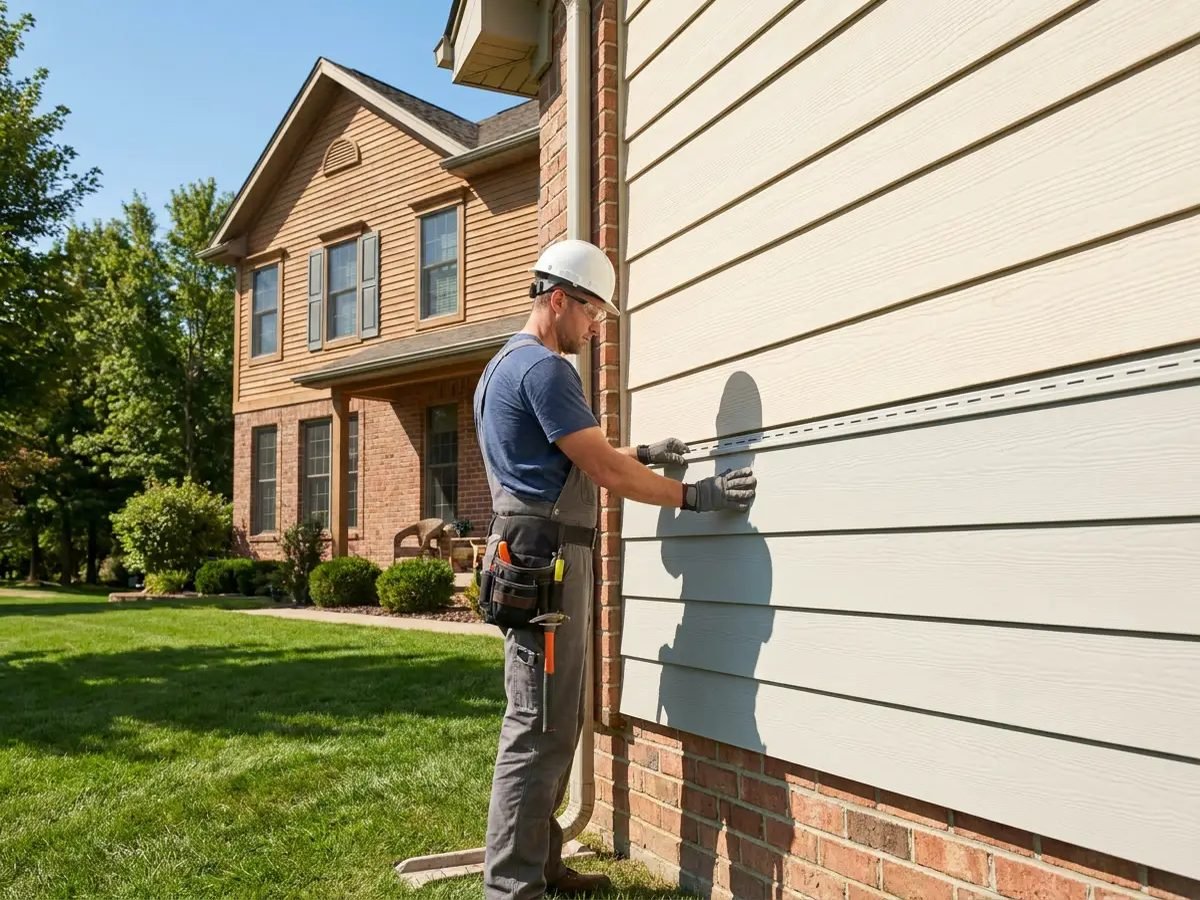
Average Siding Replacement Cost by Material
Siding replacement cost is usually quoted per square foot of wall area and includes both material and installation labor. Material choice is the single biggest factor in the final price, with a roughly 3x spread between the least and most expensive common options.
| Material | Cost per Sq. Ft. (Installed) |
|---|---|
| Vinyl | $4 – $9 |
| Engineered wood | $6 – $11 |
| Fiber cement | $8 – $14 |
| Wood (cedar/clapboard) | $9 – $16 |
| Metal (steel/aluminum) | $7 – $15 |
| Brick/stone veneer | $12 – $30 |
| Stucco | $7 – $12 |
Estimates only — not a quote. These are national ranges compiled from public sources and industry data. They are not an offer of price and are not guaranteed. Your actual cost depends on your project, location, materials, permits and the contractor you choose. HomeMatchr does not set prices or perform work. See our full disclaimer.
Cost by Home Size
Contractors price siding by wall area, not floor area, so a two-story home costs more to reside than a single-story home with the same footprint. As a rough guide, wall area runs about 1.1 to 1.3 times a home’s total floor area for a typical two-story house.
| Home Size (Floor Area) | Approx. Wall Area | Vinyl Total | Fiber Cement Total |
|---|---|---|---|
| 1,200 sq. ft. | ~1,400 sq. ft. | $5,600 – $12,600 | $11,200 – $19,600 |
| 1,800 sq. ft. | ~1,900 sq. ft. | $7,600 – $17,100 | $15,200 – $26,600 |
| 2,500 sq. ft. | ~2,600 sq. ft. | $10,400 – $23,400 | $20,800 – $36,400 |
| 3,500 sq. ft. | ~3,600 sq. ft. | $14,400 – $32,400 | $28,800 – $50,400 |
Estimates only — not a quote. These are national ranges compiled from public sources and industry data. They are not an offer of price and are not guaranteed. Your actual cost depends on your project, location, materials, permits and the contractor you choose. HomeMatchr does not set prices or perform work. See our full disclaimer.
Full Tear-Off vs. Installing Over Existing Siding
A full tear-off removes the old siding down to the sheathing, which allows the contractor to inspect and repair the wall structure, install a new moisture barrier, and start with a flat, sound surface. It costs more in labor and disposal fees, typically adding $1 to $3 per square foot, but it is the more thorough option and is often required when there is visible rot, multiple layers of old siding, or a material change (for example, moving from wood to fiber cement). Installing new siding over an existing layer can lower cost, but it may trap moisture, hide existing damage, and isn’t accepted under every local building code, so confirm what’s allowed before choosing this route.
Labor vs. Material Cost Breakdown
On a typical siding project, labor accounts for roughly 40% to 60% of the total cost, with material making up the rest. Labor’s share tends to rise with home complexity: multiple stories, steep rooflines, dormers, and a high number of corners and cutouts around windows and doors all add installation time without adding much material cost. Simpler, single-story homes with straightforward walls skew more toward material as a percentage of total spend.
Additional Costs to Budget For
- Sheathing and rot repair — $2 to $8 per square foot for any sections that need replacement.
- New house wrap or moisture barrier — typically $0.25 to $0.50 per square foot.
- Trim, soffit, and fascia — often $3 to $12 per linear foot depending on material.
- Permits — usually $100 to $500 depending on the municipality and project scope.
- Rigid foam insulation upgrade — roughly $1 to $2 per square foot if added during the reside.
- Paint or stain — required periodically for wood siding, and sometimes for engineered wood or fiber cement depending on the finish.
- Dumpster and disposal — commonly $300 to $800 for a full tear-off on an average home.
Ways to Manage Your Siding Budget
Homeowners looking to control cost without cutting corners on protection can consider a few approaches: sticking with a standard color and profile rather than a premium textured or wide-plank option, scheduling the project in a contractor’s slower season when pricing is often more competitive, replacing only the sides of the home that need it if damage is localized rather than doing a full reside, and bundling siding with other exterior work like window trim or gutters to reduce mobilization costs for a single crew visit.
Financing and Timing Your Project
Siding replacement is a significant expense, and many contractors offer financing plans or partner with third-party lenders in addition to accepting standard payment methods. Home equity loans and lines of credit are another common way homeowners fund larger exterior projects, since the improvement can add to the home’s value. Timing also affects cost and availability: spring and summer are peak season for exterior contractors in most of the country, so scheduling a project in late fall or winter, where weather allows, can sometimes result in more competitive pricing and a shorter wait for an installation crew.
Getting Accurate Quotes
Because home size, wall condition, material tier, and regional labor rates all move the final number, the ranges above are only a starting point. The most reliable way to budget is to request quotes from independent contractors who can assess your home’s specific walls, trim, and condition in person. You can compare no-obligation quotes to see how estimates differ in scope and price before choosing how to proceed. HomeMatchr is an advertising-supported service and may receive a referral fee when you connect with a provider.
Frequently asked questions
What is the average cost to reside a house?
For a typical 2,000 square foot home, total siding replacement cost usually falls between $8,000 for vinyl and $28,000 or more for fiber cement or wood, with brick or stone veneer running higher still. Home size, number of stories, and the condition of the existing wall are the biggest cost drivers.
Is it cheaper to install siding over existing siding?
Yes, skipping tear-off typically saves $1 to $3 per square foot in labor and disposal costs. However, it can trap moisture behind the new siding and hide existing damage, so it isn’t recommended if the current siding shows signs of rot or if local code doesn’t allow multiple layers.
Does siding replacement cost more for a two-story home?
Yes, because pricing is based on wall area rather than floor area, and two-story homes have significantly more exterior wall to cover than a single-story home with the same footprint. Scaffolding or lift rental for upper stories can add further labor cost.
What hidden costs should I expect with siding replacement?
The most common additions are sheathing or rot repair discovered during tear-off, a new moisture barrier, updated trim around windows and doors, and permit fees. Getting a written estimate that itemizes these possibilities upfront helps avoid surprises mid-project.
Compare Siding quotes
Enter your ZIP code to request no-obligation quotes from independent contractors.
HomeMatchr is an advertising-supported service and may receive a referral fee when you connect with a service provider.
