Vinyl Siding: Cost, Styles & Pros and Cons
Compare vinyl siding costs and request no-obligation contractor quotes.
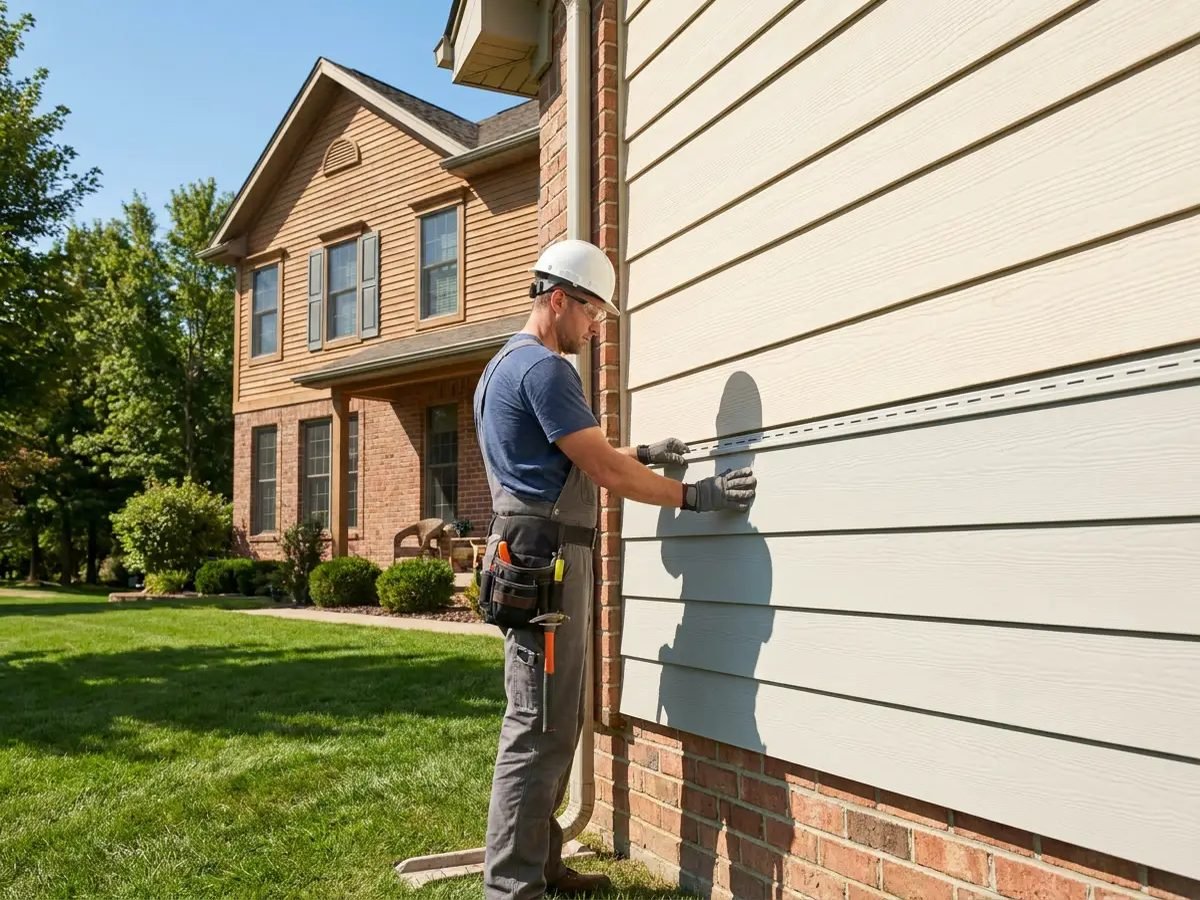
What Is Vinyl Siding
Vinyl siding is an exterior cladding made from PVC (polyvinyl chloride) formed into long, interlocking panels that overlap like traditional wood clapboard. First introduced in the 1950s and widely adopted from the 1970s onward, it is now the most commonly installed siding material on US homes because it combines a relatively low upfront cost, minimal maintenance, and a wide range of colors and textures. Modern vinyl siding is manufactured with UV inhibitors and impact modifiers that have significantly improved its durability and color retention compared with older generations of the product.
Vinyl Siding Cost
Vinyl is generally the least expensive common siding material on a per-square-foot basis, though price varies by panel thickness, style, and insulation backing.
| Vinyl Siding Type | Installed Cost (per sq. ft.) |
|---|---|
| Standard (0.040″ – 0.044″ thickness) | $4 – $6 |
| Premium/thicker panels (0.046″ – 0.052″) | $6 – $8 |
| Insulated vinyl siding | $7 – $11 |
| Board-and-batten or shake-style vinyl | $6 – $10 |
Estimates only — not a quote. These are national ranges compiled from public sources and industry data. They are not an offer of price and are not guaranteed. Your actual cost depends on your project, location, materials, permits and the contractor you choose. HomeMatchr does not set prices or perform work. See our full disclaimer.
For a 2,000 square foot home, total installed cost typically lands between $8,000 and $18,000, with insulated or premium-profile vinyl pushing toward the higher end of that range.
Vinyl Siding Styles and Profiles
- Horizontal clapboard/lap siding — the traditional overlapping-board look, available in double-4, double-4.5, and double-5 exposures.
- Dutch lap — a horizontal profile with a decorative shadow line for a more dimensional look.
- Vertical board-and-batten — vertical panels often used as an accent or on modern-style homes.
- Shake and shingle — textured panels that mimic the look of cedar shakes without the maintenance.
- Insulated vinyl — standard panels bonded to a rigid foam backing, which improves R-value and helps the panels resist denting.
Pros of Vinyl Siding
- Lower material and installation cost than most other siding types.
- Minimal maintenance — no painting or staining required, and panels can be hosed off.
- Resists rot, insects, and moisture damage since it contains no organic material.
- Wide range of colors, textures, and profiles, including options that mimic wood grain.
- Relatively quick and straightforward installation compared with masonry or wood siding.
Cons of Vinyl Siding
- Can crack or become brittle in very cold temperatures, and may soften or warp near strong heat sources such as reflective window glare from certain low-E glass.
- Color is baked into the material rather than painted on, so it cannot easily be repainted a different color later; fading can occur unevenly over many years of sun exposure.
- Lower impact resistance than fiber cement or metal, so it can dent or crack from hail or debris.
- Considered a less premium look than fiber cement, wood, or masonry in some real estate markets.
- As a plastic product, it has a different environmental profile than wood or fiber cement alternatives.
Vinyl Siding Maintenance
Vinyl siding is one of the lowest-maintenance exterior materials available. Routine care is limited to rinsing the panels once or twice a year with a garden hose or pressure washer on a low setting, checking caulking around windows and doors periodically, and inspecting for cracked, warped, or loose panels after severe storms. Because color runs through the material, minor scuffs generally aren’t visible, and damaged panels can usually be unlocked and replaced individually without redoing an entire wall section, provided the exact profile and color are still available.
Is Vinyl Siding Right for Your Home
Vinyl siding tends to work well for homeowners prioritizing upfront cost and low upkeep over a premium, paintable finish. It performs reliably across most US climates, though very cold regions may favor thicker, cold-rated panels, and homes in wildfire-prone areas may be subject to local restrictions on vinyl or other combustible cladding. If matching a historic or high-end architectural style is the priority, fiber cement or wood may be a better fit; always confirm any material choice against your local building code and, if applicable, homeowners association rules.
Vinyl Siding and Energy Efficiency
Standard vinyl siding has little insulating value on its own, since it’s a thin, hollow-backed panel. Insulated vinyl siding closes some of that gap by bonding the panel to a layer of rigid foam, which adds R-value directly at the wall surface and can help reduce thermal bridging through wall studs. For homeowners focused on energy performance, adding a separate layer of rigid foam board beneath standard vinyl during installation is another common approach, and can be more cost-effective than paying a premium for factory-insulated panels. Either upgrade is worth discussing with a contractor if your existing wall insulation is thin or outdated.
Vinyl Siding Warranty Considerations
Vinyl siding products typically come with a manufacturer’s warranty covering material defects such as cracking, fading beyond a specified threshold, or warping under normal conditions, with terms that vary widely by brand and product tier, from a couple of decades to a limited lifetime warranty. Manufacturer’s warranties usually cover the product itself and not installation workmanship, so ask your contractor separately about any labor warranty they provide on their own installation. Keep copies of your paperwork and product documentation, since warranty claims typically require proof of the original installation date and product line.
Getting Vinyl Siding Quotes
Vinyl siding pricing varies by panel thickness, insulation backing, and regional labor rates, so it’s worth comparing more than one estimate before choosing a contractor. You can request quotes from independent contractors and compare no-obligation quotes to see how pricing and scope differ for your project. HomeMatchr is an advertising-supported service and may receive a referral fee when you connect with a provider.
Frequently asked questions
How much does vinyl siding cost per square foot?
Standard vinyl siding typically costs $4 to $6 per square foot installed, with premium or insulated panels running $6 to $11 per square foot. A full project on a 2,000 square foot home usually totals $8,000 to $18,000.
How long does vinyl siding last?
Quality vinyl siding typically lasts 20 to 40 years with routine cleaning and periodic inspection. Manufacturer’s warranty terms vary by product line, so check the specific warranty on the panel you’re considering.
Can vinyl siding be painted?
Vinyl siding can be painted with specialized vinyl-safe exterior paint in a color no darker than the panel’s original shade, since darker colors absorb more heat and can cause warping. Many homeowners instead choose to replace panels if they want a significantly different color.
Does vinyl siding crack in cold weather?
Standard vinyl can become more brittle and prone to cracking in very cold temperatures, particularly older or thinner panels. Cold-rated or thicker vinyl products are available for homes in northern climates and reduce this risk.
Is insulated vinyl siding worth the extra cost?
Insulated vinyl siding adds a rigid foam backing that improves energy performance and dent resistance compared with standard hollow-backed panels. It costs more upfront, so whether it’s worth it depends on your climate, current wall insulation, and how long you plan to stay in the home.
Compare Siding quotes
Enter your ZIP code to request no-obligation quotes from independent contractors.
HomeMatchr is an advertising-supported service and may receive a referral fee when you connect with a service provider.
