Water Softener Buying Guide
Learn what to consider before buying, and get no-obligation quotes from independent contractors.
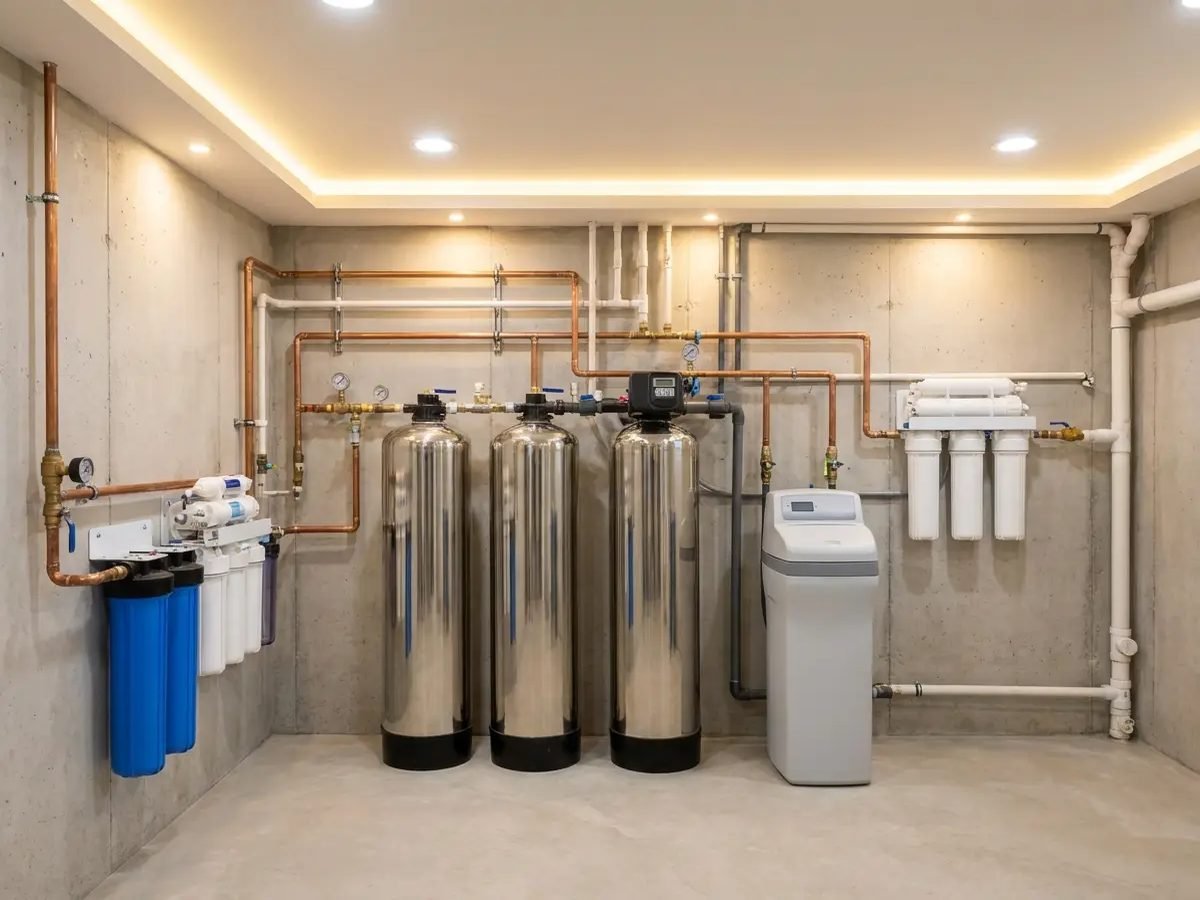
Start With a Water Test
Before comparing any specific systems, test your water. Home test kits can give a general hardness reading, while a lab analysis provides a more precise picture, including hardness in grains per gallon, iron content, and pH. This information determines what capacity and type of system will actually solve your household’s water quality issues, rather than guessing based on general averages for your region. If your home is on a private well, it’s also worth testing for iron and sulfur at the same time, since those minerals can affect which type of resin performs best and whether pre-filtration is needed ahead of the softener.
It also helps to note your home’s water pressure and any plumbing quirks, such as older galvanized pipes, before requesting quotes. A contractor can factor those details into a recommendation, since certain resin types and valve configurations perform better in homes with unusually high or low incoming pressure.
Understanding Grain Capacity
Grain capacity is the single most important spec when comparing water softeners—it determines how much hardness the system can remove before it needs to regenerate. Capacity is typically sized using three inputs: household size, average daily water use per person, and your water’s hardness level in grains per gallon. A basic formula is: (number of people) × (gallons used per day) × (grains per gallon of hardness) = daily grain removal need. Undersized units regenerate too often and wear out faster; oversized units cost more than necessary. A contractor can calculate the right capacity after reviewing your water test. It’s also worth accounting for peak-usage days, such as when laundry and the dishwasher are running while someone showers, since a unit sized only for average daily use can fall short during those higher-demand moments.
Types of Softeners to Compare
- Timer-based softeners regenerate on a fixed schedule regardless of actual water use—simple and typically the lowest cost, but less efficient with salt and water.
- Metered/demand-based softeners track actual water usage and only regenerate when needed, which saves salt and water over time and is a common upgrade from timer-based units.
- Dual-tank systems use two resin tanks so one can regenerate while the other continues supplying soft water, useful for households that don’t want any interruption in soft water access.
- Salt-free conditioners are a different technology entirely—they reduce scale without removing minerals or using salt. They suit different priorities than traditional softening.
Key Considerations Before You Buy
- Household size and water use. More people and higher usage call for higher capacity or a dual-tank setup.
- Available space. Confirm you have room near your main water line for the resin tank and brine tank, plus a nearby drain connection.
- Electrical access. Metered and digital units generally need a power outlet nearby.
- Sodium sensitivity. If sodium intake is a concern, ask about a potassium chloride alternative to salt, or consider a salt-free system.
- Manufacturer’s warranty. Compare what each manufacturer covers on the control valve, resin tank, and electronic components, and for how long.
- Ongoing cost. Factor in salt refills and eventual resin replacement, not just the upfront price.
Common Mistakes to Avoid
- Choosing a unit based on tank size alone rather than actual grain capacity and hardness data.
- Skipping a water test and guessing at hardness levels.
- Overlooking installation costs when comparing total system price between contractors.
- Not accounting for future household growth or increased water usage.
- Assuming a higher price automatically means better performance for your specific water quality.
Comparing Quotes Before You Decide
Once you know your approximate capacity needs, get quotes from more than one contractor so you can compare equipment recommendations, installation cost, and after-installation support side by side. Ask each contractor to walk through why they’re recommending a specific capacity and type based on your water test, and to itemize equipment versus labor in the quote. Always confirm a contractor is licensed and insured in your state before signing an agreement, and get the full scope of work in writing.
It’s also worth asking each contractor about installation timelines, whether they handle permits where required, and what their process looks like if the system needs a repair or adjustment after installation. A softener is a long-term investment in your home’s plumbing and appliances, so a contractor’s responsiveness matters nearly as much as the equipment they recommend.
Reading Manufacturer Specs and Certifications
When comparing specific models, look for NSF/ANSI 44 certification, which verifies a softener’s rated hardness-removal performance under independent testing. Some buyers also look for a WQA Gold Seal as an added quality indicator. Beyond certification, compare the manufacturer’s stated flow rate against your home’s peak demand, especially in larger households running multiple fixtures at once, and check what the warranty covers on the control valve versus the resin tank, since these often carry different coverage periods.
HomeMatchr is an advertising-supported service that helps homeowners compare quotes for water softener installations. Request no-obligation quotes from independent contractors to compare capacity recommendations and pricing for your home; HomeMatchr may receive a referral fee when you connect with a provider.
Frequently asked questions
What grain capacity water softener do I need?
It depends on your household size, daily water use, and hardness level. A common approach multiplies number of residents, gallons used per person daily, and grains per gallon of hardness to estimate the capacity needed.
What's the difference between a timer-based and a metered water softener?
Timer-based units regenerate on a fixed schedule regardless of actual use, while metered units track water use and only regenerate when needed, generally using less salt and water over time.
How long does a water softener typically last?
Many systems last 10 to 15 years with regular maintenance, though the control valve and resin bed may need service or replacement before other components.
Should I choose a single-tank or dual-tank softener?
Dual-tank systems provide continuous soft water since one tank can regenerate while the other stays in use, which suits larger households. Single-tank systems cost less and work well for smaller households with lower peak water use.
What should I ask a contractor before choosing a water softener?
Ask how they calculated the recommended capacity, what the manufacturer’s warranty covers, what ongoing maintenance costs to expect, and whether the quote separates equipment from installation labor. It’s also worth asking about installation timelines and how each contractor handles a service call if the system needs a repair down the road.
Compare Water Treatment quotes
Enter your ZIP code to request no-obligation quotes from independent contractors.
HomeMatchr is an advertising-supported service and may receive a referral fee when you connect with a service provider.
