Whole-House Water Filtration Guide
Compare whole-house filtration types and get no-obligation quotes from independent contractors.
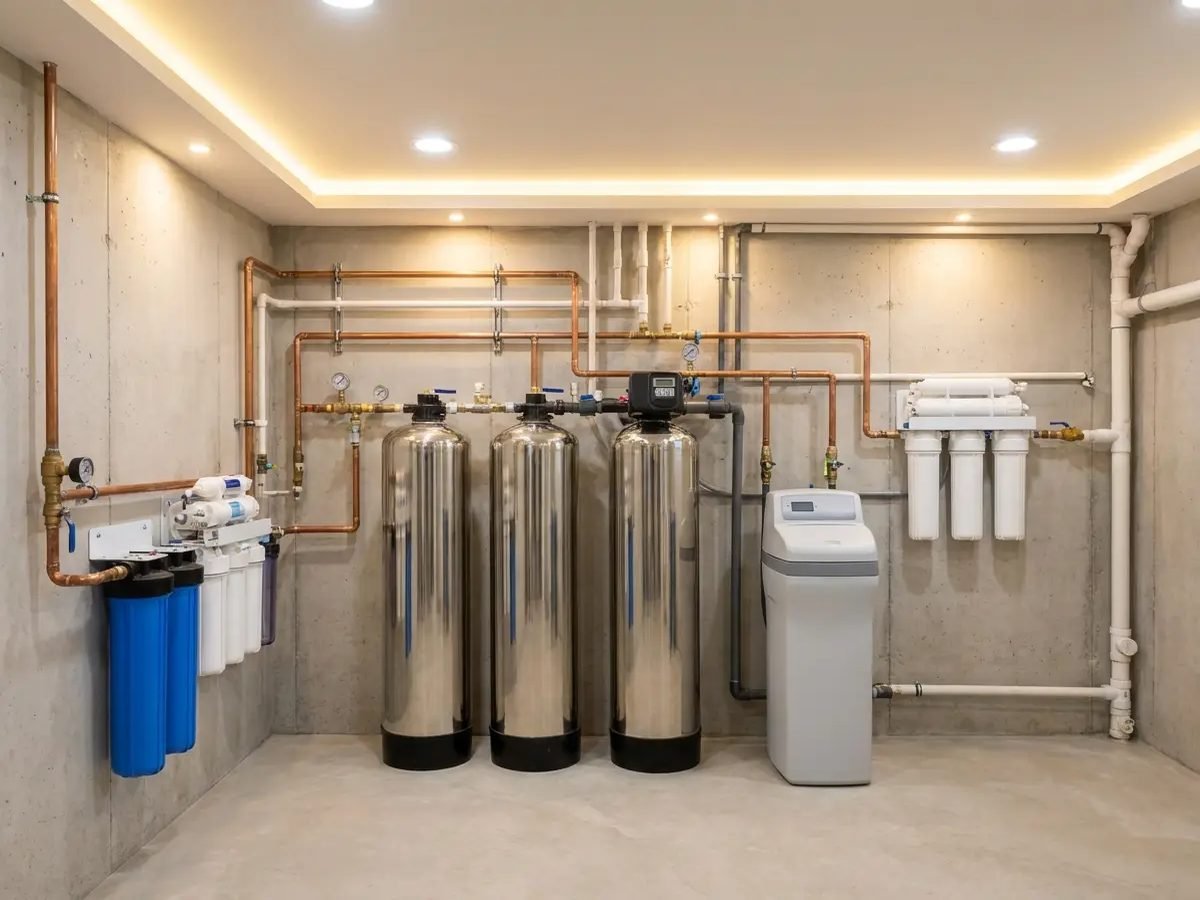
What Is Whole-House Water Filtration?
A whole-house water filter, sometimes called a point-of-entry system, is installed on the main water line where it enters the home so that every tap, shower, and appliance receives filtered water. This differs from point-of-use filters, like a pitcher or an under-sink unit, which only treat water at a single location. Whole-house systems are typically chosen when a household wants consistent water quality throughout the home rather than just at the kitchen sink.
Common signs that lead homeowners to look into whole-house filtration include water that smells like chlorine or rotten eggs, laundry that comes out looking dingy, a metallic taste from the tap, or visible sediment settling in sinks and tubs. Homes on private wells often add filtration after a water test flags iron, sulfur, or bacteria, sometimes alongside a separate disinfection step.
Common Types of Whole-House Filters
- Sediment filters remove sand, rust particles, and other visible debris, often used as a first stage before other treatment.
- Carbon filters reduce chlorine taste and odor and can address some organic compounds.
- Catalytic carbon systems are effective against chloramine, which standard carbon filters handle less efficiently.
- KDF media filters use a copper-zinc alloy to reduce chlorine and inhibit bacterial growth within the filter itself.
- Multi-stage systems combine sediment, carbon, and sometimes additional media in one unit for broader treatment.
Many installations combine a whole-house filter with a separate water softener or an under-sink reverse osmosis system for drinking water, since a whole-house filter alone doesn’t typically remove dissolved minerals.
What Whole-House Filters Can Remove
Depending on the media used, whole-house systems can address sediment, chlorine and chloramine taste and odor, some pesticides and industrial chemicals, and in some cases lead when paired with the right filter media. No single filter removes everything, which is why a water test matters—it tells you which contaminants are actually present so the filter media can be selected for the problem.
Most municipal water utilities publish an annual water quality report, sometimes called a Consumer Confidence Report, listing what’s actually detected in the local supply and at what levels. Reviewing that report before choosing a filter is a useful first step, since it tells you which contaminants are realistically present in the local water supply rather than relying on general assumptions about municipal water.
Whole-House Filter Cost
| Filter Type | Typical Installed Cost |
|---|---|
| Basic sediment filter | $300 – $700 |
| Carbon filter system | $800 – $2,000 |
| Catalytic carbon / chloramine system | $1,200 – $2,800 |
| Multi-stage whole-house system | $1,500 – $4,500 |
Estimates only — not a quote. These are national ranges compiled from public sources and industry data. They are not an offer of price and are not guaranteed. Your actual cost depends on your project, location, materials, permits and the contractor you choose. HomeMatchr does not set prices or perform work. See our full disclaimer.
Higher-capacity systems designed for larger households or higher flow rates cost more, as do systems requiring specialized media for specific contaminants identified in a water test.
Installation and Maintenance
Installation typically takes a few hours to a full day, depending on where the main line is located and whether the home already has a suitable installation point. Ongoing maintenance mainly involves replacing filter cartridges or media on a schedule set by the manufacturer, which can range from every few months for sediment filters to a year or more for larger carbon tanks. Ask a contractor for the expected replacement schedule and cost before choosing a system, since this affects the total cost of ownership over time.
Water pressure is another factor worth checking before installation. Multi-stage filtration systems can create some pressure drop across the home, so a contractor should verify your incoming pressure and, if needed, discuss whether a booster pump makes sense to keep flow rates steady at every fixture, especially in larger homes with multiple bathrooms in use at once.
Filtration vs. Softening: Solving Different Problems
It’s worth being clear about what a whole-house filter does and doesn’t do. Standard carbon and sediment filters do not remove calcium and magnesium hardness minerals, so a whole-house filter alone won’t stop scale buildup on pipes or appliances. Homes dealing with both taste or odor issues and hard water often end up installing a filter and a softener together at the point of entry, rather than expecting one system to solve both problems.
Choosing a Contractor
Because filtration needs are specific to each home’s water quality, start with a water test and share the results when requesting quotes. Ask contractors to explain which contaminants their proposed system addresses and why, and get an itemized quote covering equipment, installation, and expected annual maintenance cost. Always confirm a contractor is licensed and insured in your state before signing a contract.
HomeMatchr is an advertising-supported service that helps homeowners compare quotes for whole-house filtration projects. Request no-obligation quotes from independent contractors to compare options for your home; HomeMatchr may receive a referral fee when you connect with a provider.
Frequently asked questions
What's the difference between a whole-house filter and a water softener?
A whole-house filter targets contaminants like chlorine, sediment, or chemicals, while a softener specifically removes hardness minerals like calcium and magnesium. Some households use both together.
How much does a whole-house water filter cost?
Installed costs typically range from about $300 for a basic sediment filter to $4,500 for a multi-stage system designed to address several contaminants at once.
How often do whole-house filter cartridges need to be replaced?
It depends on the filter type and household water usage, but replacement schedules commonly range from every few months for sediment filters to about a year for larger carbon systems.
Will a whole-house filter remove all contaminants from my water?
No single filter addresses every possible contaminant. A water test identifies what’s actually in your water so the filter media can be selected for your specific concerns.
Do I need a whole-house filter if I'm on municipal water?
It depends on your water quality and personal preference. Municipal water is treated by the utility, but some homeowners still choose filtration to address chlorine taste, odor, or specific contaminants found in a local water report.
Compare Water Treatment quotes
Enter your ZIP code to request no-obligation quotes from independent contractors.
HomeMatchr is an advertising-supported service and may receive a referral fee when you connect with a service provider.
